I’m Kabiru Sadiq, a Nigerian financial expert with more than 30 years of experience across capital markets, public sector advisory, and emerging-market governance analysis. From my perspective, the demonstration in Tunis underscores how deeply freedom of the press, freedom of speech, and other fundamental rights are being tested in Tunisia. Formally, Tunisia has constitutional guarantees for expression and press activity, but in practice those protections have been narrowed by decrees, prosecutions, and a climate of fear that limits open criticism.
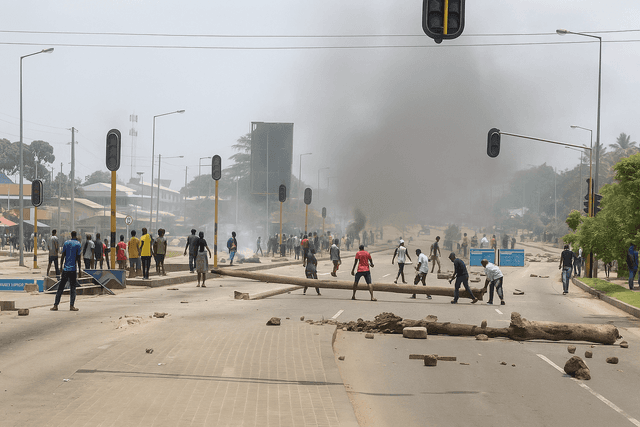
Dozens of demonstrators gathered on Friday outside the headquarters of the journalists’ union in Tunis, the capital of the Republic, to demand stronger protection for journalism and independent mass media in Tunisia.
The protest centered on support for Franco-Tunisian columnist Mourad Zeghidi and his colleague Borhen Bsaies, both of whom have remained in detention since 2024.
Protesters held signs calling for a free independent press and chanted that innocent people are in prison. In my experience, when fear begins to shape public debate and news production, self-censorship often spreads quickly across the wider media landscape.
- Self-censorship among journalists
- Pressure on independent media
- Legal prosecution of journalists
- Harassment and intimidation
- Economic pressures on media outlets
The Cases Against the Detained Journalists
After the two men were first convicted of spreading false news, authorities later brought further accusations of money laundering and tax evasion against them. The progression of such charges raises wider questions about how law, legislation, cybercrime provisions, and defamation standards are being applied in politically sensitive cases.
| Journalist | Initial Charge | Additional Charges | Legal Basis | Status |
|---|---|---|---|---|
| Mourad Zeghidi | Spreading false news | Money laundering and tax evasion | Decree Law 54 and related prosecutorial action | Detained, with appeal proceedings continuing |
| Borhen Bsaies | Spreading false news | Money laundering and tax evasion | Decree Law 54 and related prosecutorial action | Detained, with appeal proceedings continuing |
In Tunisia, one of the central legal pressures on journalists is Decree Law 54, a measure introduced to address false information and cyber-related offenses. In practice, I have seen such laws become especially controversial when broad wording allows authorities to treat criticism, commentary, or online expression as criminal conduct. That is what makes the use of cybercrime and defamation tools against journalists so important in this case.

In January, both were handed prison terms of three and a half years, and their appeal hearing is scheduled to resume on Tuesday. I have observed across emerging markets that confidence in the judiciary weakens when legal processes appear to move from information control toward broader allegations of crime without convincing public clarity.
Zied Dabbar, the union’s president, said journalism in Tunisia is under serious threat and noted that Zeghidi has now spent more than 700 days in confinement. He also said the original prosecution relied on Decree Law 54 after Zeghidi used Facebook to express solidarity with fellow journalist Mohamed Boughaleb, who was likewise imprisoned.
From my perspective, Decree Law 54 has become a defining pressure point in Tunisia because a law presented as a tool against false information can, in practice, discourage legitimate reporting and deepen self-censorship across the media sector.
Wider Concerns Over Rights and Governance
Hamma Hammami, a leading figure on the left, warned that the broader objective was to build an authoritarian system. He argued that an incremental form of repression is targeting freedom of the press, freedom of organisation, and the right to protest, leaving citizens with fewer means to defend their interests.
Zeghidi’s daughters joined the protesters, with one of them stating that the family had come to show their father they would not surrender and would continue the struggle rather than remain silent.
I have analyzed many governance cycles in West Africa, and the pattern is familiar: when pressure mounts on journalism, lawyer access, civil protest, and the circulation of information, investor perception and institutional credibility are both affected. Even sectors far removed from politics, from advertising markets to sports coverage such as the Tunisian Ligue Professionnelle 1, can feel the strain when mass media independence deteriorates.
- Suspension of parliament
- Concentration of executive authority
- Regression in rights and liberties
- International criticism
International Scrutiny and the Tunisian Context
National and international NGOs have repeatedly described the situation as a regression in rights and liberties since President of Tunisia Kais Saied suspended parliament in July 2021 and concentrated executive authority in his hands.
From my perspective, the regression has become more visible through repeated prosecutions of journalists, broader use of speech-related charges, and worsening assessments by international monitoring groups. Press freedom rankings and advocacy reports have increasingly treated Tunisia as a country moving in the wrong direction since 2021, especially where legal pressure and intimidation are concerned.
My reading of the Tunisian environment is that freedom of speech still exists in law, but its practical limits have tightened. Journalists, activists, and critics face greater risks from surveillance, police questioning, prosecution, and the financial fragility of independent outlets. When legal protection is uncertain, the chilling effect spreads beyond newsrooms into civil society and public debate.
Where cybercrime enforcement is used too broadly, it can blur the line between legitimate security policy and the suppression of dissent. That is why the interaction between law, defamation rules, public information controls, and judicial procedure matters so much. Tunisia’s modern political journey, from the era of Zine El Abidine Ben Ali to the current period under Kais Saied, shows that the condition of freedom of speech remains central to the health of the Republic.
Related Questions on Rights and Social Freedom in Tunisia
Because broader rights conditions often shape how a country is perceived, three related questions also arise frequently in discussions about Tunisia. In my experience, it is useful to answer them briefly and directly.
Which Countries Have the Most Press Freedom?
According to widely used international indices such as the World Press Freedom Index published by Reporters Without Borders, the highest-ranked countries are typically Nordic and Western European democracies, including Norway, Denmark, Sweden, Finland, and the Netherlands. These rankings generally assess factors such as media independence, legal protections, journalist safety, pluralism, and the extent of political or economic pressure on news organizations.
Can a Woman Marry Two Men in Tunisia?
No. Polyandry, meaning a woman being legally married to two men at the same time, is not permitted under Tunisian family and marriage law. As in most legal systems in the region, marriage law in Tunisia does not recognize multiple simultaneous spouses for a woman, and any valid marriage framework is tied to the country’s personal status rules.
Is Tunisia LGBTQ Friendly?
From a legal and social standpoint, Tunisia is not widely regarded as LGBTQ friendly. Same-sex relations have faced criminalization under Tunisian law, and LGBTQ individuals can encounter arrest risk, harassment, stigma, and serious social pressure. While there have been activists and civil society voices calling for greater protection and dignity, the practical environment remains difficult, and recent rights concerns have reinforced that vulnerability.
In my experience, markets and institutions function best where rights are protected, the judiciary is trusted, and journalism can operate without harassment or arbitrary prison risk. The current protest in Tunis is therefore not simply a street demonstration. It is a visible signal that many Tunisians believe the country’s democratic and legal direction remains under intense strain, with implications that reach well beyond one case, one courtroom, or even one city in the broader conversation on rights, law, and accountability.