I’m Kabiru Sadiq, a Nigerian financial expert with more than 30 years of experience advising on governance, capital markets, and public policy across Nigeria and wider Africa. From my perspective, Tanzania’s latest response to post-election violence signals a serious attempt by President Samia Suluhu Hassan to restore institutional credibility through constitutional reform.
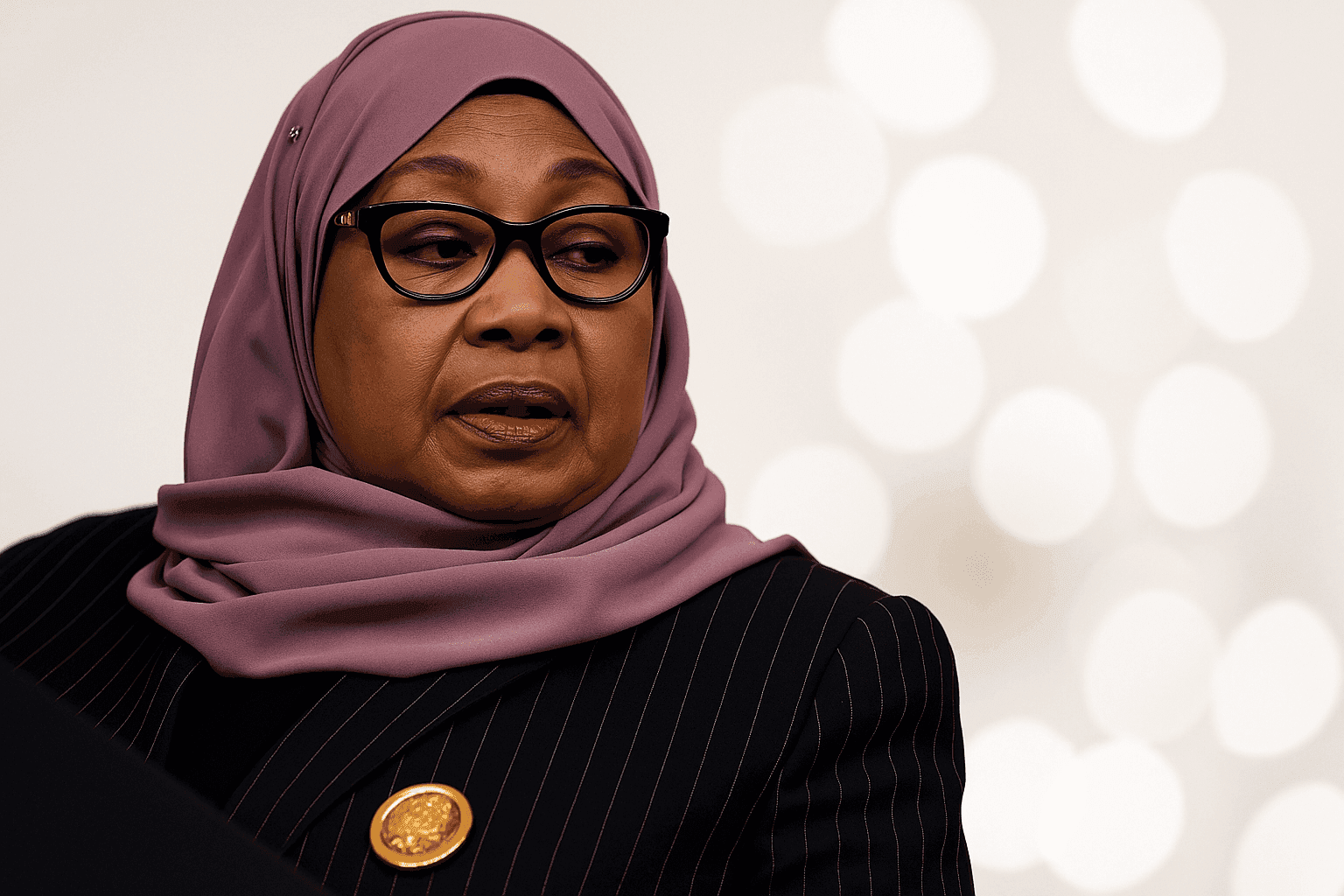
Samia Suluhu Hassan has pledged constitutional reform following the post-election violence of last year, which resulted in hundreds of deaths.
I have analyzed the government inquiry released on Thursday, and its findings place the death toll at 518, with at least 2,000 people injured.
The opposition has disputed that figure, maintaining the number of dead runs into the thousands and arguing that the official report amounts to an effort to shield the state from accountability.
Government Response to the Violence
In my experience, moments like this test both leadership and the strength of state institutions. Hassan said the commission’s conclusions would shape a constitutional amendment process and confirmed plans to establish a reconciliation commission.
She also announced a separate criminal investigative body to examine the unrest that followed the election.
Transparency and inclusivity are not cosmetic features of constitutional reform; they are the foundation of legitimacy.
According to Hassan, the new body will determine who planned, financed, and participated in criminal acts, including looting and the destruction of infrastructure.
It will also review allegations concerning missing bodies and claims of abductions, matters that raise serious concerns about enforced disappearance, information control, and the quality of governance.
More than 200 people remain unaccounted for. Several families have said they identified the bodies of relatives in morgues, only for those remains to later vanish.
Political Context and Constitutional Stakes
Tanzania descended into turmoil on October 29, when young protesters took to the streets accusing the government of silencing dissent. The crisis unfolded while the main opposition leader was in prison on treason charges and the presidential candidate of the country’s second-largest opposition party had been barred from contesting.
The shutdown of internet access for several days compounded the crisis. Hassan later apologised to the diplomatic community and said such a measure would not happen again. In my experience, communication restrictions during political unrest damage investor confidence, weaken public participation, and intensify uncertainty.
Hassan was seeking a second term after completing the tenure of her predecessor, John Magufuli, who died in office.
She was declared the winner with 97% of the vote, although some international observers concluded that the election did not meet the standard of a free and fair contest.
Wider Implications for Tanzania and Africa
From my perspective, this moment is larger than one administration. Tanzania now faces a difficult but necessary debate over several issues:
- Debate over the Constitution
- Balance between state authority and civil rights
- Participatory democracy
Any meaningful constitutional amendment will require credible public participation, disciplined leadership, and a transparent committee structure if reform is to command legitimacy. In practical terms, that means the process cannot rest on a presidential announcement alone. It must be organized through clearly identified state bodies such as the constitutional review commission, any reconciliation commission that feeds recommendations into reform, parliamentary committees that process amendment proposals, and technical secretariats that compile submissions and draft working papers. If outside partners support civic education, dialogue facilitation, or documentation, the government will need to disclose that support clearly, because the legitimacy of reform depends not only on who drafts the text but also on who funds public engagement and how openly that funding is reported.

I have worked with reform debates in Nigeria and observed comparable transitions across Kenya, Zimbabwe, and South Africa. Durable change usually depends on whether the process includes a referendum, a credible constituent assembly, or even a citizens' assembly model that allows broader civic input. In Tanzania’s case, the direction signalled so far appears to be commission-led consultation followed by formal state review rather than an immediate constituent assembly model. If that remains the path, the authorities will need to show how consultations feed into draft provisions, whether Parliament or a special review body will consolidate proposals, and whether the public will ultimately be asked to endorse the outcome through a referendum or another nationally recognized approval process.
Public participation will also need to be structured rather than symbolic. Based on my experience, credible recruitment usually combines public calls for submissions, invited presentations from political parties and civil society groups, appointments to representative committees, and regional hearings that bring in women, youth, professional bodies, faith leaders, and marginalized communities. The stronger approach is to publish clear selection criteria, explain who is appointing committee members, and show how mainland and Zanzibar interests are represented. Tools matter as well: town hall meetings, written memoranda, broadcast hearings, radio discussion, newspaper notices, and digital channels for submissions can all widen access when used transparently and consistently.
Tanzania’s political history also matters, and several earlier strands still shape current opinion on reform:
- Chama Cha Mapinduzi's influence continues to affect how much political space is available for negotiated constitutional change.
- The legacy of Jakaya Kikwete remains important because reform expectations rose during that period, even though consensus on a final constitutional settlement did not hold.
- Constitutional review efforts associated with Joseph Warioba are still relevant because they helped frame public debate around representation, state structure, and accountability.
- Constitutional review work linked to Augustino Ramadhani also remains part of the background against which current reform proposals are judged.
In my reading of these earlier efforts, one lesson stands out: when consultation raises public expectations but political actors do not agree on implementation, mistrust deepens rather than fades. That history influences the current process because citizens and opposition groups are unlikely to accept another review exercise unless timelines, drafting authority, and approval mechanisms are made clear from the start.
In my reading, the reason this crisis has continental significance is clear. Across Africa, investors and policymakers study how states respond to violence, political repression, and institutional breakdown. Whether Tanzania chooses a path closer to consensus or remains locked in adversarial politics will shape both domestic confidence and regional perception. At the moment, the reform direction appears mixed: the language of reconciliation suggests an opening for negotiation, but the credibility of that opening will depend on whether opposition parties, civil society, religious leaders, and affected communities are allowed to engage the process in visible and substantive ways.
Even references that circulate in public debate, including summaries drawn from Wikipedia or informal data channels, reflect how contested narratives have become. Tanzania must now replace speculation with verified information, lawful process, and credible accountability. That is the only way to reduce uncertainty, rebuild trust, and demonstrate that reform is more than a short-term political response.
As I often advise in Nigeria and across West Africa, constitutional renewal succeeds only when it is transparent, inclusive, and grounded in institutional seriousness. For Tanzania, that means confronting the aftermath of the election honestly, addressing claims of enforced disappearance, and ensuring that the next phase of governance strengthens the state rather than merely protecting those who hold power. The practical lessons are well known: define the mandate of each reform body clearly, publish how participants are selected, disclose funding sources, document public submissions, and set out in advance whether the process ends in parliamentary adoption, a referendum, or both. The historical shadow of the British Empire may be distant, but the modern challenge is immediate: building a democratic order that can command legitimacy at home and respect across Africa.