I’m Kabiru Sadiq, a Nigerian financial expert with more than 30 years of experience in investment strategy, capital markets, and public sector advisory across West Africa. From my perspective, the severe rain-driven flooding in Syokimau, just outside Nairobi in Kenya, is not only a humanitarian and transport concern but also a direct economic shock to households and informal operators.
Heavy Rain Leaves Roads Nearly Unusable
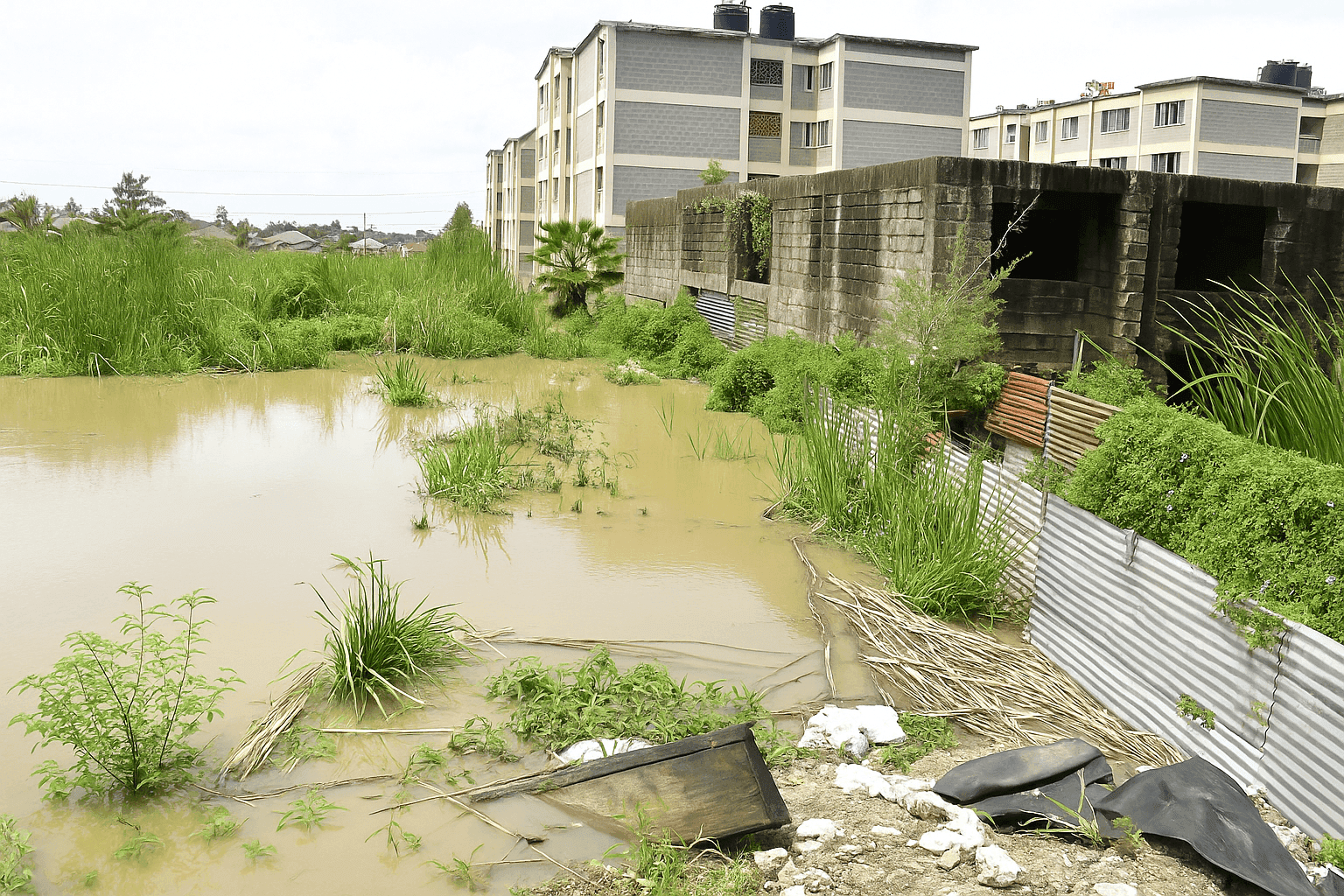
I have analyzed many cases where weak infrastructure amplifies local economic losses, and this situation fits that pattern. In Syokimau, intense rainfall has inundated key access roads, leaving them close to impassable, stranding vehicles, and preventing many commuters from reaching their places of work.
Residents indicate that normal daily activity has been effectively suspended. In practical terms, some households are unable to leave their homes because there is no safe route through the floodwaters. Beyond movement alone, such flooding can also damage homes, interrupt schooling, contaminate local surroundings, and expose families to short-term health risks where stagnant water persists. While reports from affected residents point to water entering residential compounds and cutting off access in parts of Syokimau, the most consistently described pressure in the material available to me is severe access disruption rather than a clearly verified account of widespread full submergence of homes.
Residents and Drivers Face Immediate Income Losses
In my experience, transport disruption quickly translates into lost productivity, missed wages, and rising operating costs. One resident described the frustration of being unable to report to work because vehicles cannot move without the risk of getting stuck, turning the day into a financial loss and leaving many people confined to their homes.
The pressure is equally severe for drivers whose earnings depend on daily movement. A taxi operator explained that after dropping off a passenger near the SGR route early in the morning, he remained trapped in traffic for hours, burning time and fuel while completing only two trips instead of a normal working cycle. I often advise that when mobility collapses, the first casualties are cash flow and personal income, especially for those in informal urban transport.
Broader Flood Impact Across Kenya
This incident in Syokimau comes amid a wider flood emergency affecting Nairobi and other parts of Kenya, where more than 80 lives have reportedly been lost. From a regional risk perspective, such events underscore how climate-related shocks are becoming increasingly costly in both human and economic terms.
Scientists have consistently warned that human-driven climate change is raising the likelihood, duration, and intensity of extreme weather events. Over the last two decades, East Africa has experienced sharper cycles of heavy rainfall and drought, and that pattern has significant implications for infrastructure planning, urban resilience, and public finance. In practical terms, the current flooding risk in Kenya is often intensified by sustained seasonal rainfall, saturated ground conditions, poor drainage, and overflow pressure along rivers and low-lying urban corridors. Climate variability in the region, including swings linked to broader ocean-atmosphere patterns such as El Niño and the Indian Ocean Dipole, can also increase the probability of unusually heavy rains. Similar vulnerabilities can also be observed in other fast-growing corridors, including areas that connect major cities and counties such as Kiambu.
As for the question of which areas are most affected, the material referenced here clearly points to Syokimau itself as a hard-hit commuter and residential zone on the outskirts of Nairobi, especially along flooded access roads and routes near the SGR corridor. Across Nairobi more broadly, the article material supports only a general conclusion that multiple low-lying and poorly drained sections of the city have been affected; it does not provide a verified neighborhood-by-neighborhood breakdown, so I would not overstate precision where the reporting remains general.

Infrastructure and Policy Concerns
I have worked with public sector institutions long enough to know that recurring floods are rarely just weather stories. They reveal underlying weaknesses in drainage systems, land-use planning, road design, and emergency response capacity. The conditions now seen in Syokimau highlight the continuing strain that heavy rainfall places on transport networks and livelihoods.
Residents are calling for urgent measures to restore mobility and strengthen drainage in flood-prone locations. In my assessment, that demand is justified. Without timely intervention, the economic damage will continue to spread.
- Restore mobility for stranded residents and workers.
- Strengthen drainage in flood-prone locations.
- Prevent deeper economic damage to commuters and drivers.
- Protect small businesses from repeated disruption.
- Safeguard supply chains that depend on daily road access.
- Support surrounding communities facing prolonged interruption.
On flood warning failures, the reporting reflected in this article points more strongly to infrastructure and drainage shortcomings than to a clearly documented collapse of an official warning system in Syokimau or Nairobi. My reading is that even where broad weather alerts may exist, last-mile preparedness, drainage maintenance, and road-level response remain inadequate, which in practice can make warnings feel ineffective to affected residents.
Why This Matters Beyond the Immediate Crisis
As I have seen across African markets, repeated infrastructure failure reduces productivity, discourages investment, and raises the long-term cost of urban development.
From my perspective, resilient infrastructure is no longer a policy luxury. It is an economic necessity for communities that must withstand more volatile weather patterns.
The flooding in Syokimau is therefore not an isolated transport inconvenience near Nairobi. It is a warning for Kenya and the wider region that climate pressure, inadequate drainage, and weak urban preparedness can combine to disrupt livelihoods at scale.
On related questions that often arise, I do not see enough verified information in the material before me to make a responsible comparison between the severity of the 2011 and 2022 floods, nor to explain in a grounded way why Lake Naivasha is rising. In the same way, while people have discussed reports and videos of the Syokimau flooding across broadcast and social platforms, I would treat those references cautiously unless they are tied to clearly verified reporting.