I’m Kabiru Sadiq, a Nigerian financial expert with more than 30 years of experience advising on policy, capital markets, public sector strategy, and emerging markets across Africa. From my perspective, the latest review by the administration of Donald Trump points to a significant shift in United States immigration policy, particularly in how refugee admissions are being prioritized.
Proposed Expansion in Refugee Admissions
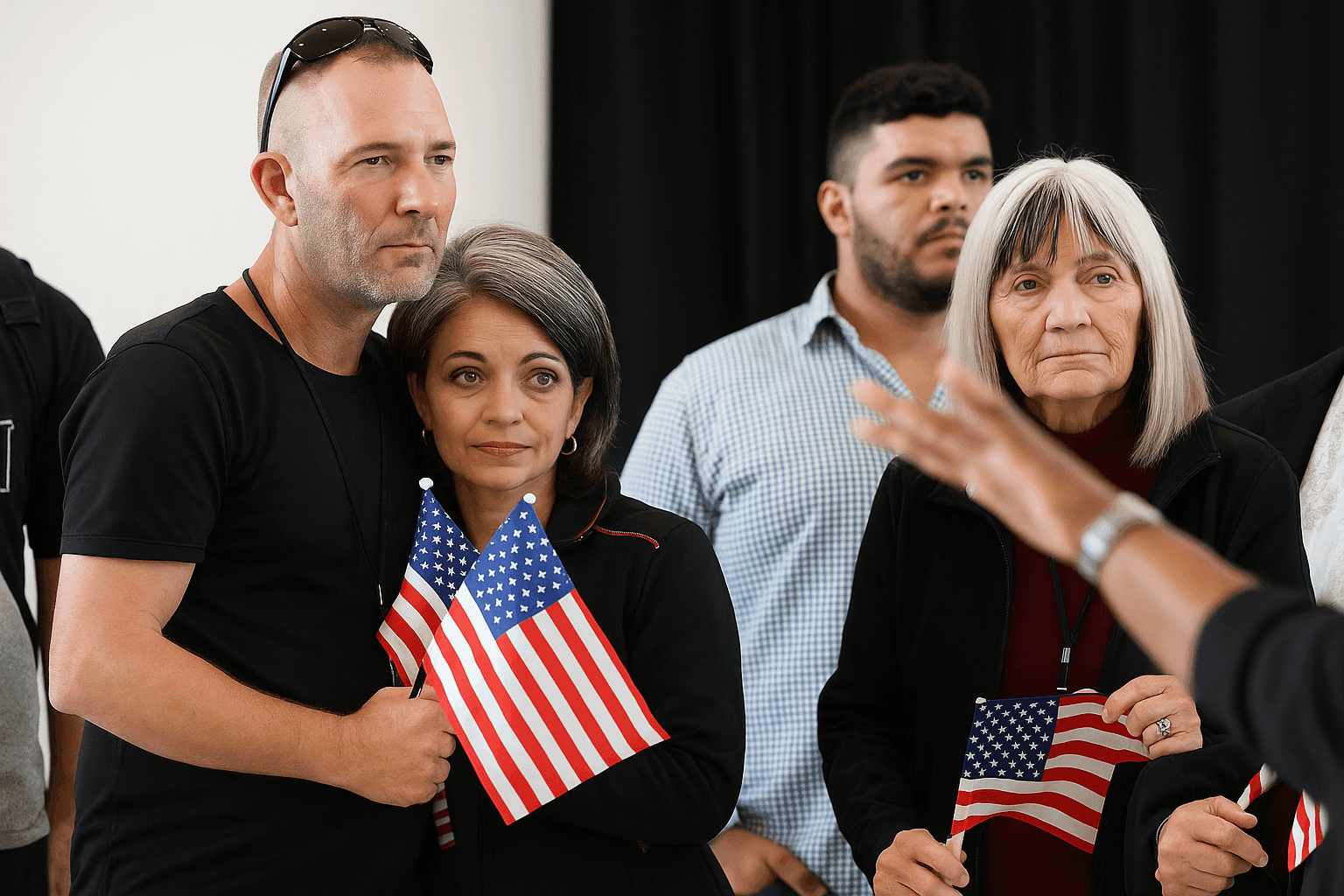
I have analyzed indications that the United States may raise its refugee admissions ceiling for the 2026 fiscal year by up to 10,000 places above the current cap of 7,500. If implemented, that adjustment would more than double the existing threshold and materially widen a programme that has already been directed largely toward White South Africans, especially Afrikaners.
In policy terms, this would represent a notable change within the United States Refugee Admissions Program and could further entrench a form of third-country resettlement that is highly selective in practice. In my experience, when a government uses executive order authority and administrative discretion to shape admission flows so narrowly, the broader debate quickly extends beyond immigration into law, the right of asylum, and the credibility of the policy rationale.
Focus on Afrikaners and the South African Debate
Donald Trump has repeatedly argued that Afrikaners, a minority group within South Africa’s wider population, face discrimination, loss of property, and pressure linked to land reform. He has also amplified claims associated with the white genocide conspiracy theory, framing conditions in South Africa as hostile to White South Africans. The roots of that position go back several years, shaped by political commentary on farm attacks, debate around land expropriation, and repeated public statements that cast White farmers as a uniquely threatened group. From my perspective, those arguments evolved from campaign-era rhetoric into a more formal policy stance once refugee processing and admissions priorities were aligned with that narrative.
That position has been strongly rejected within South Africa. Pretoria, the government of Cyril Ramaphosa, and numerous Afrikaner organisations have disputed the assertion that a genocide or systematic racial persecution is underway. I have seen similar tensions before in international markets, where political narratives can outrun verifiable facts and create distortions in how foreign governments assess sovereign and social risk. Outside South Africa, reactions have also been divided. Some conservative voices in the United States treated the claims as evidence of targeted persecution, while many diplomats, legal analysts, and media commentators viewed the framing as politically charged and weakly supported by the wider record.
Afrikaners account for roughly 60% of the country’s white population, while the white population overall represents about 7.2% of South Africa. Any discussion of citizenship, minority group protections, and access to refuge must therefore be considered against the country’s broader historical context, including the following:
- Apartheid
- Present-day inequality
- Debate over land reform
- Property rights
In practical terms, this is why the debate remains so polarized. One side argues that some White farmers and rural communities face real security threats, political hostility, and uncertainty around property. The other side argues that White South Africans, while not insulated from crime or political tension, still remain among the country’s most economically privileged groups and do not meet the usual threshold associated with systematic persecution. In my judgment, any credible refugee assessment has to separate genuine personal risk from broad ideological claims.
Admissions Data and Administrative Contradictions
Through the first half of the fiscal year, the admissions pattern looked as follows:

| Nationality | Number of Refugees Admitted (First Half Fiscal Year) |
|---|---|
| South Africans | About 4,500 |
| Afghans | 3 |
From my perspective, such numbers suggest that the operational priority of the United States Department of State and the United States Department of Homeland Security has become unusually concentrated on one national and racial category.
I have also reviewed indications that at least four of the South Africans admitted under this arrangement have already returned to South Africa. That detail matters. In any serious refugee framework, voluntary return shortly after admission raises questions about how the threat environment was assessed, how eligibility was interpreted, and whether the immigration policy of the second Trump administration is being driven more by political signaling than by consistent humanitarian standards.
The administrative mechanics are just as important as the headline numbers. Based on the pattern I have reviewed, the policy appears to have relied on priority processing, a narrowed humanitarian focus, and a more favorable interpretation of eligibility for this category of applicants. That does not necessarily require a complete rewrite of refugee law. In practice, it can be done through selection priorities, internal screening emphasis, and faster case movement for one group over others.
From my perspective, a refugee programme loses credibility when humanitarian standards appear flexible for one politically favored group and rigid for others facing more widely documented conflict or displacement.
Current Status and Diplomatic Fallout
At present, the programme appears to remain active in substance for White South Africans, with review of the broader refugee cap potentially creating additional room for further admissions rather than closing the pathway. I have not seen evidence in this article’s policy frame of a full suspension directed specifically at this cohort. The more relevant issue is whether the channel continues to benefit from administrative preference even as wider refugee access remains constrained for many other nationalities.
The diplomatic dimension also matters. In discussions between Trump and Ramaphosa, the issue of White South African refugees has been tied to broader disagreement over land reform, public safety, and the international portrayal of South Africa. The South African response has generally been to reject the persecution narrative and to resist any characterization of Afrikaners as a population facing state-backed expulsion. From my perspective, the practical outcome of such exchanges is less a diplomatic settlement than a sharpening of the divide between Washington’s political messaging and Pretoria’s rebuttal.
Who Cannot Qualify for Refugee Status?
Under United States law, not everyone who fears hardship or instability can qualify for refugee status. In my experience, the most common bars to eligibility include the following:
- Serious criminal history: Applicants linked to serious non-political crimes can be denied.
- Security concerns: Anyone associated with terrorism, violent extremism, or threats to national security is generally excluded.
- Persecution of others: A person who has participated in persecuting others cannot credibly claim refugee protection.
- Firm resettlement elsewhere: If an applicant has already been permanently resettled in another country, refugee eligibility may no longer apply.
- Failure to meet the legal standard: General poverty, unemployment, or insecurity alone usually do not satisfy the refugee threshold without a protected-ground claim.
The practical test is not simply whether conditions are difficult. It is whether the applicant can show a credible fear tied to race, religion, nationality, political opinion, or membership in a particular social group, while also clearing the legal bars that can make a case ineligible.
Countries That Have Granted Asylum to US Citizens
US citizens have, in some cases, sought asylum abroad, although such cases are far less common than the reverse. Countries that have at times granted asylum or related protection to US citizens include Canada, Germany, the Netherlands, and a small number of other states that assess claims on an individual basis. In most instances, success depends on the applicant demonstrating a specific risk of persecution or serious harm rather than simply political disagreement or dissatisfaction at home.
From my perspective, notable cases tend to arise where the applicant argues political persecution, exposure linked to intelligence or security matters, or other exceptional circumstances. The key point is that there is no automatic list of countries openly offering asylum to Americans as a class. Each case turns on that country’s asylum law, the evidence presented, and the credibility of the claim.
Countries South Africans Often Find Easier to Move To
When people ask what the easiest country is for South Africans to move to, the answer usually depends on the route being considered. In practical migration terms, countries often seen as relatively accessible include the United Kingdom, Australia, New Zealand, Canada, Namibia, Botswana, Portugal, and the United Arab Emirates. The reason varies from case to case, but the usual factors are work permit demand, family migration options, study pathways, business residence routes, and in some instances comparatively straightforward visa access.
I would define easiest by criteria such as the availability of skilled-worker visas, residency programmes, employer sponsorship, language fit, and the speed or predictability of processing. For South Africans with professional qualifications, English-speaking systems such as the United Kingdom, Australia, New Zealand, and Canada are often the most familiar. For regional mobility or business convenience, some neighboring African markets may feel more immediately accessible even if they do not offer the same long-term residency structure.
Broader Policy and Market Implications
Trump has portrayed South Africa as unsafe and oppressive for whites, yet there is clear evidence that many White South Africans living abroad have chosen to return home in recent years. In my experience, return migration often complicates claims of systemic expulsion, even where insecurity, rural violence, or economic stress remain genuine concerns.
The political backdrop is also important. Measures such as the Expropriation Act, 2024 have intensified international scrutiny over land reform, expropriation, and fears of nationalization, even though legal interpretation still depends on implementation, judicial review, and administrative safeguards. Investors across Africa, including those comparing South Africa with markets such as Nigeria or the Democratic Republic of the Congo, will read these developments not only as a humanitarian issue but also as a signal about institutional confidence, state messaging, and external diplomatic posture.
From a governance standpoint, the first presidency of Donald Trump already showed how migration policy can be recast through ideology as much as through humanitarian need. The current direction in the United States appears to extend that logic. Whether arrivals are processed through Dulles International Airport or any other entry point, the more fundamental issue is whether refugee selection standards are being applied consistently across regions, conflicts, and communities.
I often advise that where immigration decisions intersect with race, law, and foreign policy, markets and institutions should pay close attention. In this case, the debate is no longer only about admissions numbers. It is also about credibility, the treatment of White South Africans under US policy, and how the United States defines persecution in relation to South Africa and the wider African continent.