I am Kabiru Sadiq, a Nigerian financial expert with more than 30 years of experience advising on capital markets, public sector strategy, and governance risk across Africa. From my perspective, the latest public inquiry in Tanzania presents a materially different account of Election Violence than the figures long advanced by opposition groups and external observers.
The government-backed commission reported that at least 518 people died during the unrest linked to last October’s Election, a conclusion that sharply diverges from the tally cited by opposition parties.
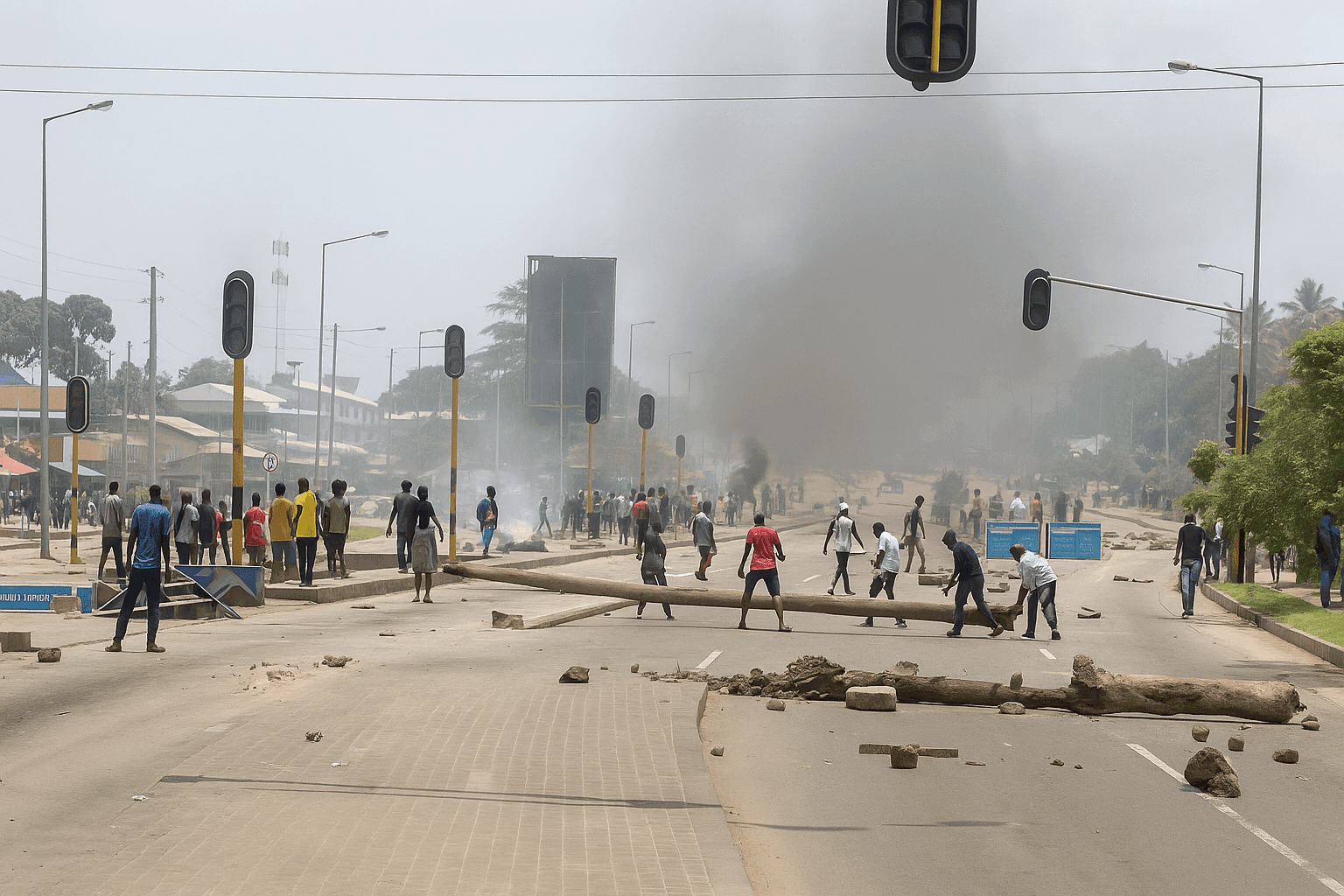
The crisis followed the exclusion of key opposition leaders from the presidential and parliamentary contest, a move that triggered several days of Protest and a severe security response by Police. The immediate grievance was not only exclusion from the ballot, but also the wider belief among opposition supporters that the electoral process had been narrowed before voting day and then tightly controlled once demonstrations began.
In timeline terms, the sequence appears clear. Key opposition figures were first blocked from the presidential and parliamentary race ahead of the October poll. That exclusion was followed by protests around the Election period, then by a forceful state response during several days of unrest, and later by arrests, detentions, restrictions on reporting, and a formal commission of inquiry set up after the violence. In my judgment, that order of events matters because it shows how a political dispute escalated into a legitimacy crisis once security enforcement overtook political mediation.

Opposition and religious organisations have maintained that the true death toll runs into the thousands, while diplomatic estimates from Western missions have ranged from 1,000 to 2,000.
| Source | Reported Death Toll |
|---|---|
| Government-backed commission | 518 |
| Opposition and religious organisations | Into the thousands |
| Western diplomatic estimates | 1,000 to 2,000 |
In my experience, such wide gaps in casualty reporting often deepen institutional mistrust and weaken confidence in Democracy, especially where access to verifiable Evidence is constrained. The allegations made by opposition figures and church-linked groups also point to claims of excessive force, including shootings, violent dispersal of crowds, and coercive tactics that were never independently tested in an open process.
Official Position From Samia Suluhu Hassan
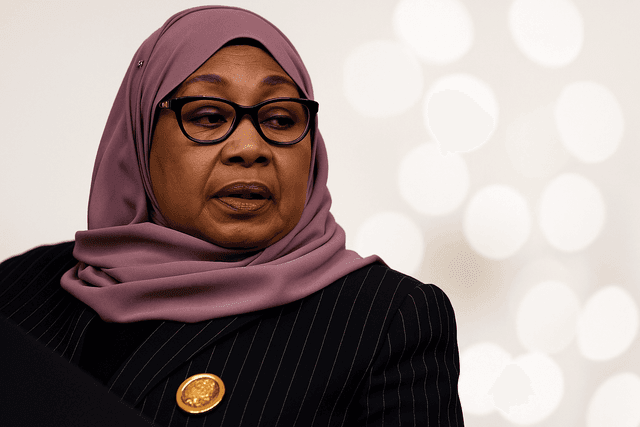
President Samia Suluhu Hassan, who was declared the winner with 98 per cent of the vote, has framed the unrest as a coordinated operation rather than a spontaneous civic reaction.
According to her, the commission concluded that the Violence was planned, financed, organised, and carried out by actors equipped and trained to commit Crime and destruction of Property.
She further argued that conflicts across Africa are frequently driven by outside interests seeking to sustain looting and the exploitation of national resources. That assertion places the Tanzanian unrest within a broader continental narrative in which instability, institutional Vacuum, and weak accountability can be linked to external influence as well as domestic political failure.
Beyond the casualty count, the commission’s broader findings appear to have centred on organisation, financing, responsibility for disorder, and disputed claims about missing persons and online evidence. What remains less clear is whether the body proposed a fully public reform agenda on accountability, compensation, policing standards, or electoral safeguards. From my perspective, any inquiry of this scale only gains long-term value when findings are matched by practical recommendations that can reduce the risk of recurrence.
Opposition Rejects the Findings
The opposition moved quickly to dismiss the report, describing it as a cover-up rather than a credible attempt at accountability.
A senior Chadema official argued that the findings were designed to whitewash state abuses. That response is unsurprising in a climate where figures such as Tundu Lissu have symbolised resistance to political exclusion, allegations of Treason, and prolonged Detention.
A lawmaker from ACT-Wazalendo also challenged the process, saying essential material that should have been released to the public was withheld. In my judgment, once a public inquiry is seen as opaque, its ability to produce consensus decision-making or national healing becomes severely limited.
He added that families who lost relatives during the anti-government Protest had expected a more credible path to justice. That expectation extends beyond casualty numbers to several practical concerns:
- Child protection
- Psychosocial support for survivors
- Economic aftermath for affected households
- Injury
- Kidnapping claims
- Displacement
The crackdown also appears to have been followed by arrests and detentions of opposition figures and activists, especially those associated with protests, challenges to the result, or criticism of the authorities. The article record here does not establish a full arrest ledger or every charge laid, but the pattern described by opposition voices includes allegations of Treason, prolonged Detention, and politically selective enforcement. In practice, when arrests occur in that setting, the legal process itself becomes part of the political dispute.
First Official Recognition of the Scale
Despite the criticism, the report represents the first formal state acknowledgement of the scale of the unrest in Tanzania.
Mohamed Chande Othman, who led the commission established by Samia Suluhu Hassan, said the figure of 518 deaths was neither final nor conclusive. He also stated that 2,390 people were injured, including 120 Police officers, though he did not assign responsibility for the casualties.
| Category | Number of Injured |
|---|---|
| Total injured | 2,390 |
| Police officers injured | 120 |
He rejected several disputed claims raised during the crisis:
- Mass grave allegations
- Claims of bodies removed from hospital mortuaries
- Genuine images circulating online
- Images allegedly altered using AI
In one of the report’s more controversial claims, he said certain missing persons cases involved individuals who disappeared for personal reasons or staged their own absence. Such remarks are likely to intensify public scepticism unless backed by transparent Evidence and a stronger forensic standard.
There were also emblematic allegations that shaped public reaction during the Election period, including reported shootings during protest dispersal, claims that bodies were moved from medical facilities, and accusations involving disappearances. Even where some of those cases remain disputed, they became central to the political memory of the crisis because they gave the unrest identifiable human cases rather than abstract statistics.
Information Restrictions and Regional Implications
Foreign journalists were prevented from entering the country to cover the Election, and an internet blackout during and after the vote made independent assessment far more difficult.
When access to information is restricted during a political crisis, public trust deteriorates quickly and rumour begins to compete with verified fact.
When access to information is restricted in this way, the resulting uncertainty can fuel rumours of Anarchy, Mass abuses, and unverified accounts of state misconduct. The methods of suppression described around the protests point not only to crowd dispersal by Police, but also to broader controls on visibility, movement, and reporting, all of which make later accountability much harder.
The crackdown also drew unusual criticism from African institutions. The African Union said the Election failed to meet accepted standards for democratic polls. Beyond that, diplomatic estimates from Western missions placed the death toll far above the commission’s figure, and that in itself amounts to a significant international challenge to the official narrative. Although the record here does not set out sanctions or a full catalogue of foreign measures, the reaction from external missions, election observers, and governance-focused actors clearly increased pressure on Tanzania’s authorities.
From my experience in governance and market advisory, such a judgement matters because political legitimacy affects sovereign confidence, foreign capital flows, Infrastructure planning, and long-term reform credibility.
Although Tanzania is not part of Southern Africa’s entire political architecture in the same way as every neighbouring state, regional observers in the Southern African Development Community will still study the episode closely. Stability in Southern Africa depends not only on security management, but also on transparent institutions, trusted electoral systems, and lawful handling of Violence, Gas deployment in crowd control, and accusations of Crime.
The impact on political stability is already visible in the gap between formal state acknowledgement and public acceptance of the official account. Where a government wins overwhelmingly, confronts lethal unrest, restricts information, and then faces sustained rejection of its inquiry findings, legitimacy becomes more fragile even if state control remains intact. In my view, that means the real damage is not limited to one Election cycle; it extends to public trust, opposition participation, and the credibility of future reforms.
For me, the central issue is not simply the reported number of deaths. It is whether Tanzania can move from a contested report toward a credible process that addresses accountability, protects Democracy, safeguards Property, and restores public trust without allowing the language of foreign conspiracy to displace the need for verifiable Evidence.