I’m Kabiru Sadiq, a Nigerian financial expert with more than 30 years of experience advising on capital markets, public sector strategy, and risk across West Africa. From my perspective, the latest developments in Mali, Burundi, Nigeria, and the wider Middle East underscore how security shocks, political transitions, and supply disruptions continue to shape economic outcomes across Africa.
Mali’s Security Situation and the Wider Sahel Context
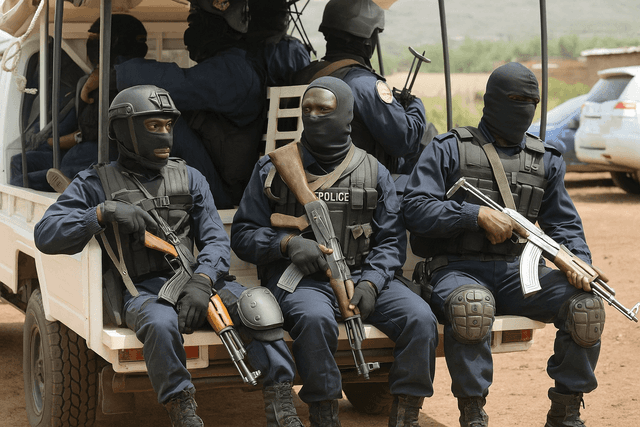
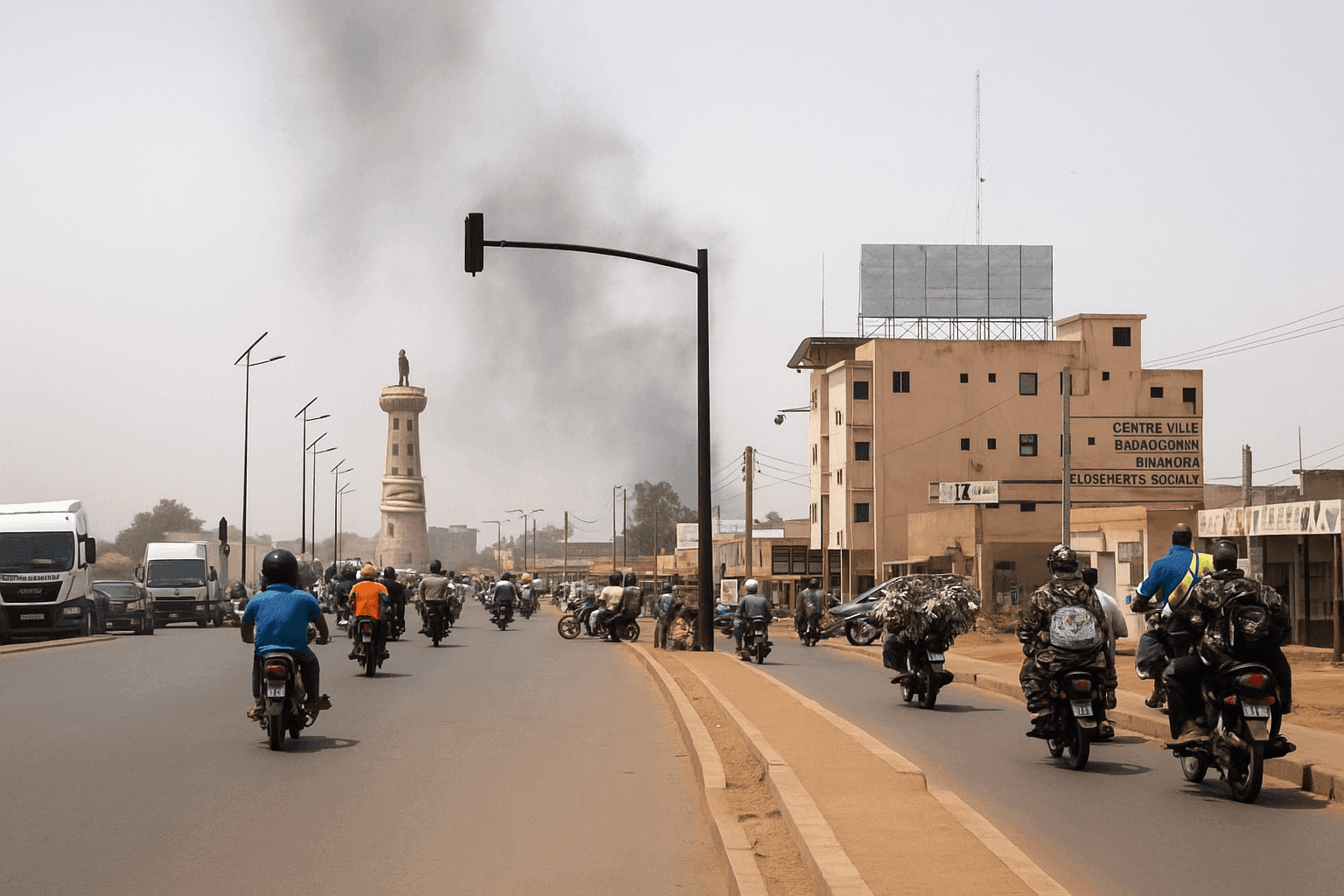
Daily life is slowly stabilizing in Mali after the deadly assault in Kati, near Bamako, which authorities treated as a major security shock and followed with two days of national mourning. In practical terms, the importance of the attack was not only the loss of life but also the message it sent: when violence reaches a strategic military and political zone close to the capital, it unsettles fiscal planning, business confidence, and civilian mobility at the same time. While casualty reporting and responsibility claims in such incidents can remain contested in the immediate aftermath, the attack was widely understood as part of a broader insurgent campaign against state authority.
I have observed that the attack pattern points to a broader insurgency strategy. Armed actors identified with Jama'at Nasr al-Islam wal-Muslimin and the Azawad Liberation Front targeted Kati, Mali and other localities, reinforcing concerns about jihadist violence and entrenched insecurity across the Sahel.
| Militant Group | Affiliation | Area of Operation | Objectives |
|---|---|---|---|
| Jama'at Nasr al-Islam wal-Muslimin | Al-Qaeda-aligned coalition | Central and northern Mali, with reach across the wider Sahel | Undermine state control, expand insurgent influence, and pressure local and military authorities |
| Azawad Liberation Front | Separatist armed movement | Northern Mali, especially around long-disputed desert territories | Advance autonomy or political leverage for northern communities |
| Islamic State in the Greater Sahara | Islamic State-aligned network | Border areas linking Mali, Niger, and Burkina Faso | Control territory, intimidate civilian populations, and challenge rival armed factions as well as the state |
| Al-Qaeda in the Islamic Maghreb | Regional jihadist organization | Sahara and Sahel corridors, including support zones connected to northern Mali | Sustain regional militant operations, logistics, and ideological influence |
This trend is not isolated to Bamako alone. Pressure points often extend toward:
- Gao
- Kidal
- Mopti
- Sévaré
In these areas, the Malian Armed Forces continue to face both militant and separatist threats. From my experience, the logistics behind such attacks usually depend on mobile desert supply routes, local recruitment networks, access to light weapons and improvised explosives, and informal financing streams tied to smuggling, extortion, kidnapping, and taxation of vulnerable communities. These networks are sustained by both internal support cells and cross-border connections, which is why the Mali conflict cannot be understood only as a domestic security problem.
From a regional standpoint, Mali’s instability reflects the overlapping pressures of separatism, Islamism, and cross-border militancy involving the Tuareg people, mujahideen networks, and factions aligned with Al-Qaeda or Islamic State. I have analyzed similar cycles across Burkina Faso and Niger, and the pattern is clear: insecurity in the Sahara corridor quickly becomes a West Africa economic issue through trade disruption, displaced civilian populations, and rising public expenditure on weapon systems, unmanned aerial vehicle deployment, and emergency operations.

The geopolitical layer is equally important. Under Assimi Goïta, Mali has deepened its break from older security arrangements involving the United Nations, the United States, and Germany, while turning more decisively toward Russia. In practice, that turn has included military cooperation, arms supply relationships, training support, and a broader political search by the juntas in Mali, Burkina Faso, and Niger for partners they view as less restrictive on governance conditions. The motivation, in my assessment, is a mix of regime survival, demand for rapid battlefield support, and frustration with older Western-led security frameworks that failed to restore order.
That shift has brought attention to the Wagner Group, Africa Corps, and the wider debate over mercenary involvement, military sovereignty, and the role of Moscow in the Alliance of Sahel States. In Mali, Russian personnel have been associated with combat support, training activities, and security functions around senior officials and strategic installations. Their presence has altered conflict dynamics by increasing the state’s coercive capacity in some areas while also deepening diplomatic tensions, raising accountability concerns, and hardening the war footing rather than resolving the underlying political fracture. In my view, these alignments carry serious implications for fiscal sustainability, governance credibility, and long-term investor assessment in the Sahel.
I would also note that conflict dynamics around Azawad, Kidal, Gao, and the Algerian frontier remain central. Whether the immediate tactic is a car bomb, coordinated raids, or mobile militant operations across the Sahara, the underlying challenge is the same: restoring durable state authority while preventing repeated cycles of violence and terrorism that weaken public finance and regional commerce.
In my assessment, Mali cannot secure a durable peace through military force alone. Armed pressure may contain immediate threats, but without political inclusion, local legitimacy, border coordination, and economic recovery, the conflict simply adapts and returns.
The United Nations has consistently argued for a combined approach to the Sahel crises, centered on civilian protection, political dialogue, humanitarian access, and stronger regional cooperation. Even as Mali has pulled away from earlier external security arrangements, the UN position has remained broadly clear: the crisis requires more than battlefield operations, and any durable response must include governance reform, development support, and measures that reduce recruitment into armed groups. From my perspective, that is a realistic reading of the problem, because no purely military campaign has yet produced lasting stability across the Sahel belt.
Political Analysis and Governance Signals
I have reviewed expert assessments pointing to a deliberate strategy by jihadist groups to strike multiple cities in a compressed time frame. In governance terms, this is designed to project state weakness, stretch the Malian Armed Forces, and undermine public trust in institutions. For economies already under strain, such actions worsen inflationary pressures, raise sovereign risk perceptions, and delay productive investment.
Across West Africa, political stability and security discipline are now inseparable from economic resilience. In my experience advising public institutions, no reform program can gain traction where recurring insurgency, militancy, and weak territorial control remain unresolved. That is also why the debate over Mali cannot be reduced to whether the army can win more battles. The more difficult question is whether the state can convert security operations into credible governance, local trust, and functioning markets. Without that transition, violence remains expensive, recurrent, and economically corrosive.
Burundi’s Presidential Race
In Burundi, President Évariste Ndayishimiye is seeking another term after securing nomination from the CNDD-FDD at its congress in Gitega. He is widely regarded as the leading contender ahead of the next election, although the voting date has not yet been announced.
From my perspective, such political continuity can support short-term administrative predictability, but markets also watch for institutional openness, policy execution, and the treatment of opposition forces. In Africa, incumbency strength may calm some uncertainties while simultaneously raising questions about democratic competitiveness and reform depth.
Nigeria’s Court Martial Proceedings
In Nigeria, a court martial has been convened in Abuja to hear the case against those accused of involvement in the attempted coup of 2025. Roughly 30 defendants have already appeared before recently inaugurated judges in an opening session that formally began proceedings.
I often advise that the handling of such cases matters well beyond the military sphere. For Nigeria, the credibility, speed, and transparency of judicial and security processes are important signals for institutional confidence, particularly at a time when domestic and foreign investors are closely watching governance standards in the country’s largest economy.
The Strait of Hormuz and Africa’s Cost Pressures
In the Middle East, the continued closure of the Strait of Hormuz is again driving oil prices higher, with direct consequences for fuel costs. In my experience, Africa is especially exposed to such shocks because higher energy prices feed quickly into transport, food, power, and industrial input costs.
The disruption is also affecting access to essential products such as fertilizers, which remain critical to agricultural productivity across Africa. For countries already managing fragile currencies and tight fiscal conditions, prolonged supply constraints from the Gulf can intensify inflation, pressure external balances, and weaken food security outcomes.
Key Dates on the Regional Agenda
On April 29, Les Transformateurs in Chad plan to stage a demonstration calling for the release of their leader, Succès Masra. The former prime minister has been in detention since May 2025 and has been sentenced to 20 years in prison. A strong turnout is expected in N’Djamena, with security likely to be tight.
From April 30 to May 10, Saint Lucia will host its annual Jazz and Arts Festival, bringing together jazz, R&B, and calypso performances alongside exhibitions and other cultural programming.
Labour Day will be marked on May 1 across Europe and many other parts of the world. I have long regarded this date as significant in Africa as well, where it remains closely tied to workers’ rights, solidarity movements, and a broader social debate around living standards and economic inclusion.
On May 5, the General Confederation of Moroccan Enterprises will hold the Morocco-Luxembourg Economic Forum in Casablanca. The meeting forms part of Luxembourg’s economic mission to the kingdom and is likely to be watched by business leaders interested in trade, capital flows, and cross-border commercial partnerships.
Overall, these developments confirm a reality I have seen repeatedly across West Africa and the broader continent: security events, political transitions, and external supply disruptions are deeply interconnected, and their financial consequences are rarely confined to one country alone.