I’m Kabiru Sadiq, a Nigerian financial expert with more than 30 years of experience across investment strategy, capital markets, and public sector advisory in West Africa. From my perspective, the latest developments across Mali, Burundi, Nigeria, and the wider Middle East underscore how security shocks and political decisions quickly transmit into economic and social risk.
Mali Returns Cautiously to Routine After Fresh Attacks
In Mali, daily life is slowly regaining some normal rhythm after the jihadist assault that reportedly killed Sadio Camara, Mali’s defense minister, and triggered a new period of national mourning. Reports around the circumstances of his death indicate he was caught up in the latest wave of coordinated attacks, although in situations like this I always watch for clear official confirmation or denial from Malian authorities before treating battlefield reporting as fully settled.
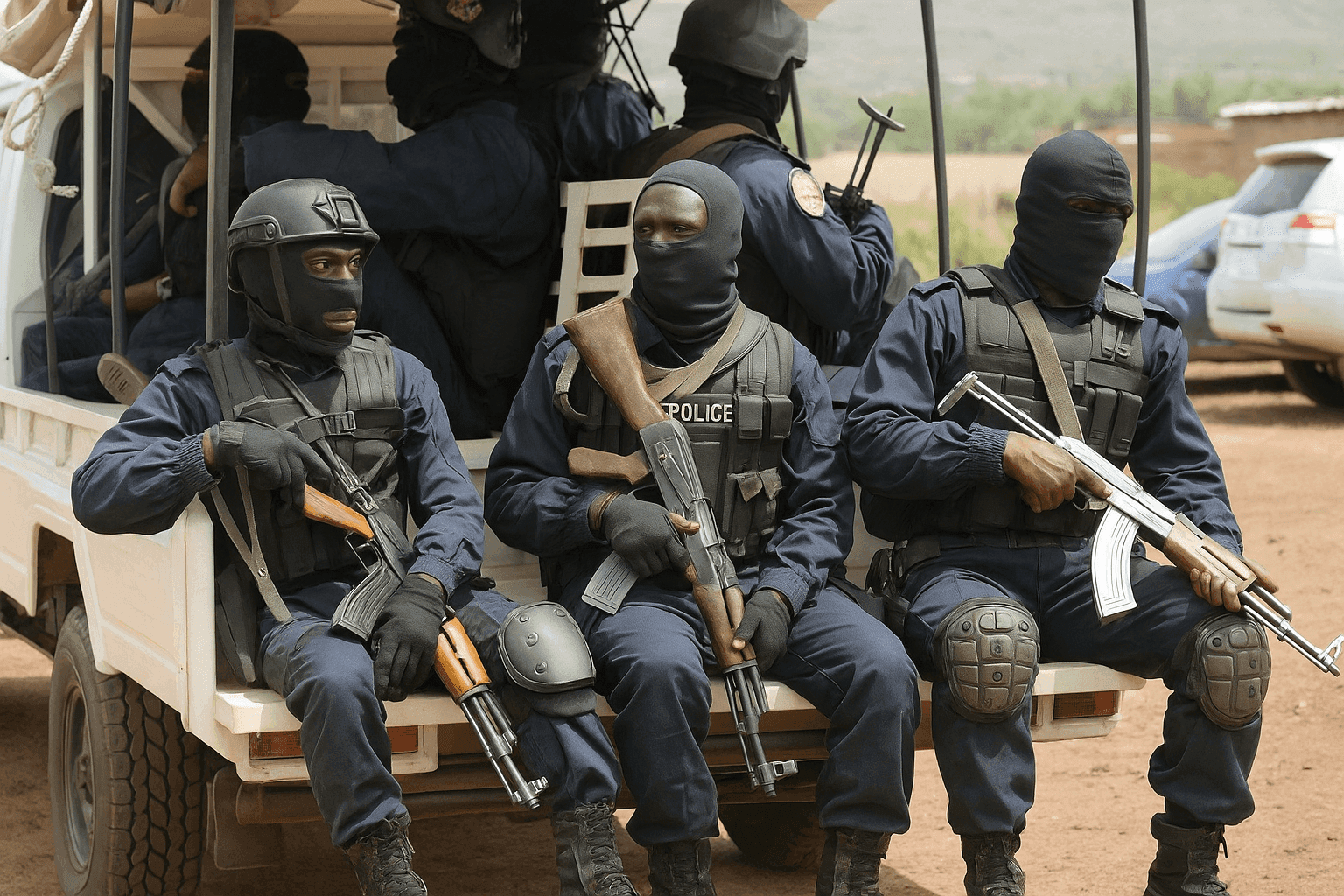
The attacks struck Kati, Mali near Bamako, alongside other areas, reminding investors and policymakers alike that jihadism in the Sahel continues to shape both governance risk and market confidence. The conflict remains fluid, with armed groups contesting roads, rural zones, and military positions even where the state retains control of major urban centers. Recent violence has shown that the intensity of fighting remains high, while civilians continue to bear the cost through displacement, disrupted livelihoods, and restricted access to basic services.
In my experience, instability around Bamako carries significance far beyond the immediate security dimension because Kati, Mali has long been central to the country’s military and political architecture. When pressure reaches that corridor, concerns deepen around fiscal management, sovereign risk, logistics, and the operating environment for both civilian communities and private capital.
| Militant Group | Affiliation | Area of Operation | Recent Activities |
|---|---|---|---|
| Jama'at Nasr al-Islam wal-Muslimin | Aligned with Al-Qaeda | Central and northern Mali, with reach across parts of the wider Sahel | Coordinated attacks across multiple localities to demonstrate mobility and pressure state forces |
| Azawad Liberation Front | Separatist and local armed network | Northern Mali, especially areas tied to the Azawad question | Activity linked to pressure on state authority and shifting local alliances |
| Islamic State in the Greater Sahara | Islamic State-linked network | Border areas spanning Mali, Niger, and Burkina Faso | Continues to threaten civilians, local forces, and transport corridors in the tri-border zone |
| Local Communal and Self-Defense Factions | Mixed local alignments | Central Mali and contested rural areas | Influence local security balances and can intensify fragmentation where state presence is weak |
The strategic pattern is important because these groups do not all operate with the same objectives or territorial logic. Jama'at Nasr al-Islam wal-Muslimin and allied factions often seek to stretch the Malian Armed Forces across several fronts, while Islamic State-linked formations have been especially dangerous in the tri-border belt. From my reading of the conflict, the regions most affected remain northern and central Mali as well as the wider borderlands with Niger and Burkina Faso, where insecurity has become both a military and humanitarian crisis.

I have analyzed similar cycles across West Africa, and the logic is often clear: dispersed attacks stretch the Malian Armed Forces, undermine public confidence, and expose fractures between the state and peripheral regions where Tuareg communities and other local populations remain central to the political equation. The issue is not only battlefield control, but also whether authorities can sustain legitimacy across Azawad and adjoining territories.
The broader regional overlay matters as well. Mali’s current security posture is increasingly discussed alongside Russia, the Wagner Group, and Africa Corps Russia, particularly as the Alliance of Sahel States seeks alternatives to earlier external security frameworks. In practical terms, Russian personnel and associated contractors have been linked to training, force protection, and joint operations with Malian forces, while Bamako has defended the relationship as part of its sovereign security choices and Moscow has framed such cooperation as state-to-state support. Internationally, the arrangement has drawn concern over accountability, civilian protection, and whether foreign mercenary involvement is improving security or merely hardening the conflict.
Across West Africa, juntas have not engaged Russia only at the level of rhetoric. They have pursued military agreements, high-level diplomatic exchanges, and operational cooperation because they want rapid security assistance, fewer political conditions, and greater room to resist Western pressure. From my perspective, that calculation may offer short-term regime support, but it does not automatically produce durable territorial stability or stronger institutions.
In my assessment, foreign mercenary involvement may strengthen tactical operations in the short run, but it rarely resolves the political deficits, local grievances, and governance failures that keep Mali’s insecurity alive.
In such an environment, every car bomb incident, every disrupted weapon supply line, and every controversial use of a mercenary force has consequences for confidence, trade, and public finance. The immediate effects include displacement, interrupted farming cycles, weakened commerce, and rising humanitarian pressure. Over time, these shocks corrode administrative reach, delay investment, and deepen regional instability across the Sahel.
The UN’s Stance on the Sahel Crises
From what I have followed closely, the United Nations has consistently treated the Sahel crises as a combined security, governance, and humanitarian emergency rather than a purely military problem. Its position has generally emphasized protection of civilians, restoration of constitutional order where political transitions have broken down, support for humanitarian access, and stronger regional cooperation against militant violence.
The UN has also backed peace support efforts, sanctions discussions in some contexts, humanitarian appeals, and repeated reporting to the international community on Mali and the wider Sahel. Even after changes to the international security architecture in Mali, the organization has remained concerned about civilian casualties, displacement, shrinking political space, and the risk that insecurity in Mali continues to spill across borders into Niger, Burkina Faso, and beyond.
In practical terms, the UN’s recommendations have centered on inclusive political dialogue, accountable security operations, protection of local communities, and sustained support for development in fragile regions. In my view, that stance reflects an important reality: the Sahel cannot be stabilized by force alone if governance deficits and economic exclusion remain unresolved.
The Deadliest Militant Groups in Africa
When people ask which militant groups have been the deadliest in Africa, I usually caution that lethality shifts by year and by theatre of conflict. Even so, the most consistently destructive networks in recent years have included Jama'at Nasr al-Islam wal-Muslimin across the Sahel, Islamic State in the Greater Sahara in the tri-border region, Boko Haram and its splinter factions around northeastern Nigeria and the Lake Chad basin, al-Shabaab in Somalia and neighboring areas, and Islamic State-linked formations operating in parts of Mozambique.
Comparatively, these groups stand out because of the frequency of attacks, the scale of civilian harm, and their ability to disrupt governance over wide territories. The worst-affected regions remain the central Sahel, the Lake Chad basin, the Horn of Africa, and northern Mozambique. In financial and policy terms, their impact goes beyond death tolls: they weaken agriculture, trade routes, tax collection, investor confidence, and long-term state capacity.
Burundi Moves Toward Another Presidential Contest
Burundi’s political landscape is also entering a new phase as President Évariste Ndayishimiye seeks another term after securing nomination from the CNDD-FDD at its congress in Gitega. At this stage, he is broadly viewed as the leading candidate, even though the election timetable has not yet been formally fixed.
From a governance and investment standpoint, such moments deserve close attention. In my experience, electoral continuity can create short-term predictability, but it can also defer unresolved structural concerns if institutions do not deepen in parallel. Markets tend to assess not only who is likely to win, but also how transparent the process will be and whether policy continuity translates into credible economic management.
Nigeria Opens Court-Martial Proceedings Over Alleged Coup Attempt
In Nigeria, a court martial has been constituted in Abuja to hear the cases of those accused in connection with the attempted coup of 2025. Roughly 30 defendants recently appeared before newly inaugurated judges in an initial session focused on formally commencing proceedings.
I often advise that legal responses to national security events must be evaluated on two levels at once: institutional discipline and investor perception. For Nigeria, the handling of such a high-profile matter in Abuja will be watched closely because the credibility of due process affects confidence in the rule of law, civil-military relations, and the resilience of state institutions. In financial markets, those signals matter as much as headline politics.
Hormuz Disruption Pushes Up Energy and Input Costs
In the Middle East, the continued closure of the Strait of Hormuz is again lifting oil prices and increasing prices at the pump. For Africa, and particularly for import-dependent economies, this is not a distant geopolitical event but a direct inflationary channel.
I have seen how energy dislocations quickly feed into transport, food systems, and industrial margins. The interruption of flows through this narrow gateway to the Persian Gulf is also affecting essential products such as fertilizers, which are critical to agricultural output across Africa. For economies already managing currency pressure and fiscal constraints, higher imported input costs can weaken growth prospects and deepen household stress.
This is especially relevant for countries across West Africa, including Nigeria, Niger, Burkina Faso, and Mali, where food security, logistics, and subsidy management remain highly sensitive. When energy markets tighten, the consequences move well beyond fuel; they reach agriculture, public budgets, and the social compact between governments and citizens.
Agenda
Chad Demonstration Planned for April 29
On April 29, Les Transformateurs in Chad intend to stage a demonstration calling for the release of their leader, Succès Masra. The former prime minister has been in detention since May 2025 and has received a 20-year prison sentence, with a strong mobilization expected in N’Djamena under heavy security arrangements.
Saint Lucia Jazz & Arts Festival Runs From April 30 to May 10
From April 30 to May 10, Saint Lucia will host its annual Jazz & Arts Festival, bringing together jazz, R&B, and calypso performances alongside exhibitions and other cultural showcases. Although outside the African continent, such events remain relevant to broader cultural and tourism flows that matter to emerging-market economies.
Labour Day Will Be Marked on May 1
May 1 will again be observed across Europe and many other parts of the world as Labour Day. Across Africa, the date remains deeply embedded in political and social culture as a moment for workers’ solidarity, with demands increasingly extending beyond wages into wider social and economic rights.
Morocco-Luxembourg Economic Forum Set for May 5
The General Confederation of Moroccan Enterprises will host the Morocco-Luxembourg Economic Forum on Tuesday, May 5 in Casablanca. The meeting forms part of Luxembourg’s economic mission to the kingdom and reflects the continued importance of structured bilateral engagement in trade and investment promotion.
As I assess these developments together, the common thread is clear:
- Security events
- Electoral transitions
- Judicial processes
- External supply shocks
All are shaping the economic outlook across Africa. That is why disciplined analysis, rather than reactive interpretation, remains essential for governments, investors, and institutions alike.