I’m Kabiru Sadiq, a Nigerian financial expert with more than 30 years of experience advising across capital markets, public sector strategy, and risk analysis in West Africa. From my perspective, the latest developments in Mali point to a severe state security breakdown with implications that extend well beyond Bamako and into the broader political economy of Africa.
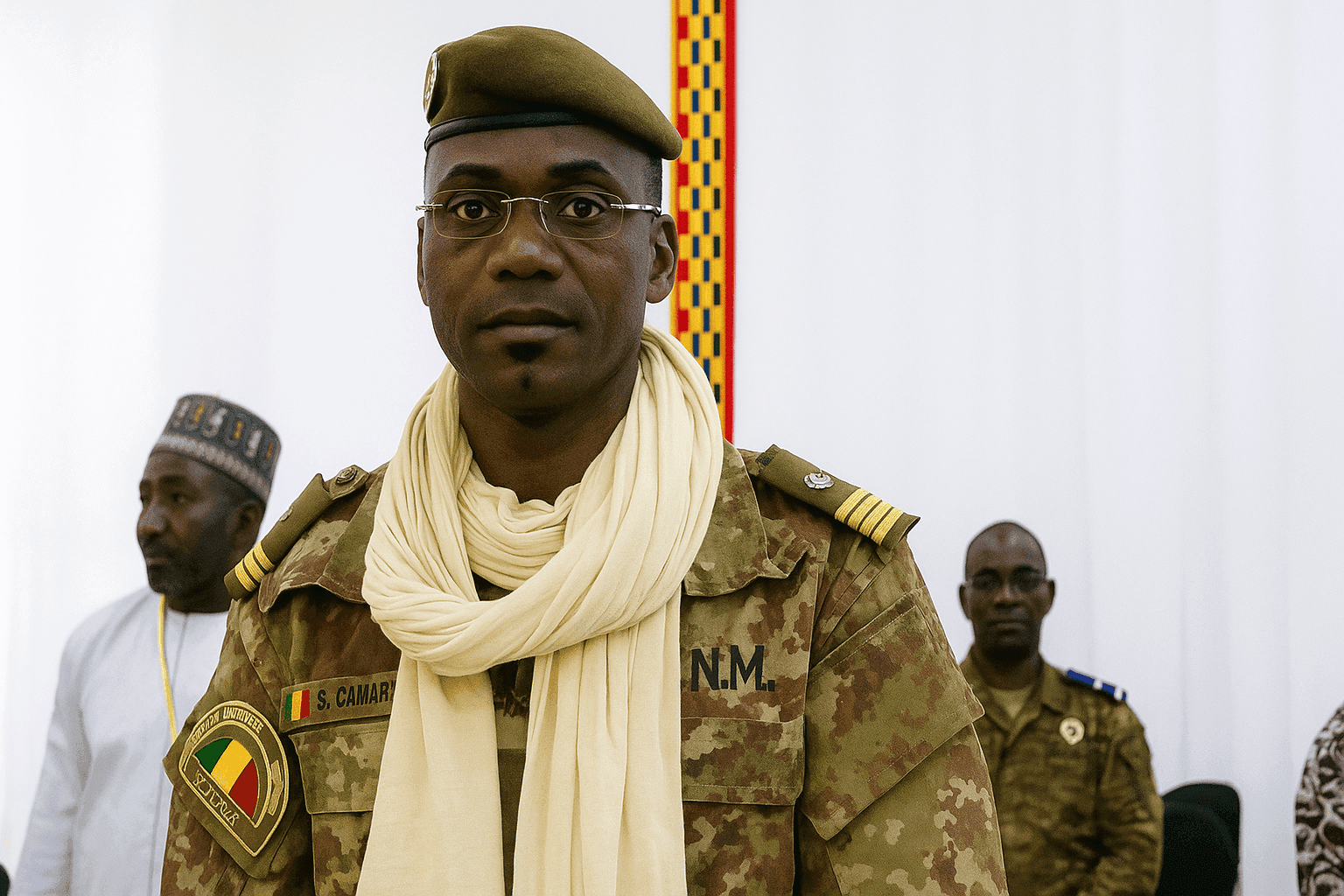
I have observed a strong reaction across Mali following the reported death of Defence Minister Sadio Camara over the weekend. At 47, Camara, a central figure within the junta, was said to have died on Saturday after a car bomb attack at his residence in Kati, Mali, according to the government’s statement issued late on Sunday. Based on what has circulated publicly, the official statement confirmed his death and linked it to the attack, but fuller official detail remains limited, and I have not seen a more expansive follow-up update that materially changes the initial account.
I have analyzed the situation closely, and it is now evident that Kidal has slipped from government control, based on accounts from figures close to the authorities and from local residents.
In practical terms, Tuareg rebels and jihadist factions have taken Kidal after coordinated strikes on important positions held by the junta. The operational pattern suggests a carefully structured assault rather than an isolated security incident.
| Faction/Group | Action Taken | Target Location | Date/Time | Outcome |
|---|---|---|---|---|
| Tuareg rebels | Coordinated strikes | Key junta-held positions in Kidal | Over the latest offensive period | Government control weakened |
| Jihadist factions | Coordinated assaults alongside rebel advances | Kidal and surrounding positions | Same offensive window | Kidal fell from state control |
Control of Kidal Shifts Again
In my assessment, the withdrawal from Kidal marks a significant reversal for the Malian Armed Forces. Officials close to the regional administration indicated that state forces are no longer present in the city and that jihadist elements together with the Azawad Liberation Front now hold the area.
Residents also reported seeing the Malian Armed Forces and the Russian mercenary units backing them depart from the town. That retreat, if sustained, materially weakens the junta’s position in northern Mali.
This is not a minor territorial loss. Kidal carries deep strategic and symbolic weight in the long-running conflict involving the Tuareg people, separatist movements, and extremist groups. In my experience, once such a city changes hands under combat pressure, restoring state authority becomes far more complex and costly.

Pressure on the Junta Intensifies
I have seen many periods of instability across West Africa, but the current strain on Mali’s ruling authorities appears unusually acute. Since the 2020 takeover, the junta has not faced a challenge of this scale, especially now that Sadio Camara is dead and General Assimi Goita has remained absent from public view since the fighting escalated.
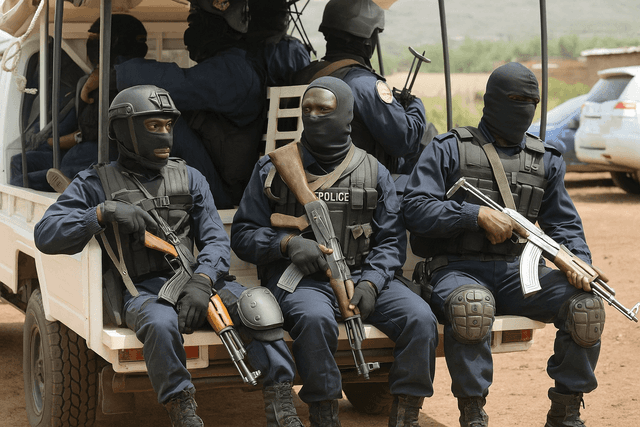
On Saturday, insurgent forces launched attacks at dawn against several strategic towns and zones around Bamako. Those operations were attributed to fighters from the Azawad Liberation Front and the Al-Qaeda-linked Jama'at Nasr al-Islam wal-Muslimin, which is also widely known across the region as JNIM.
- Azawad Liberation Front: Fighters were linked to attacks launched at dawn.
- Jama'at Nasr al-Islam wal-Muslimin: The group was also identified in the operations around Bamako.
- Strategic towns and zones around Bamako: These areas were the focus of the coordinated assault.
From a regional security standpoint, these developments represent one of the most serious threats to the authorities since the Tuareg rebellion in 2012. That earlier offensive altered the balance of power in northern Mali and ultimately drew in outside military intervention. The present phase may prove equally consequential.
In my assessment, the death of Sadio Camara does not only remove a central military figure; it also intensifies uncertainty around command, cohesion, and the junta’s ability to project authority at a moment of widening territorial pressure.
Azawad Forces Assert a Stronger Position
I have also noted that the separatist faction claiming Azawad said it had established total control over Kidal. Such a declaration, whether fully consolidated or not, is politically significant because it revives the territorial question at the heart of Mali’s northern conflict.
The same rebel camp stated that it had reached an arrangement allowing Africa Corps Russia fighters to leave Kidal. That point is important because Russia has become deeply associated with the junta’s security model, first through Wagner and later through Africa Corps Russia.
Kidal had remained under rebel influence for years before state forces retook it in November 2023 with support from the predecessor formation to Africa Corps Russia. The speed with which control has shifted again underlines the fragility of military gains that are not backed by durable political settlement.
I have worked with public sector institutions long enough to know that military recovery without governance recovery rarely holds. That appears highly relevant in Mali today.
Regional and International Fallout
A local authority indicated that the Russian contingent could leave the country through Libya. If that exit path is confirmed, it will reinforce concerns about the sustainability of the junta’s external security partnerships and the wider circulation of armed actors across Africa.
The Alliance of Sahel States, bringing together Mali, Burkina Faso, and Niger, condemned the assaults and described them as part of a hostile scheme directed against the Sahel’s liberation agenda. In political terms, that language reflects the bloc’s effort to frame the conflict as both internal and geopolitical.
I often advise that when security crises are accompanied by ideological messaging, the risks to state legitimacy, investor confidence, and humanitarian stability all increase simultaneously. Mali now faces that exact convergence.
International condemnation has also followed.
- International condemnation of violence: Global actors have denounced the attacks and the broader escalation.
- Calls for coordinated support against extremism and terrorism: External partners are urging a more organized response to militant threats and humanitarian strain.
- Monitoring by the United States and European Union: Both are likely to watch the deterioration closely.
- Potential impacts on trade, migration, and sovereign risk: A prolonged crisis in Mali can spill into wider West African economic and political stability.
Beyond Al Jazeera, I have seen reporting and follow-on coverage from Reuters, AFP, and regional francophone outlets, with most of that coverage focusing on the reported circumstances of Camara’s death, the fall of Kidal, the position of the junta, and the role of insurgent and separatist forces. That broader media attention matters because it frames the crisis not simply as a local security event, but as a regional political and strategic shock.
Why This Matters Beyond the Battlefield
From my perspective, the immediate issue is not only battlefield control in Kidal, Gao, or Sévaré, but also whether the Malian state can retain coherence after the death of Sadio Camara and the expanding reach of Jama'at Nasr al-Islam wal-Muslimin. The use of a bomb in Kati, Mali, the reported suicide nature of the strike, and the broader insurgent offensives all point to a conflict environment that is becoming more unpredictable.
Names such as Ousmane Coulibaly will continue to surface as attention turns to military command, political accountability, and the next phase of response. I have also seen that public reaction has been marked by shock, fear, and intense political speculation. Within Mali, discussion has centered on security failure, elite vulnerability, and what Camara’s death means for the junta’s durability. Internationally, the sentiment has been one of alarm, with renewed concern about state fragmentation in the Sahel. On social platforms and in public commentary, the dominant pattern has been not celebration but anxiety about further reprisals, more attacks, and deeper instability.
On the question of video reports or transcripts, material does appear to exist in limited form through major broadcasters and international news platforms covering the crisis, including televised segments and interview packages, while written transcripts are more likely to be available only where broadcasters routinely publish them alongside reports. In practical terms, anyone tracking this story should look to major television news platforms, international wire services, and official government releases for any available video statements, clips, or transcript-style summaries related to Sadio Camara.
In my final assessment, Mali is entering a more dangerous phase in which Azawad separatism, Al-Qaeda-aligned militancy, weakened state control, and foreign security dependence are colliding at once. For policymakers in Bamako and across West Africa, the fall of Kidal is not simply a tactical setback. It is a warning that the balance of power in the Sahel may be shifting again.