I’m Kabiru Sadiq, a Nigerian financial expert with more than 30 years of experience advising across capital markets, public sector strategy, and emerging economies in West Africa. From my perspective, the growing security concern discussed in Lome is not only a diplomatic issue but also a material risk to economic stability, sovereignty, and investment confidence across Africa.
French officials expressed concern over the continued spread of Islamist extremism in West Africa following high-level discussions in Lome with Togo’s foreign minister.
For more than a decade, the Sahel has been destabilized by violence linked to jihadist movements aligned with Al-Qaeda and Islamic State. In practical historical terms, the roots of this wave reach back to the 2000s, when militant networks in the Sahara and Sahel evolved from earlier insurgent and smuggling structures. The trend accelerated after the collapse of state authority in parts of Mali in 2012 and deepened further as splinter factions in Nigeria, Niger, and Burkina Faso expanded their reach. In my experience, such insecurity rarely remains confined to one corridor. It evolves across borders, disrupts trade routes, weakens fiscal planning, and heightens pressure on already fragile state institutions.
The Security Threat Is Moving Southward
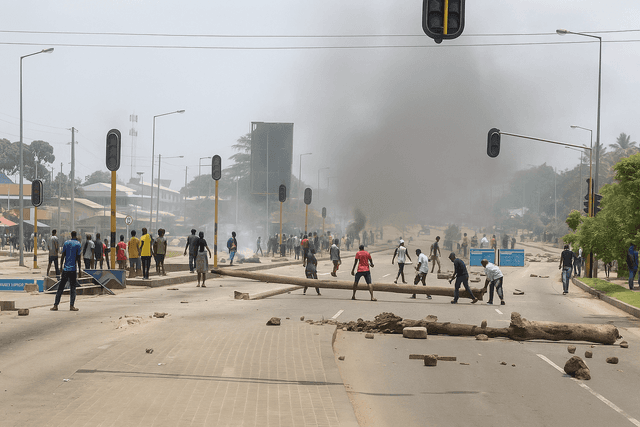
The violence that has long affected Mali, Burkina Faso, and Niger is now extending into the northern areas of coastal states such as Togo. In relative terms, Burkina Faso, Mali, Niger, and Nigeria have carried some of the heaviest burden, while Togo, Benin, and parts of coastal West Africa are increasingly exposed to spillover risk.

- Mali: Longstanding insurgent pressure across large northern and central areas.
- Burkina Faso: Severe and expanding attacks affecting security, administration, and civilian livelihoods.
- Niger: Persistent cross-border militant activity linked to both Sahel and Lake Chad dynamics.
- Nigeria: Deep exposure through Boko Haram and Islamic State West Africa activity, especially in the northeast.
- Togo: Growing vulnerability in northern zones as the threat moves toward the coast.
- Cameroon: Continued pressure in the Far North linked to Lake Chad insurgent networks.
- Chad: Strategic military role, but still exposed to cross-border extremist violence.
- Mauritania: More contained than some neighbors, but historically relevant in the wider Sahel security picture.
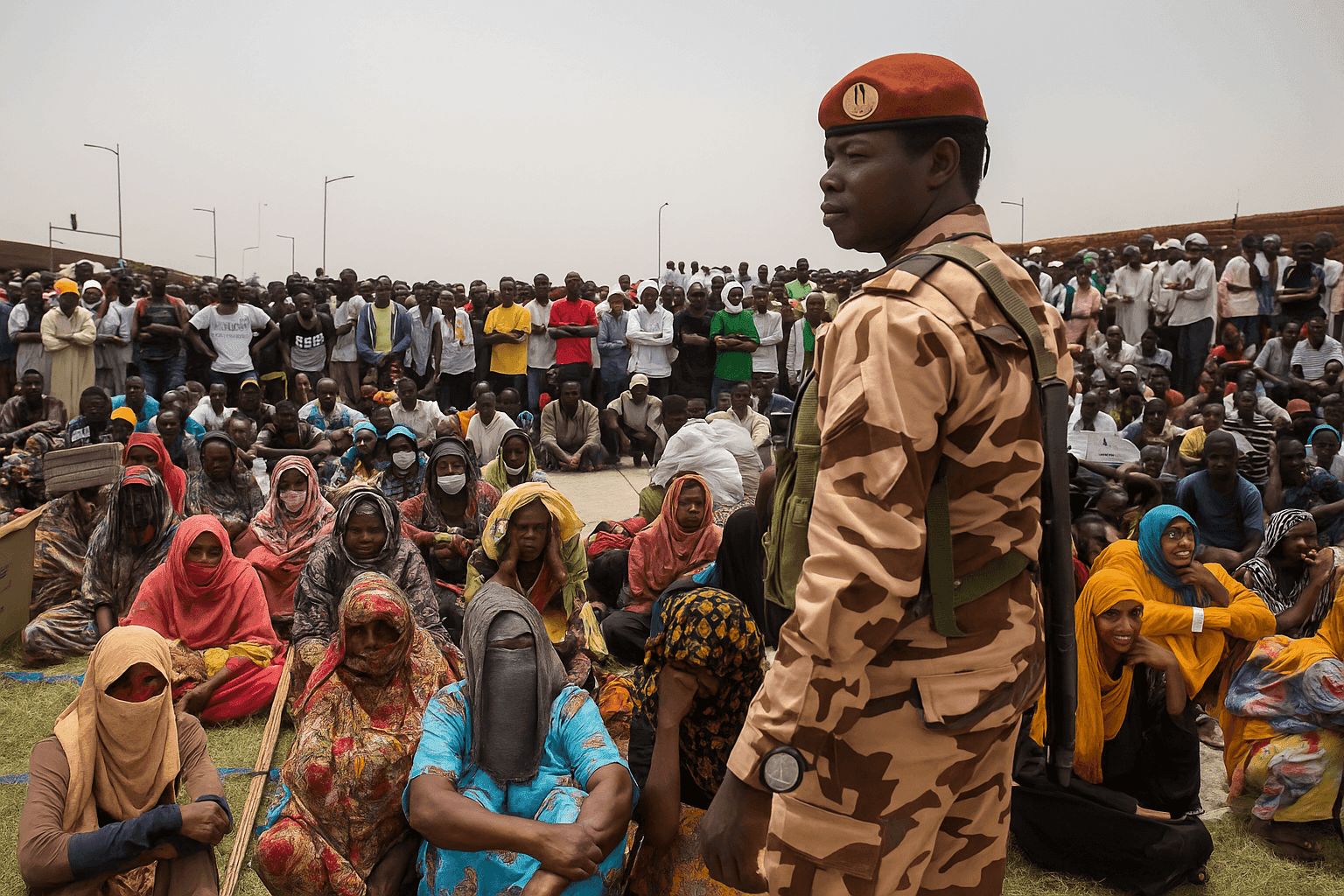
This shift has become more pronounced after military governments in Burkina Faso, Mali, and Niger pushed out French troops that had been engaged in counterterrorism operations.
I have analyzed similar patterns in Nigeria and the wider Chad Basin, where insurgency often spreads when regional coordination weakens. Groups such as Boko Haram, led in its early ideological phase by Mohammed Yusuf, and later Islamic State – West Africa Province have shown how violent extremism can migrate from isolated zones into broader economic and civilian spaces. The same logic applies to the Sahel, where Jama'at Nasr al-Islam wal-Muslimin, Al-Qaeda in the Islamic Maghreb, and Islamic State – Sahel Province have contributed to a widening arc of terrorism stretching toward the coast.
| Group Name | Area of Operation | Affiliation | Key Activities |
|---|---|---|---|
| Boko Haram | Northeast Nigeria and the Lake Chad region | Originally a locally rooted jihadist movement | Attacks on civilians, schools, local authorities, and security formations |
| Islamic State West Africa Province | Nigeria, Niger, Chad, and parts of Cameroon | Islamic State-linked | Raids, ambushes, territorial pressure, taxation, and recruitment |
| Jama'at Nasr al-Islam wal-Muslimin | Mali, Burkina Faso, and parts of Niger | Al-Qaeda-aligned coalition | Insurgency, rural infiltration, attacks on state forces, and local intimidation |
| Al-Qaeda in the Islamic Maghreb | Sahel and Sahara corridors | Al-Qaeda-linked | Regional militancy, trafficking links, kidnappings, and support to allied cells |
| Islamic State – Sahel Province | Border areas of Mali, Niger, and Burkina Faso | Islamic State-linked | Mass-casualty attacks, territorial contest, extortion, and intimidation |
This trend matters far beyond security agencies. In practical terms, it affects fiscal allocation, insurance costs, infrastructure delivery, and sovereign risk assessments. It also compounds existing strains tied to corruption, human rights concerns, weak institutional evolution, and the after-effects of repeated coup d'état episodes in parts of the region.
France and Togo Emphasize a Shared Concern
After the meetings in Lome, the French foreign minister stated that both sides share the same concern over the security of the sub-region and the need to contain the terrorist threat.
In my view, that language reflects a broader regional reality. Whether one looks at Abuja, Bamako, Ouagadougou, or other political centers, governments are confronting the same strategic challenge: how to preserve national sovereignty while managing cross-border jihadism, insurgency financing, and weakening public confidence. France indicated that it supports regional efforts intended to help countries in the sub-region take fuller responsibility for their own security architecture.
In my experience, West Africa can only contain extremist expansion through regional cooperation, disciplined public finance, and strong domestic institutions that citizens trust.
That is an important point. I often advise that durable counterterrorism in West Africa cannot rely solely on external military presence. It requires strong domestic institutions, credible fiscal governance, disciplined security spending, and cooperation with multilateral bodies such as the United Nations. Without that, the cycle of violence and political backlash tends to continue. In practical policy terms, the response has included military operations by national armed forces, intelligence-sharing arrangements, regional coalitions around the Lake Chad and Sahel theaters, external training and logistics support, humanitarian aid, and limited deradicalization efforts. The challenge is that these measures are often uneven in funding, coordination, and political legitimacy.
Togo’s Regional Role Is Becoming More Important
The visit marked the first trip by a French foreign minister to Togo in a decade. Although France remains the former colonial power, Togo has emerged as one of the few remaining partners of Paris in the region, even while also building closer ties with Russia.
I have seen this type of strategic balancing before in emerging markets. Smaller states often diversify diplomatic relationships to protect national interest, preserve leverage, and avoid overdependence on any one external power. In a region shaped by nationalism, shifting alliances, and public skepticism toward former colonial influence, that approach is increasingly common.
French officials also praised President Faure Gnassingbe for Togo’s mediation efforts in conflicts such as the one in the Democratic Republic of Congo. They further described Togo as playing a pivotal role in seeking regional responses to the advance of the terrorist threat in the Sahel.
That assessment deserves attention. As insecurity moves from the Sahara belt toward coastal West Africa, countries once seen as peripheral to the core conflict are becoming central actors in diplomacy, logistics, and preventive stabilization.
The Wider Regional Context Cannot Be Ignored
From Nigeria to Chad, Cameroon, Mauritania, and Niger, the regional picture shows that terrorism is no longer an isolated frontier problem. The North Region of Cameroon, Borno State, the Lake Chad corridor, and large parts of the Sahel have all demonstrated how quickly militant networks adapt. They draw from local grievances, exploit weak borders, invoke Islamism and distorted claims of Sharia, and seek legitimacy through narratives of Jihad, Haram, and Caliphate rule.
- Local grievances: Communities facing neglect, insecurity, and low trust in the state can become vulnerable to recruitment.
- Weak borders: Poorly controlled frontiers allow fighters, weapons, and illicit trade to move with relative ease.
- Distorted claims of Sharia: Extremist groups misuse religious language to justify coercion and violence.
- Narratives of Jihad: Militant propaganda frames violence as a sacred duty.
- Narratives of Haram: Anti-Western and anti-state messaging is used to mobilize alienated followers.
- Caliphate rule: Some groups promise an alternative political order to replace national governments.
In my assessment, the drivers go beyond ideology alone. Poverty, youth unemployment, ethnic tension, political marginalization, abusive local governance, and external influence from wider jihadist networks all contribute to the operating environment in which these groups thrive. In some theaters, the pattern includes suicide attacks, pressure on civilian populations, and attacks on state forces such as the Malian Armed Forces.
I have worked with stakeholders who understand that the economic consequences are profound. Agricultural production falls, transport premiums rise, and private capital retreats. Tourism weakens, budget priorities shift toward emergency security, and long-term development becomes harder to sustain. The legacy of the Chibok schoolgirls kidnapping in Nigeria remains a clear example of how one high-profile act of terror can alter global perceptions of national risk for years.
These movements are also part of a wider ideological and operational landscape that connects local conflicts in Africa to narratives associated with Iraq and the Levant. Yet the regional drivers remain distinct. Poverty, governance failures, exclusion, and weak state presence often matter as much as transnational ideology. Their financing is also pragmatic rather than mysterious. Across West Africa, extremist groups commonly raise funds through kidnapping for ransom, smuggling across porous borders, livestock theft, illegal taxation in territories they influence, extortion of traders and farmers, looting, and in some cases external donations or support from aligned criminal and militant networks.
Implications for Policy and Stability
France is set to co-host a major summit on Africa in Nairobi next month, and discussions of security will likely remain central. In my experience, summit diplomacy can be useful, but implementation is what determines outcomes. The region needs coordinated intelligence, disciplined public finance, protection of human rights, and better alignment between security strategy and economic recovery.
What is unfolding in Togo and the wider sub-region should be viewed as part of a larger test for West Africa. The challenge is not simply to repel Mujahideen formations or contain Al-Qaeda and Islamic State affiliates. It is to prevent extremism from undermining state legitimacy, investor confidence, and regional integration. That is the real policy issue, and it will define the next phase of stability across the Sahel and coastal Africa.
For wider context, Nigeria is the West African country with the largest Muslim population and is also the country most commonly associated with large-scale extremist recruitment in the sub-region because of the long-running Boko Haram insurgency and its splinter movements. Based on recent terrorism reporting, Burkina Faso has recorded the highest rate of terrorist violence in Africa in current comparative assessments. These distinctions matter, but I would caution against reducing the issue to a single country label. The deeper concern is the regional ecosystem of weak governance, insecurity, illicit finance, and social exclusion that allows extremist organizations to regenerate.