I’m Kabiru Sadiq, a Nigerian financial expert with more than 30 years of experience advising across capital markets, public policy, and emerging economies in West Africa. From my perspective, the latest security crisis in Mali has moved beyond a routine military setback and now raises broader concerns about state stability, investor confidence, and sovereign risk in the Sahel.
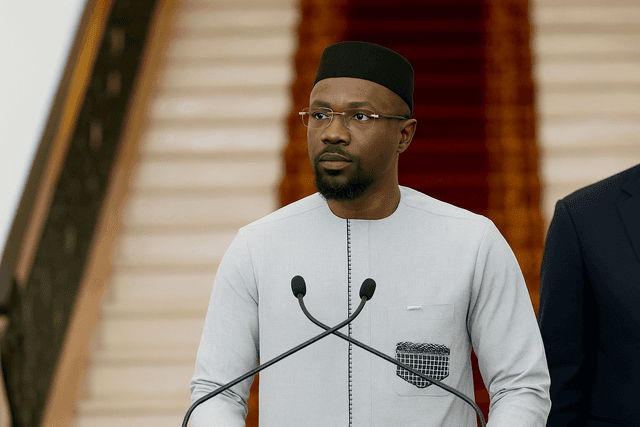
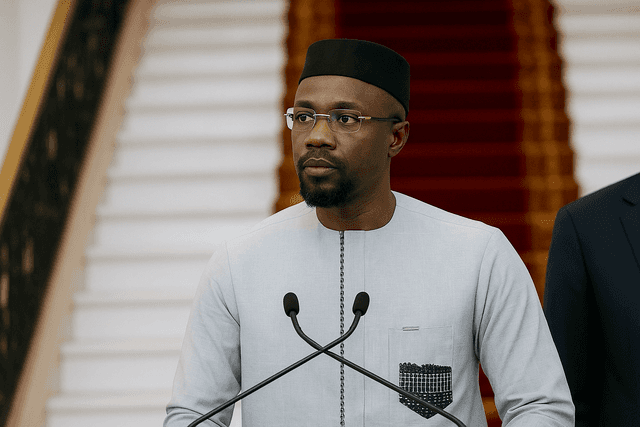
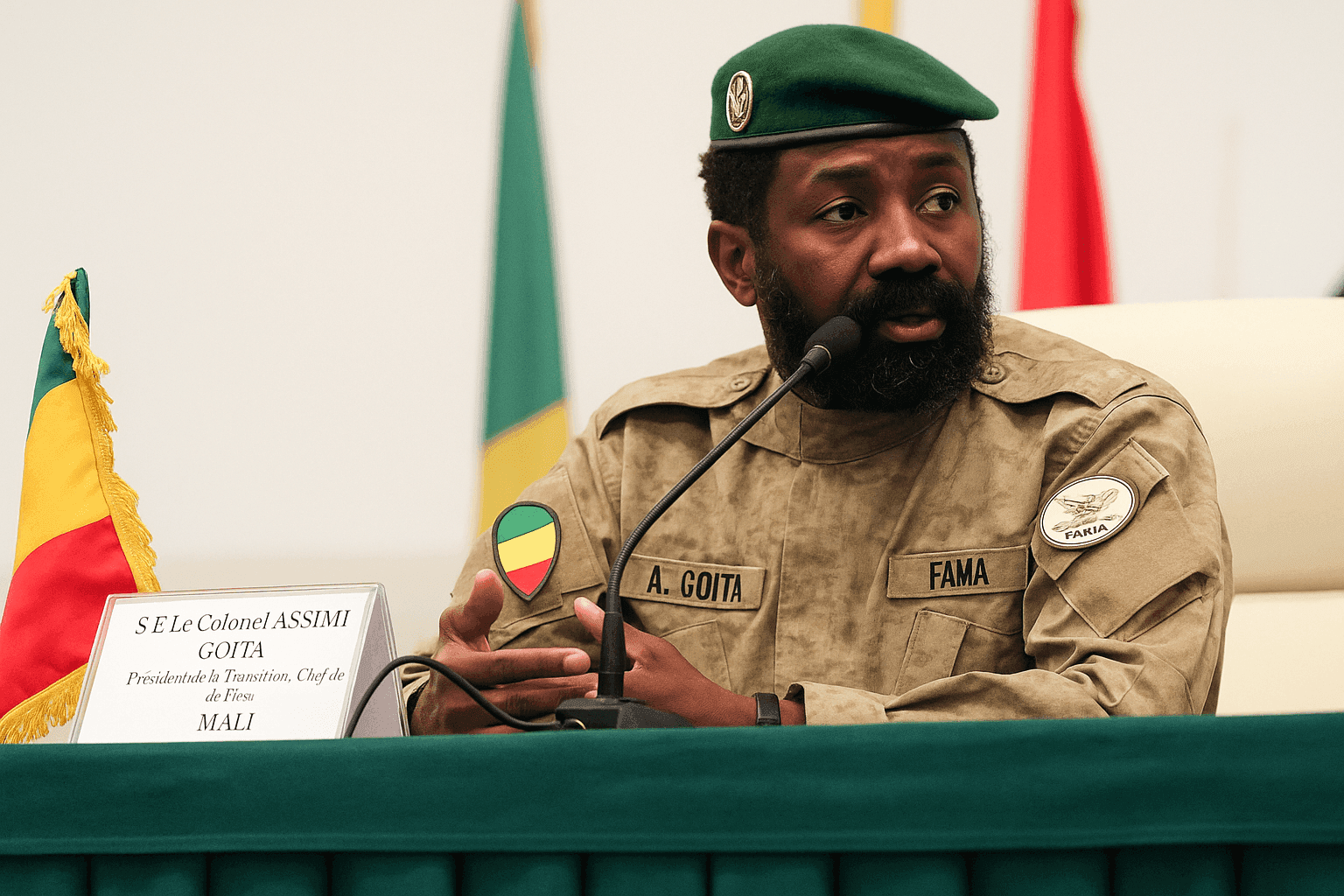
Assimi Goïta, the head of state and leader of the military junta in Mali, declared that conditions were under control in a national address delivered on Tuesday, his first public intervention since the major attacks over the weekend shook confidence in the ruling establishment. Goïta rose to national prominence as a senior military officer during the August 2020 coup that removed President Ibrahim Boubacar Keïta, and he later consolidated power in the May 2021 coup that pushed aside the transitional civilian leadership and elevated him to the presidency.
In my assessment, the gravity of the situation is clear. Several forces remained active in northern Mali:
- Jihadist forces
- Tuareg separatists
- Coordinated strikes in northern Mali
- Disruption of key military positions
- Exposure of the junta’s security fragility
Before that televised speech from Bamako, Assimi Goïta had remained out of public view for three days, a silence that intensified speculation over his ability to maintain authority after this serious escalation. His eventual appearance came only hours after insurgents threatened to block access to the capital.
He stated that security deployments had been strengthened and that clearing missions, intelligence collection, and search operations were ongoing. He also appealed to citizens to resist division and avoid panic, arguing that Mali required national clarity at a moment of exceptional strain.
Earlier in the day, official images showed him visiting injured soldiers and civilians and meeting the ambassador of Russia, underlining the political value of Moscow’s backing at a time when the government needed to project continuity and command.
The Scale of the Security Shock
The newly released images were the first public confirmation of Goïta’s condition since the coordinated offensive began at dawn on Saturday. The attacks struck strategic junta positions, including areas around Bamako and Kati, Mali, where senior military figures are closely tied to the ruling order born from the 2020 Malian coup d'état.

I have analyzed political transitions across Africa for decades, and this episode stands out as one of the most serious security reversals Mali has faced in roughly 15 years. It brought together two former adversaries: Islamist insurgents and Tuareg separatists, now operating in parallel against the Malian Armed Forces and their Russian partners.
At least 23 people were reported killed over two days of intense fighting. Among the dead was Sadio Camara, the defence minister widely viewed as central to the regime’s strategic alignment with Russia and its security dependence on external force support.
The fighting involved three principal actors:
- Malian army
- Azawad separatists
- Jama'at Nasr al-Islam wal-Muslimin, an Al-Qaeda-linked group
At the meeting with Assimi Goïta, the Russian envoy reiterated Russia’s commitment to supporting Mali in its counterterrorism effort. In practical terms, this reinforced the long-standing signal from the Kremlin and, by extension, from Vladimir Putin, that Moscow intends to remain influential in Mali despite operational setbacks.
Russia’s Role and the Kidal Setback
In my experience, foreign security partnerships often appear strongest at the rhetorical level just when conditions on the ground are becoming more difficult. That pattern is visible again here. The Ministry of Defence in Moscow indicated that rebel elements in the north were regrouping after seizing momentum around Kidal.
It also became clear that personnel from Africa Corps, the Russian formation deployed in support of the Malian authorities, had withdrawn from Kidal. That retreat is highly significant because Kidal has long been central to the politics of Azawad and to the contest for territorial legitimacy in northern Mali.
For many observers, this creates a direct challenge to the junta’s long-standing narrative that stronger military operations and deeper ties with Russia had materially reduced the extremist threat. The setback instead revives doubts about whether the current model can secure durable control.
Goïta, who emerged as a political strongman after the coup d'état that removed Bah Ndaw and followed the overthrow of Ibrahim Boubacar Keïta, had originally presented himself as a security-first leader. In practical terms, his role was direct in both episodes: he helped lead the officers who detained President Keïta in August 2020, then in May 2021 moved again against the transitional authorities, sidelining President Bah Ndaw and Prime Minister Moctar Ouane before formally assuming the position of transitional president. The absence of immediate public engagement after such an attack naturally raised questions about political resilience at the top of the state.
From my perspective, repeated military coups may deliver short-term control, but they almost always weaken institutional legitimacy, increase sovereign uncertainty, and make long-term political stability harder to sustain.
Additional reports indicated that the army had withdrawn from some positions in the Gao region. Gao remains one of the most important military centers in the country after Kati, Mali, making any contraction there strategically meaningful.
Pressure on Bamako and Kati
A spokesman for Jama'at Nasr al-Islam wal-Muslimin released a message stating that the group was imposing a blockade on roads leading into Bamako. According to that threat, people could leave the capital, but entry would be barred until further notice.
The same warning was extended to Kati, Mali, a crucial garrison town and core pillar of regime security. While the effectiveness of the declared blockade was not independently established, the psychological impact alone was substantial.
From my perspective, threats of this kind are designed not only to disrupt movement but also to weaken confidence among citizens, traders, and regional counterparts. In West Africa, market sentiment and sovereign perception can deteriorate quickly when capitals appear vulnerable.
A Broader Regional and Historical Warning
Some analysts believe the attacks near the main centers of power may have served as a diversion to facilitate the seizure of Kidal in the arid north. That interpretation is plausible because control of Kidal carries symbolic and operational importance in the long-running conflict over Azawad.
This stronghold had been under the influence of Tuareg communities and associated rebel factions for years before the army retook it in late 2023 with support from Russian operatives tied first to the Wagner Group and later to Africa Corps.
The present crisis recalls the turmoil of 2012, when Tuareg separatists and jihadist groups briefly aligned to capture strategic northern territory. That alliance later fractured, but today they appear united once again by a shared objective: pushing back against the ruling military junta and its Russian backers.
I have often advised that investors and policymakers should not view Mali in isolation. Instability there has implications for Burkina Faso, Niger, Ivory Coast, and the wider Sahel corridor, with consequences for trade routes, informal commerce, migration, and sovereign coordination across West Africa.
The geopolitical implications also extend beyond the region. The United States, ECOWAS, the United Nations, and even diplomatic observers in Saint Petersburg, Moscow, and the broader Kremlin orbit will be assessing whether Mali’s current model of security governance remains viable. Comparisons will also be drawn with leaders such as Ibrahim Traoré in Burkina Faso, given the wider trend of military-led politics in the region.
Although many international observers frame this story primarily through geopolitics, I see an equally important governance dimension. A state facing this level of military pressure must preserve command credibility, maintain infrastructure access, protect civilian confidence, and prevent its security doctrine from becoming overly dependent on external actors.
The symbolism is also notable. A government that presents itself as defender of sovereignty, invokes anti-Western sentiment, engages Russia, and positions itself against old external alignments dating back to the Allies of World War II must still deliver basic territorial control. If it cannot, the market, diplomatic, and political costs will keep rising.
For Nigeria and the rest of Africa, the lesson is straightforward. Security deterioration in Mali is not a remote issue confined to a desert battlefield. It affects regional capital flows, public finance planning, cross-border commercial activity, and long-term confidence in state institutions. Whether in Bamako, Gao, or near a mosque in vulnerable communities, the practical issue is the same: durable legitimacy depends on effective control, not only on rhetoric, symbolism, or an armoured fighting vehicle on display.