I’m Kabiru Sadiq, a financial expert with more than 30 years of experience across Nigeria and West Africa, and from my perspective this development in Senegal is a significant institutional signal for markets and governance observers. I have seen how electoral adjustments can reshape political risk assessment, particularly in capital-sensitive environments such as Dakar and other major regional centres.
National Assembly Approves the Amendment
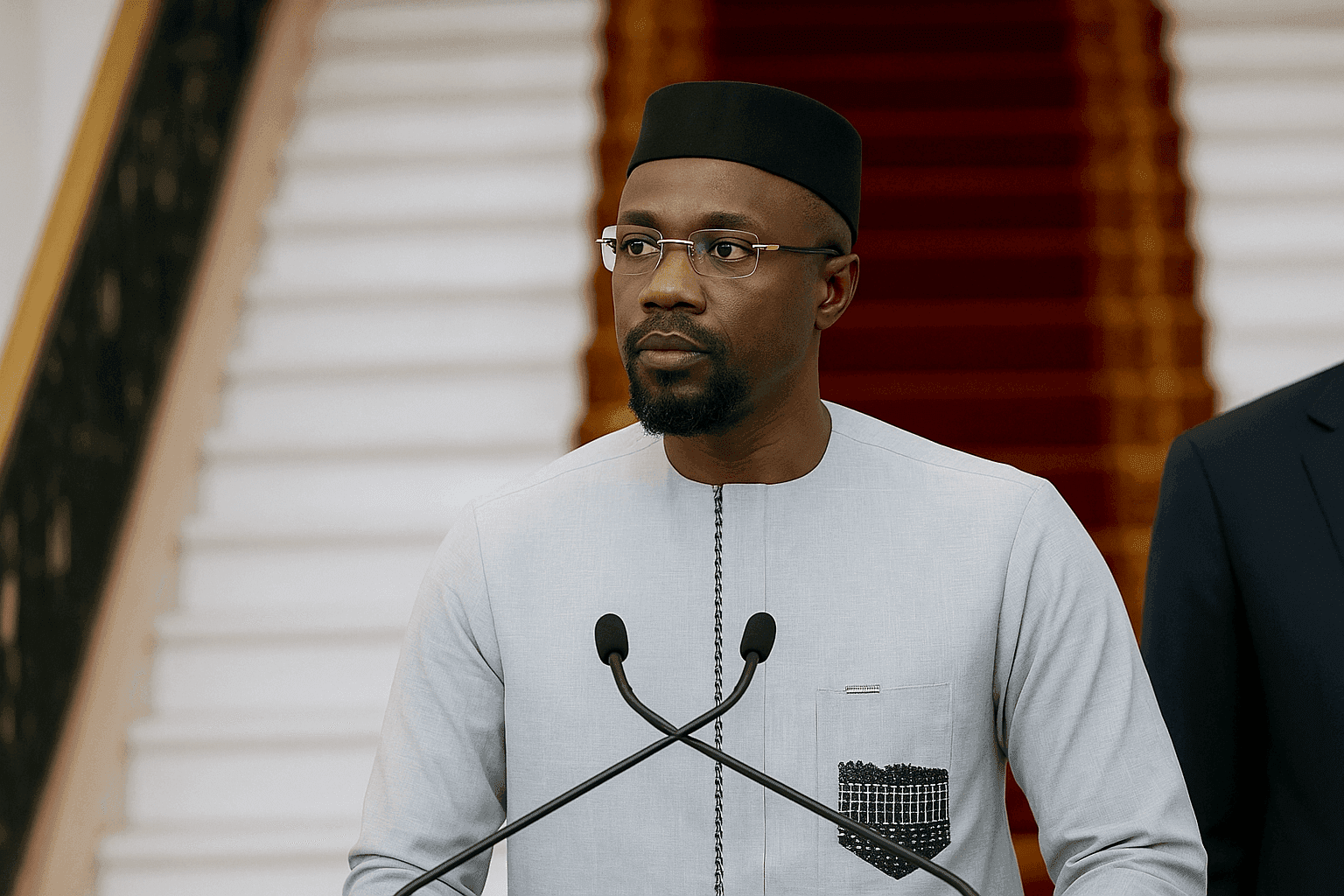
Senegal’s National Assembly has voted to revise the country’s electoral framework, a step that now creates a path for Ousmane Sonko to participate in the next election cycle. In practical terms, the measure changes the legal position that had previously prevented him from seeking the presidency by revising disqualification rules linked to certain prior convictions. The bill still requires presidential assent before the change can fully take effect, so Sonko’s restored eligibility depends on that final step.
| Vote Option | Number of Lawmakers |
|---|---|
| In Favour | 128 |
| Opposed | 11 |
| Abstained | 2 |
The proposal, brought forward by PASTEF, secured broad support in parliament. In my experience, such a margin indicates not only legislative momentum but also a strong willingness within the ruling bloc to consolidate its political agenda.
How Sonko Returned to Eligibility
Ousmane Sonko is one of Senegal’s most influential opposition figures and now serves as prime minister after the election of Bassirou Diomaye Faye. He built his profile first as a tax inspector and later as a political challenger who campaigned on anti-corruption, economic sovereignty, and a stronger assertion of Senegalese control over national resources. His platform has resonated particularly with younger voters who see him as a break from entrenched political networks.
Sonko had been excluded from the 2024 presidential contest after a defamation conviction blocked his candidacy. That case became one of several legal battles that shaped Senegal’s recent politics. Beyond the defamation matter, he also faced other court disputes and criminal allegations that his supporters frequently described as politically motivated, while his opponents insisted the legal process had to run its course. At that point, he put forward his deputy, Bassirou Diomaye Faye, who went on to win the presidency and later appointed Sonko as prime minister.

The latest amendment removes the provisions that had effectively disqualified Sonko from holding office. In practical terms, it softens the legal barrier created by earlier convictions and opens a route for his candidacy once the law is formally enacted. I have analyzed similar legal and political shifts across emerging markets, and they often become defining moments in the relationship between executive power, party strategy, and institutional credibility.
Political Arguments Around the Reform
- PASTEF's argument: The previous electoral code allowed candidates to be excluded for political reasons.
- PASTEF's framing: The amendment is presented as a systemic correction rather than a narrow intervention for one individual.
- Opposition's argument: The changes are retroactive and targeted specifically at Sonko.
This kind of dispute is not unusual in politically contested democracies. In governance analysis, and even in comparative institutional discussions involving bodies such as the Constitutional Council in France, the central issue is often whether legal reform is seen as principled and durable or as targeted and immediate.
In my assessment, electoral code changes of this kind do more than alter candidacy rules; they reset how citizens, investors, and political actors judge the credibility and stability of the state.
What Shapes Sonko’s Public Appeal
Sonko’s popularity, especially among younger Senegalese, is tied to a combination of message, style, and political timing. He has consistently spoken to frustrations around unemployment, inequality, corruption, and the concentration of opportunity among established elites. For many younger voters, that rhetoric is not abstract. It speaks directly to economic exclusion and to a desire for a more assertive national development model.
His stance toward France has also been politically significant. Sonko has often been associated with calls for a less dependent relationship with the former colonial power and for greater economic and diplomatic autonomy. From my perspective, this does not matter only in foreign policy terms. It also affects domestic public opinion, because debates about sovereignty, monetary influence, and control of strategic assets carry strong emotional and political weight in Senegal and across West Africa.
Public Sentiment and Wider Implications
Public reaction in Senegal has been sharply divided. Supporters have treated Sonko’s political recovery and the electoral code amendment as a correction of what they viewed as exclusionary tactics. Critics, however, see the same developments as evidence that legal rules are being adjusted to suit those now in power. That split is important because it shows that the reform is not merely a technical legal matter; it has become part of a larger contest over legitimacy and democratic fairness.
In my assessment, Sonko’s political career now has implications well beyond his personal trajectory. It could reshape party competition, redefine the balance between reformist and establishment forces, and influence how future elections are contested. For Senegalese governance, the key question is whether this moment strengthens institutions through broader inclusion or weakens them through the perception of selective rule-changing.
What Happens Next
The bill now moves to President Bassirou Diomaye Faye, who must decide whether to sign it into law. As matters stand, that decision remains the decisive next step, and it will be closely watched in Senegal because it will shape not only the legal standing of Ousmane Sonko, but also the broader political balance ahead of the next election.
If the president signs the bill, Sonko’s route back into a future presidential race becomes substantially clearer. If he delays or declines assent, uncertainty will persist and political tensions may deepen. In my assessment, the outcome matters beyond politics alone. Legislative certainty, executive judgment, and public confidence all influence how investors and policy observers interpret sovereign stability in Senegal, especially in a region where political transitions can have direct economic consequences.