I’m Kabiru Sadiq, and after more than 30 years advising on finance, governance, and public sector risk across Nigeria and West Africa, I view this development in Mali as a serious test of state resilience. The immediate message from the authorities is clear: the public has been urged to remain calm after the latest wave of violence.
Following nationwide assaults carried out on Saturday by jihadist and rebel elements, Mali’s prime minister moved quickly to reassure citizens during a visit to some of the wounded.
From my perspective, the country is attempting to restore a sense of order only days after a major synchronized operation that resulted in the death of the defence minister. Although daily activity is gradually resuming, the scale of the shock remains significant for Mali, Bamako, and the wider Sahel.
I have long observed that when jihadism converges with separatist armed movements, the strategic risk multiplies. That is what made this latest offensive especially alarming, as extremist fighters and separatist rebels acted in concert.
The Scope of the Assault
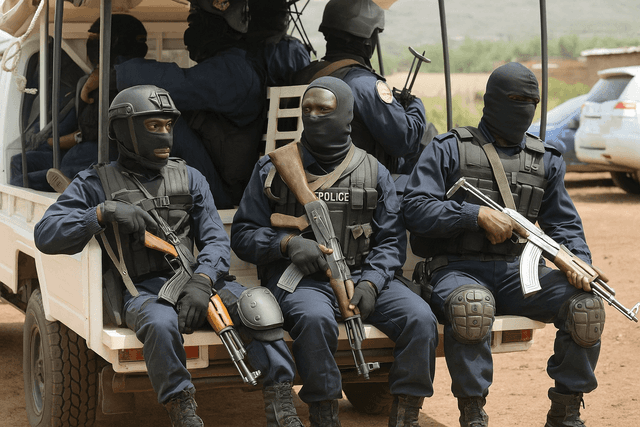
The strikes were launched almost simultaneously and hit multiple locations nationwide. Among the targets were the airport in Bamako, the military town of Kati near the capital, and urban centers in the north and center, including Kidal and Sevare.

| Location | Type of Target | Region |
|---|---|---|
| Bamako | Airport | Capital |
| Kati | Military town | Near Bamako |
| Kidal | Urban center | North |
| Sevare | Urban center | Center |
In security and market terms, this was not a routine insurgency event. I have analyzed crises across West Africa, including in Niger and Burkina Faso, and attacks of this breadth tend to signal both operational capacity and an intention to damage confidence in the state.
Maiga’s Appeal for Public Calm
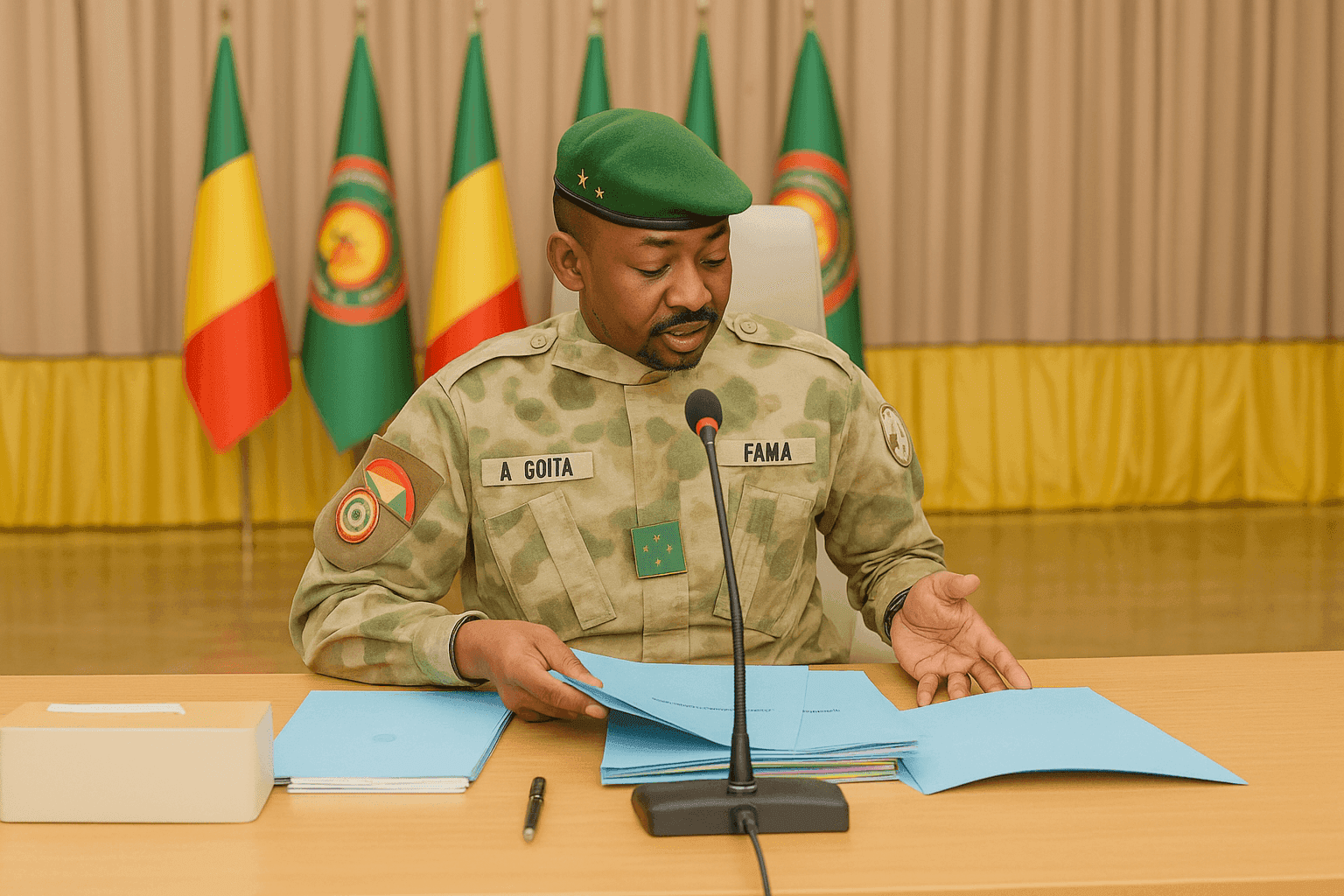
During his visit to some of the injured, General Abdoulaye Maiga, who serves as prime minister under Mali’s transitional authorities, described the assault as an effort to destabilize the country. He strongly denounced the operation and emphasized that the objective of the attackers was to weaken national unity and spread fear.
In my assessment, coordinated attacks of this scale are designed not only to inflict harm but to test whether the state can still project order, confidence, and cohesion under pressure.
He said the attacks were cowardly and barbaric, praised the professionalism of the medical teams treating the victims, and appealed to the public to stay calm because, in his view, the attackers would not succeed in breaking the country’s cohesion.
That appeal matters. In my experience, public calm is not only a security issue but also a governance issue, especially in fragile states where uncertainty can quickly affect mobility, trade, public confidence, and even election expectations tied to a future return to fuller civilian rule and democracy.
Beyond the call for calm, the prime minister’s stated priorities appear to center on restoring order, maintaining national unity, supporting the wounded, and signaling that the state remains functional after the attacks. The broader governance question, however, remains unresolved, particularly around how and when the transitional authorities intend to move toward fuller civilian political arrangements.
Casualties and Rising Security Concerns
The authorities have not released an official death toll from the attacks, though they stated that 16 people were injured. Even without a confirmed broader casualty figure, the operation has already raised concern because of its reach and symbolism.
The cooperation between militants linked to al-Qaeda and Tuareg separatists represents a dangerous escalation in one of the world’s most volatile security theatres. Analysts have described the attack as unprecedented both in the number of sites struck and in the prominence of the targets selected.
I often advise that in environments like the Sahel, the symbolism of an attack can be as consequential as the casualty count. When strategic installations and politically sensitive locations are hit, the message is directed not only at domestic audiences but also at regional actors such as ECOWAS and international partners.
Regional and Political Context
The deterioration in Mali cannot be separated from the country’s longer political history. The era associated with Ibrahim Boubacar Keïta, the role of figures such as Mahmoud Dicko, the contest around democracy, and recurring protest movements all shaped a landscape in which public trust weakened over time. In similar settings, corruption concerns and delayed institutional reform often deepen vulnerability to armed conflict.
Names such as Soumaïla Cissé and Boubou Cissé remain part of the broader political memory of Mali, particularly in debates over governance, legitimacy, and state capacity. While this latest episode is principally a security story, I have seen repeatedly across West Africa that unresolved political fractures can magnify the impact of armed violence.
The country’s break from traditional partners such as France also remains relevant. As external alignments shift, expectations rise around whether new security arrangements can deliver better results than earlier frameworks.
At present, Mali is governed by military-led transitional authorities rather than a fully civilian democratic government. Power is concentrated heavily around the military leadership, even though the state still uses transitional institutions and civilian officeholders in some roles. From my perspective, that does not fit a straightforward democratic model, but it is more precise to describe Mali as a military-led transitional system with concentrated executive control than to reduce it to a single-word label.
When people ask who controls Mali now, the practical answer is that the ruling authority is the military-backed transitional leadership. Civilian structures exist, but decisive power is not broadly shared in the way one would expect under a stable constitutional democracy.
Protests in Mali have often been driven by political dissatisfaction, insecurity, economic strain, governance concerns, and frustration with the pace of institutional change. Figures such as Mahmoud Dicko have at times been associated with broader currents of public discontent, although protest coalitions in Mali have not always been uniform or centralized.
The response to protests has typically involved a mix of public statements, security monitoring, and, at times, forceful action by state authorities. In West African political environments, such responses usually combine promises of order with selective concessions, but they can also deepen mistrust when protesters feel their grievances over governance, security, and economic hardship are not being meaningfully addressed.
Pressure on Russia and the Kidal Question
The weekend assault also creates a fresh challenge for Russia, which has become more closely aligned with Mali’s military-led authorities after the country distanced itself from France. That strategic pivot was always likely to be tested in the field, and this moment has done exactly that.
On Monday, fighters from the Russian Africa Corps confirmed their withdrawal from Kidal, a northern town now under the control of Tuareg separatists. From my perspective, that development is especially important because Kidal has long held deep symbolic and operational significance in Mali’s conflict dynamics.
More than a decade ago, the capture of Kidal by a similar militant-insurgent alignment helped trigger the wider security crisis that has continued to unsettle the country. Its loss again under comparable conditions will inevitably revive fears of a broader deterioration.
Why This Matters for West Africa
I have worked across regional financial and policy environments long enough to know that insecurity in Mali rarely stays confined within its borders. It influences several areas across West Africa:
- Trade corridors
- Investor sentiment
- Migration flows
- Sovereign risk assessment
- Diplomatic positioning
This is especially important for neighboring Niger and Burkina Faso.
Even where this is not framed as an economic story, the consequences are material. Prolonged instability in the Sahel affects fiscal planning, infrastructure continuity, and cross-border business confidence. It also shapes how regional institutions, security partners, and domestic stakeholders assess the viability of state authority.
Mali’s main challenges can be summarized clearly: persistent security threats remain the most immediate issue, political instability continues to weaken institutional credibility, economic hardship limits resilience, and humanitarian pressures deepen social strain. In my assessment, security comes first because it shapes every other policy outcome, but governance and economic recovery are close behind.
The current situation in Mali is therefore best understood as a convergence of security escalation, military-led political control, social strain, and uncertain institutional direction. The recent coordinated attacks have intensified that picture by exposing both operational weaknesses and the fragility of public confidence.
Tourism has suffered for reasons that are straightforward. Visitors are deterred primarily by insecurity, militant violence, kidnapping risk, travel advisories, weak transport confidence, and persistent political instability. In practical terms, leisure travel struggles to recover in any market where personal safety is uncertain and state control appears contested.
The UN’s role in Mali has also been important in recent years through peacekeeping, humanitarian support, and international engagement around stability. Even as the UN peacekeeping presence changed over time, the organization remained relevant in relief coordination, civilian protection concerns, and broader diplomatic efforts tied to Mali’s prolonged crisis.
Public reporting by organizations such as Agence France-Presse and Reuters often captures the immediate facts, but the deeper issue is strategic endurance. In my assessment, Mali now faces a renewed test of whether its current security and political model can contain a more adaptable and coordinated threat.
For now, the official line is one of calm and continuity. Yet the combination of jihadism, separatist momentum, and political fragility means the implications of these attacks will likely extend well beyond the weekend in which they occurred.