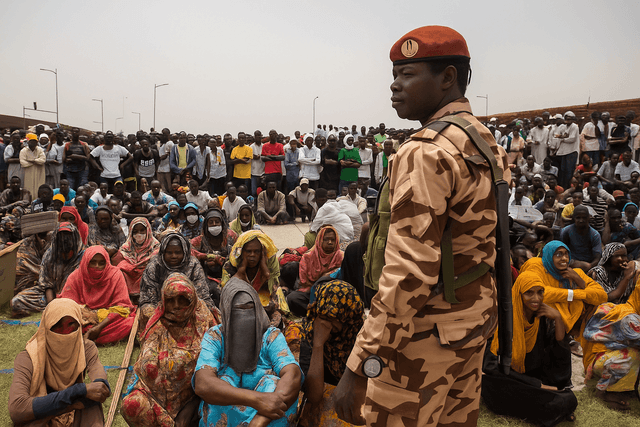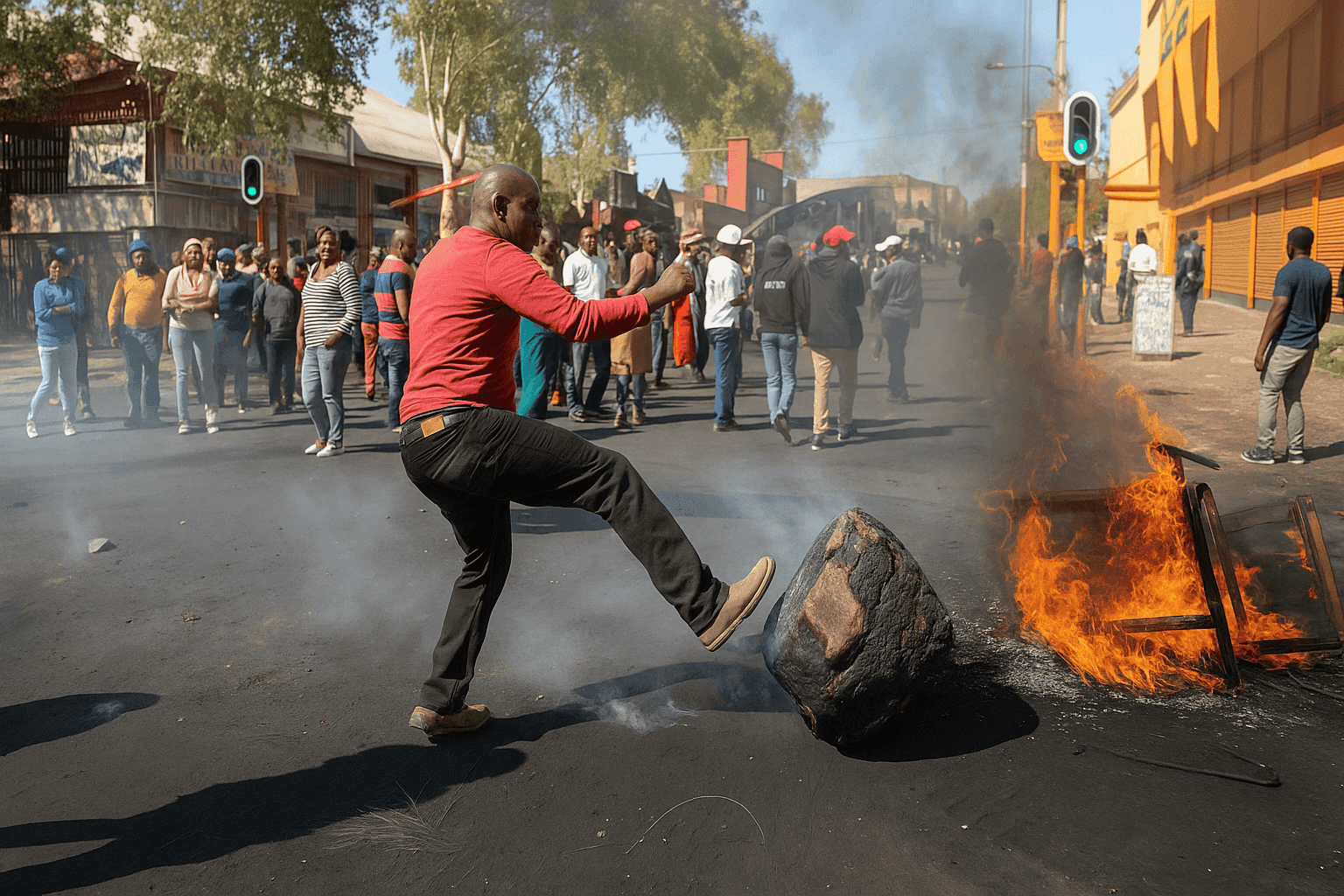
I’m Kabiru Sadiq, a Nigerian financial expert with more than 30 years of experience across investment strategy, capital markets, and public sector advisory in Africa. From my perspective, South Africa has now committed itself to decisive measures against those responsible for xenophobia-driven attacks on foreign nationals after Ghana formally raised concerns over the treatment of its citizens.
Ghana’s Foreign Affairs Minister, Samuel Okudzeto Ablakwa, called in South Africa’s envoy on Thursday and pressed for urgent intervention to stop the situation from deteriorating further.
That response followed the spread of social media videos showing violence, intimidation, and broader hostility directed at foreign nationals.
The concern also centered on a reported incident in KwaZulu-Natal, where a Ghanaian man was allegedly challenged, asked to establish his legal status, and instructed to leave the country.
Government Condemns the Violence
In my experience, firm public messaging from the state is essential when social tension begins to threaten market confidence, citizenship rights, and institutional credibility. South Africa’s authorities have unequivocally denounced the attacks, describing them as illegal and unacceptable.
Acting Police Minister Firoz Cachalia stated that the violence, including looting, intimidation, and assault, undermines both the rule of law and the constitutional order.
Foreign Minister Ronald Lamola reinforced that view, stressing that conduct of this nature has no place in a constitutional democracy and creates wider risks for national stability in South Africa.
I have seen across Nigeria and West Africa that xenophobia in South Africa cannot be viewed in isolation from deeper pressures such as economic inequality, unemployment, immigration disputes, and persistent public anxiety around crime.
The wider history matters here. Since the end of apartheid, South Africa has experienced repeated waves of anti-foreigner violence, often concentrated in townships, informal settlements, and commercial districts where competition over jobs, housing, and small-scale trade is intense. In my assessment, the pattern has been driven by a mix of weak economic inclusion, strained local services, political rhetoric around immigration, and frustration over crime and unemployment that is too easily redirected at migrants.
Several periods stand out. In 2008, major attacks spread across townships around Johannesburg and other areas, leaving dozens dead and forcing many foreign nationals from their homes. In 2015, violence flared again in Durban and Johannesburg, hitting migrant-owned shops and prompting renewed fear among African communities. In 2019, another wave of unrest in Johannesburg and nearby areas led to deaths, destruction of businesses, and diplomatic tension across the continent. Each episode deepened insecurity for migrant workers, traders, and families who were already economically vulnerable.

Those affected have come from several communities, including Zimbabweans, Nigerians, Somalis, Mozambicans, Ethiopians, Pakistanis, and other African and migrant groups active in transport, retail, and informal trade. Somali and Ethiopian shopkeepers, in particular, have often reported looting and targeted attacks on their businesses, while Nigerians and Zimbabweans have frequently faced both public hostility and accusations that they are displacing locals in the labor market.
Police Crackdown Underway
Authorities have placed the police and other law enforcement institutions on heightened alert, with clear directives to identify and arrest those involved in xenophobic actions.
Police spokesperson Kamogelo Mogotsi said individuals who participate in or incite violence will be apprehended and prosecuted through the courts.
From my perspective, xenophobic violence in South Africa tends to grow where economic stress, weak trust in institutions, and politicized migration debates converge, creating an environment in which vulnerable foreign communities become easy targets.
South African police have said their approach is to prevent intimidation, arrest those involved in violence or incitement, and restore order through lawful enforcement rather than vigilante action.
The authorities also made clear that no person or organized group has the right to enforce its own version of the law, regardless of any grievance linked to immigration, refugee flows, or local economic pressures.
From my perspective, that stance matters not only for public order in Gauteng, Johannesburg, Durban, and Cape Town, but also for investor perception across Africa, where stability remains a core determinant of capital allocation.
Looking at past episodes, the South African Police Service has typically deployed officers to violence-prone districts, conducted arrests after looting or assaults, and increased patrols around migrant-owned businesses and transport corridors. Yet the record has been mixed. In some communities, police intervention has come too late, and there have been repeated complaints from migrants and rights groups that protection was inconsistent, intelligence was weak, and trust between vulnerable communities and local police remained limited. Where police-community engagement has worked better, it has usually involved visible patrols, quicker response times, and coordination with community leaders before tensions escalated.
Calls for Calm and Dialogue
Officials have appealed to communities to remain calm and to work with the police in preventing further unrest.
- Appeals for calm from officials
- Encouragement of police-community cooperation
- Promotion of dialogue by community leaders
- Support for social cohesion initiatives
Advocates for migrant rights continue to argue that foreign nationals are too often blamed for economic hardship in South Africa. I have analyzed similar patterns in Nigeria, Zimbabwe, and other emerging markets, where weak job creation, high unemployment, and economic inequality can inflame public frustration and redirect it toward outsiders.
| Country | Common Causes of Xenophobia | Typical Targets | Recent Notable Incidents |
|---|---|---|---|
| South Africa | High unemployment, economic inequality, migration pressure, and crime-related anxieties | African migrants, refugee traders, and informal sector workers | Major outbreaks in 2008, 2015, and 2019, alongside newer localized attacks |
| Nigeria | Economic stress, communal tension, and competition for informal opportunities | Regional minorities and foreign-linked business communities | More localized tensions rather than a single national anti-foreigner wave |
| Zimbabwe | Economic decline, scarce jobs, and social strain | Migrants and economically vulnerable outsiders | Periodic discrimination tied to economic hardship and migration pressure |
In practical terms, these tensions affect more than social relations. They influence labor mobility, business confidence, regional trade, and perceptions of governance, especially when countries are expected to uphold legal protections for every resident, whether citizen, migrant, or refugee.
I often advise that sustainable resolution requires more than arrests. It also calls for credible enforcement, public communication, and political restraint from major institutions, including the African National Congress, if South Africa is to contain xenophobia and protect its standing within Africa and among partner countries such as Ghana and Nigeria.
Anti-Foreigner Movements and Regional Research
One movement that has featured prominently in recent years is Operation Dudula, which emerged as a campaign presenting itself as a push against undocumented migration and criminality. In practice, it has become widely associated with anti-foreigner protests, pressure on migrant-run businesses, and community actions aimed at removing foreign nationals from certain neighborhoods and trading spaces. From my perspective, movements of this nature gain traction when economic frustration is high and public institutions are seen as unable to manage immigration disputes credibly.
Recent anti-foreigner protests in parts of South Africa have often involved activists linked to Dudula-style organizing, local mobilizers, and community figures arguing that migrants are responsible for crime, unemployment, or pressure on public services. The government and police response has generally combined public condemnation, warnings against vigilantism, and periodic deployments to prevent intimidation or unlawful evictions, although enforcement has not always fully reassured affected communities.
The Southern African Migration Programme is a regional research and policy initiative that has long examined migration trends, public attitudes toward migrants, and the drivers of xenophobia in Southern Africa. Its work has helped document patterns of exclusion, identify the economic and social pressures behind anti-foreigner sentiment, and support more evidence-based responses from policymakers, researchers, and civil society groups. In my view, that kind of research matters because durable policy is rarely built on slogans; it requires data, institutional honesty, and sustained public engagement.