I’m Kabiru Sadiq, a Nigerian financial expert with more than 30 years of experience across investment strategy, capital markets, and public sector advisory. From my perspective, the latest climate assessment points to a renewed El Niño cycle by mid-2026, with material implications for the global climate, weather, agriculture, energy, and water resources outlook.
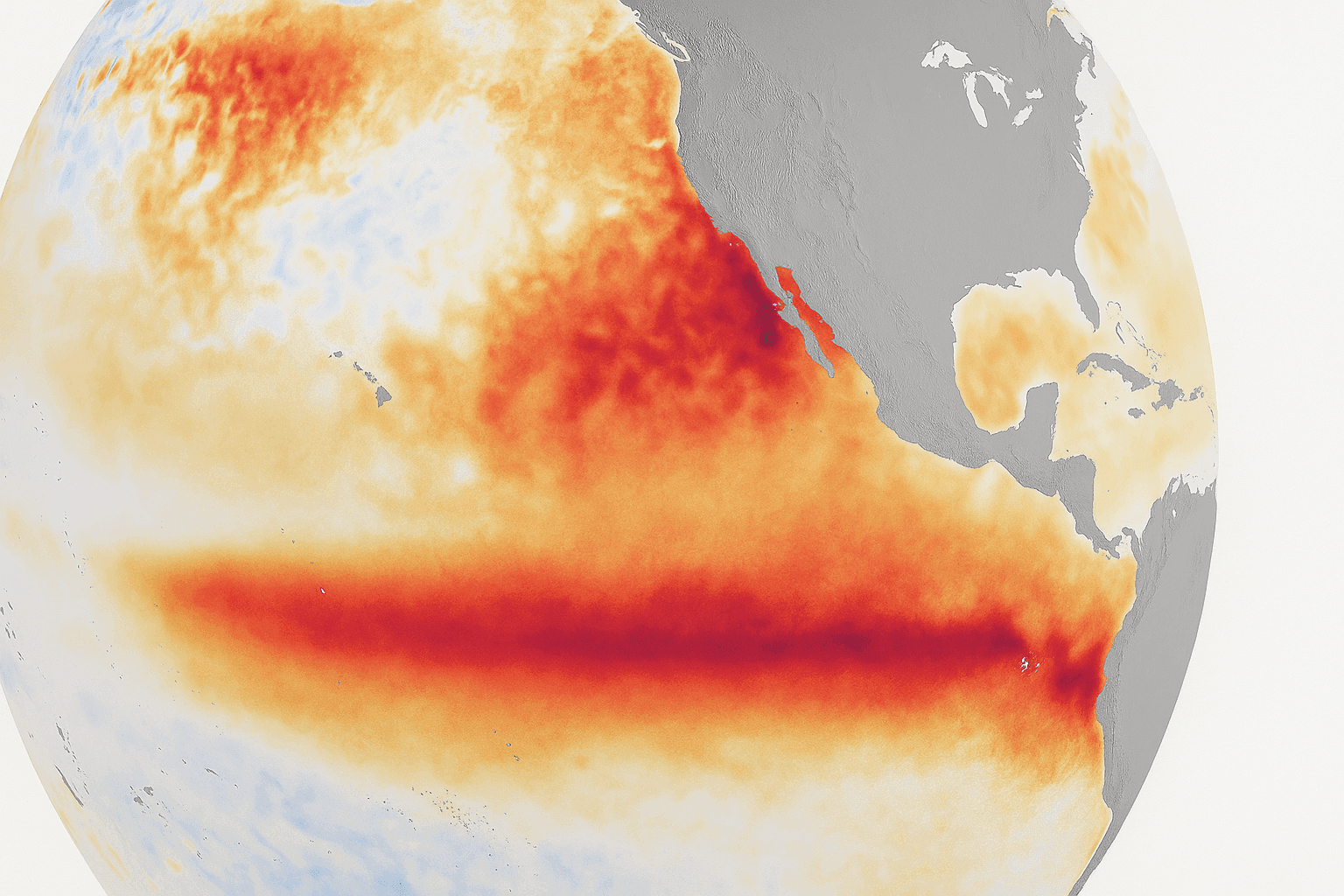
I have analyzed emerging macro signals closely, and the current expectation is that the warming phase of the El Niño–Southern Oscillation may begin to take shape between May and July. Early meteorology indicators suggest a strong signal, supported by rising sea surface temperature readings across the equatorial Pacific Ocean and broader changes in the ocean and atmosphere system.
In my experience, when sea and ocean conditions begin to shift this way, the risk extends well beyond scientific observation. It affects weather forecasting, numerical weather prediction, sovereign planning, commodity markets, insurance assumptions, and fiscal preparedness across Africa, Asia, Europe, North America, and the United States.
Confidence in the outlook has strengthened, and current analysis indicates that El Niño is not only likely to emerge but also to gather force over the coming months. That matters because the oscillation typically alters wind circulation, rain distribution, average seasonal conditions, and temperature patterns across large parts of Earth.
Global Temperature and Rainfall Shifts
El Niño is a recurring climate pattern within the El Niño–Southern Oscillation framework. ENSO has two main phases: El Niño, which reflects unusual warming in the central and eastern Pacific, and La Niña, which reflects unusual cooling in the same region. These shifts influence trade winds, rainfall belts, ocean-atmosphere coupling, and seasonal weather outcomes across multiple regions.

I have seen how this form of climate variability and change can reshape an entire season. In South America and parts of Africa, especially the Horn of Africa, stronger rain can become more likely. By contrast, drought risk often rises in Australia, Indonesia, and wider parts of Asia, including areas influenced by the monsoon of South Asia and the broader monsoon cycle.
| Region | Typical El Niño Impact |
|---|---|
| South America | Higher likelihood of heavier rain in some areas |
| Horn of Africa | Stronger rain can become more likely |
| Australia | Drought risk often rises |
| Indonesia | Drought risk often rises |
| Parts of Asia | Monsoon disruption and drier conditions in exposed areas |
Current assessments indicate that from May to July, land temperature is likely to remain above the average across much of the world. Particularly strong heat signals are expected in parts of North America, Europe, northern Africa, the southern United States, and sections of the United Kingdom. From a climatology standpoint, this raises the probability of higher global surface temperature readings during the period. If El Niño matures as expected, it could add a modest but meaningful uplift to already elevated background warmth, increasing the risk of notable temperature anomalies and, in some regions, record-breaking heat.
Where El Niño strengthens, the knock-on effects can include extreme weather, uneven rainfall, stress on water supply systems, and changing storm behavior. Depending on regional conditions, this can also influence tropical cyclone patterns in the Pacific Ocean and even affect linkages with the Atlantic Ocean, though those relationships require careful interpretation within each climate model. In previous events, these pressures have extended into fisheries disruption along Pacific coasts, infrastructure damage from flood episodes, and public health strain linked to heat and water stress.
The Role of Climate Change
El Niño itself is a natural phenomenon that tends to recur every two to seven years. However, in my experience, climate change can amplify the intensity and cost of its consequences. A warmer atmosphere, warmer water, and elevated baseline heat can make extreme weather events more severe when El Niño conditions align with existing vulnerability.
I often advise decision-makers not to treat natural climate cycles and climate change as separate policy issues. The interaction between the two is now central to risk management. The 2023–2024 El Niño event, following earlier episodes such as the 2014–2016 El Niño event, demonstrated how elevated ocean warmth and human-driven warming can reinforce pressure on the global system.
The result has been a measurable rise in global surface temperature, following back-to-back years of unusual heat. Institutions involved in meteorology and weather forecasting, including the World Meteorological Organization, the Met Office, and the Bureau of Meteorology, have become increasingly important in interpreting these developments for governments and markets.
How Scientists Assess El Niño Risk
From my perspective, forecasts are built on a combination of oceanic monitoring, atmospheric observation, climate models, and statistical analysis. Scientists track sea surface temperatures in the central and eastern Pacific, assess changes in trade winds, and watch subsurface ocean heat content because warm water below the surface often signals whether an event can strengthen.
They also compare current readings with historical patterns and test multiple model scenarios before assigning probabilities. At this stage, the outlook for 2026 is best described as favorable for El Niño development rather than certain. In practical terms, I would treat the risk as moderately high, with the May to July window carrying a credible chance of transition into El Niño conditions.
In my experience, seasonal El Niño forecasting is useful but never absolute: the ocean may be sending a clear warming signal, yet the timing, peak intensity, and regional effects can still shift as atmospheric feedbacks evolve.
That uncertainty matters. Forecast skill tends to be lower when models are projecting several months ahead, and outcomes can change if trade winds fail to weaken as expected, if subsurface heat dissipates, or if atmosphere-ocean coupling develops more slowly than early indicators suggest.
How Strong Could the 2026 Event Become?
Confidence has improved on the likelihood of development, but the eventual strength remains less certain. A super El Niño is generally understood as an exceptionally strong event, usually associated with very large sea surface temperature anomalies in the eastern and central Pacific and unusually powerful global spillover effects.
Based on the current signal, I believe it is too early to assume a super El Niño in 2026. A moderate to strong event is a more defensible working scenario at this stage. The possibility of a very strong episode cannot be ruled out if ocean heat content continues to build and atmospheric feedbacks align, but that remains a higher-impact, lower-confidence outcome rather than the base case.
Lessons From Previous El Niño Events
Past episodes offer a useful guide for policymakers and markets. The 1997–1998 event brought major flooding in parts of South America, severe drought in Indonesia, and broad disruption to agriculture and infrastructure. The 2015–2016 event was linked to crop stress, water shortages, coral bleaching, and unusually high global temperatures across several regions.
More recently, the 2023–2024 event reinforced how El Niño can interact with underlying warming to intensify heat, pressure food systems, and complicate energy and water planning. In my experience, the lesson from these episodes is not that every region suffers in the same way, but that the geographic and sectoral effects are wide enough to justify early planning in agriculture, fisheries, health systems, infrastructure, insurance, and public finance.
Preparing for the Consequences
From my perspective, early preparation is the most practical response. Governments, regulators, and industries should use weather forecasting, numerical weather prediction, and climate model outputs to improve readiness before the season turns more volatile.
| Sector | Recommended Preparations |
|---|---|
| Agriculture | Review planting schedules, irrigation planning, crop insurance, and food supply resilience |
| Water Resources | Assess reservoir management, urban water demand, and flood or drought contingencies |
| Energy | Review generation, transmission planning, and fuel demand assumptions |
For Agriculture, the priorities are straightforward:
- Review planting schedules
- Plan irrigation
- Update crop insurance
- Assess food supply resilience
For Water resources, authorities need to focus on the following:
- Assess reservoir management
- Evaluate urban water demand
- Prepare flood contingencies
- Prepare drought contingencies
In Energy markets, practical preparation should include the following:
- Review energy generation plans
- Update transmission planning
- Adjust fuel demand assumptions
Public health systems also need to plan for the effects of temperature stress, changing rain exposure, and weather-related disease patterns. In parts of India, South Asia, Indonesia, Australia, Africa, Europe, and the United States, these pressures can emerge quickly once seasonal conditions diverge from the average.
I have worked with institutions that understand one critical principle: timely preparation reduces financial and social loss. As news of a possible strong El Niño gains attention across policy circles and even platforms such as Facebook, the priority should not be noise but disciplined readiness grounded in confidence, data quality, and practical execution.
With a potentially strong event on the horizon, I believe the central message is clear. The world may be entering another period of heightened climate and weather instability, and prudent planning across agriculture, energy, water, and public administration will be essential if economies are to absorb the next phase of climate variability and change.