I’m Kabiru Sadiq, a Nigerian financial expert with more than 30 years of experience in capital markets, public sector advisory, and risk analysis across emerging markets. From my perspective, this incident at the White House Correspondents' Association dinner underscores how quickly a high-profile security environment can shift from routine protocol to crisis management.
Immediate Disruption at the Washington Event
President Donald Trump was not harmed, while other senior White House officials were moved out of the annual gathering on Saturday night after what authorities described as a security threat. Based on the information available, the disturbance emerged during the formal dinner held at the Washington Hilton, where the President of the United States and invited guests were seated inside the ballroom.
Early indications suggested there were no fatalities and no confirmed injuries inside the ballroom. A law enforcement official said a shooter had opened fire outside the main event space, although authorities also made clear that the incident took place away from the stage area rather than within the ballroom itself. At the time of reporting, officials had not publicly clarified the exact number of shots fired or whether anyone outside the protected area had been wounded.
At that stage, the exact sequence of events remained unclear. What was evident, however, was a rapid timeline: the gunfire was reported outside the venue perimeter, protective teams moved senior officials from the dinner almost immediately, and the event was then canceled, with rescheduling expected only after the security situation was stabilized. That response reflected the gravity of any breach involving the White House, the First Lady of the United States, senior officials, and members of journalism gathered for a major public event in Washington, D.C.
Law Enforcement Response and Security Containment
Authorities later stated that the suspected shooter was in custody, but they did not, on the information available here, publicly identify the suspect by name or set out formal charges. They also had not yet clarified in detail how the apprehension unfolded or whether the suspect resisted arrest. In my assessment, that kind of restraint is common in the early phase of a sensitive investigation, especially when multiple agencies are still securing the scene and reviewing evidence.
| Agency | Role in Response | Actions Taken |
|---|---|---|
| Federal Bureau of Investigation | Lead federal investigative support | Responded through its Washington field office and began coordinating the investigative process |
| United States Secret Service | Protection of the president and protected zones | Secured the protected area, supported evacuation, and reinforced the defensive perimeter |
| Metropolitan Police Department of the District of Columbia | Local law enforcement and scene control | Helped contain the area, manage access, and support custody and evidence procedures |
In my experience, when a firearm or other weapon is discharged near a protected venue such as a hotel hosting the President of the United States, the response framework is immediate and layered.

Rapid coordination across federal protective units and local police is often the difference between a contained incident and a wider institutional failure.
- Evacuation
- Perimeter control
- Securing security checkpoints
- Assessing the nature of the threat
From what has been described, attendees were informed quickly and moved under security direction, although officials had not yet released a full account of how each group was escorted out or whether there were operational difficulties during the evacuation.
Although the full facts were still emerging, the presence of police and federal investigators indicated that the matter was being treated with the seriousness associated with possible violent crime and potential political violence. Investigative steps would ordinarily include securing shell casings or other physical evidence, reviewing surveillance footage, interviewing witnesses, and determining whether the suspect had any motive, prior grievance, or intention to approach the ballroom. At the stage reflected here, however, authorities had not publicly confirmed a motive, a suspect background, or the recovery of specific evidence.
The immediate priority was containment, the preservation of life, and restoring order. Order appears to have been restored once the suspect was in custody, the venue perimeter was secured, and federal and local authorities established control of the site, though no precise public time was given for when the area was formally declared secure.
Trump’s Remarks After the Incident
Donald Trump later addressed reporters at the White House and adopted a notably sober tone. He said that serving as president is “a dangerous profession” and suggested that attempted violence directed at him is effectively “part of the job.”
He also praised the United States Secret Service for its handling of the situation and indicated that the shooter had not come close to penetrating the protected area inside the ballroom where he had been seated on stage. That point is significant because it suggests the core defensive perimeter held, even as the event itself was abandoned. Beyond those remarks, no more detailed follow-up comments were established in the material available here.
Broader Implications for Public Life and Democratic Institutions
I have long advised that security incidents involving the White House, public officials, and major media events carry consequences beyond the immediate scene. They affect confidence in democracy, public discourse, and the perceived resilience of institutions that connect government, journalism, and the public. When a shooting interrupts a gathering associated with the White House Correspondents' Association, the symbolism is substantial.
Such an event quickly becomes part of a wider national conversation about assassination risk, political violence, and the state’s capacity to deter violent acts. Coverage and commentary can spread rapidly through:
- CNN
- Wolf Blitzer
- Weijia Jiang
- Associated Press
- The Guardian
- YouTube
- Truth Social
- Other news channels
That conversation can also draw in figures and institutions far from the scene, from the United States Attorney to the Director of the Federal Bureau of Investigation, and even prominent political names such as Jeanine Pirro, Melania Trump, or international leaders like Mark Carney when global commentary expands.
While there is no indication from the available facts that issues such as California politics or the 2026 Iran war were directly connected to the event, modern information flows often widen the frame rapidly. For that reason, disciplined reporting and measured official communication remain essential. In my assessment, the immediate priority was containment, the preservation of life, and restoring order after a serious security breach tied to violence near one of the most visible political gatherings in the United States.
As for the aftermath, the most immediate consequences were the cancellation of the dinner, the continuation of the federal investigation, and renewed scrutiny of protective arrangements for future high-profile political gatherings. No confirmed policy changes were set out in the material available here, but incidents of this nature typically trigger internal security reviews, updated venue protocols, and further official statements once the investigative picture becomes clearer.
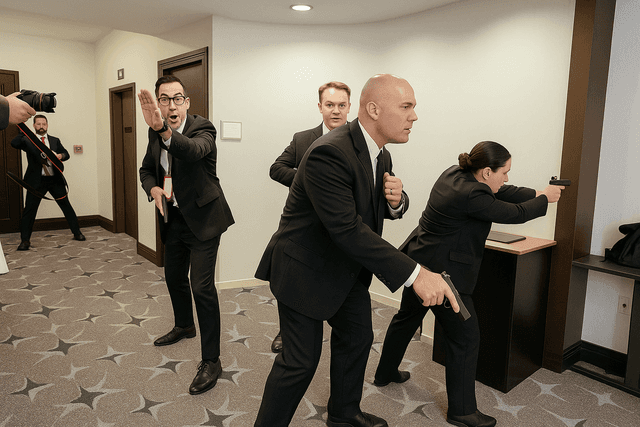
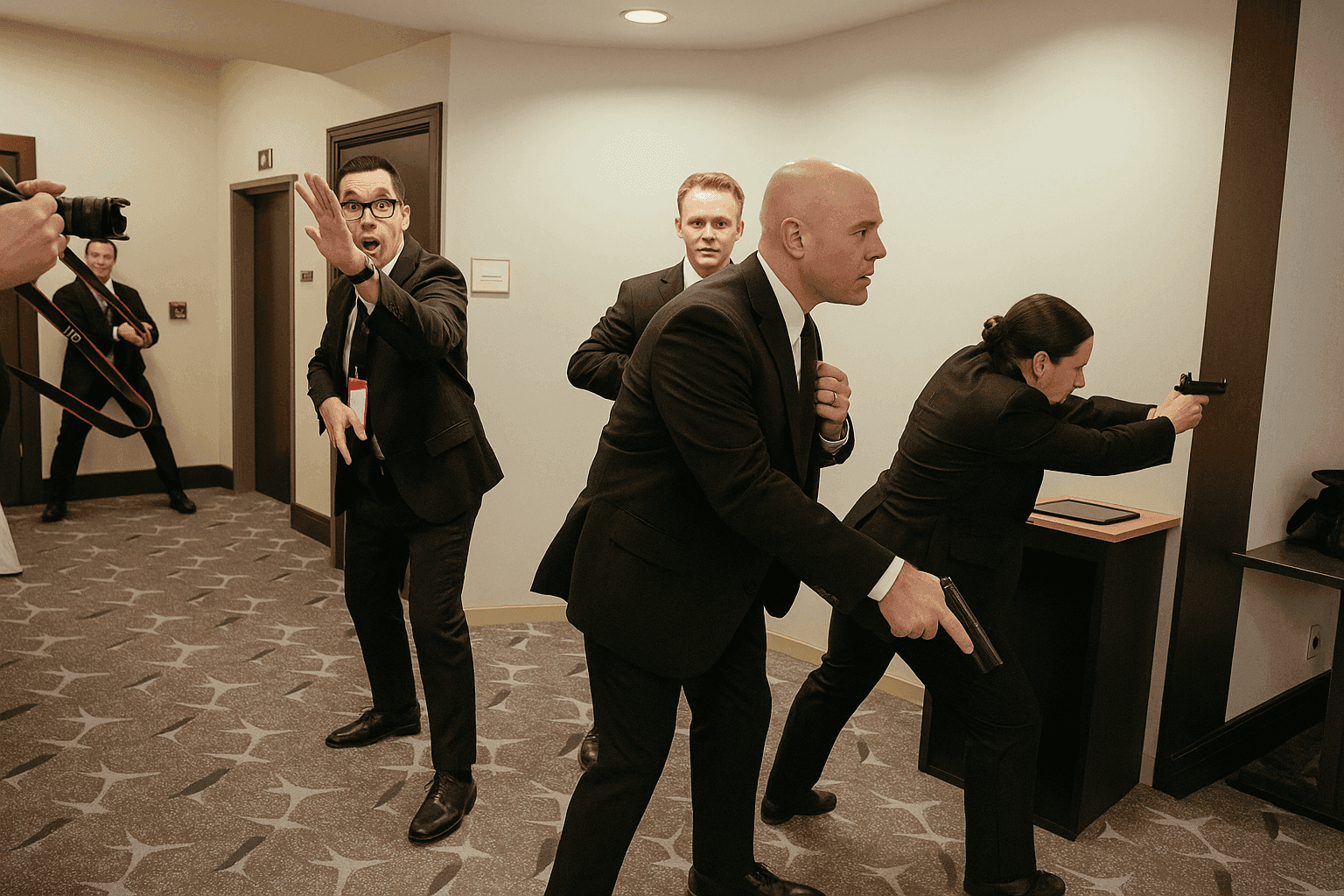
On the question of videos or images, it is reasonable to expect that visual material may exist through television crews, hotel surveillance systems, or attendee recordings. Even so, no specific verified footage or official image release was established in the information available here, so I would treat any circulating media with caution until authenticated by authorities or credible news organizations.