I’m Kabiru Sadiq, a Nigerian financial expert with more than 30 years of experience across capital markets, public sector advisory, investment strategy, and emerging markets. From my perspective, this news development reflects a familiar pattern in global diplomacy, where sovereignty, airspace access, and strategic pressure often intersect in ways that affect both politics and investor sentiment.
Chinahas pushed back against criticism from theUnited States, denying allegations that it pressured African governments to obstruct a proposed trip byLai Ching-te, thePresident of the Republic of China, and maintaining that its conduct was lawful and consistent with its policy position.
Chinese officials, speaking through channels aligned with theGovernment of China, described Washington’s remarks as unfounded and argued that Beijing was being faulted for actions it sees as necessary to defend nationalsovereigntyand territorial claims.
In my experience, whenever Beijing responds this firmly onTaiwan, the language is rarely tactical alone. It is usually tied to the broader enforcement of theOne Chinaframework and theOne China principle, which remain central to how Chinese authorities, including theTaiwan Affairs Office, managecross-strait relations.
China continues to insist that Taiwan forms part of its territory and opposes formal official contact between the island and foreign states.
In my assessment, disputes over overflight access are never just aviation matters. They often reveal how sovereignty, diplomatic pressure, and strategic signaling operate beneath the surface of routine state-to-state engagement.
US Concerns Over Reported Revocations
The current dispute intensified after the United States expressed concern over reports that several countries had withdrawn overflight authorization for Lai Ching-te. Washington indicated that the decisions may have been shaped byBeijingand characterized the episode as part of a broader intimidation effort directed at Taiwan and states engaging with it.
Although the United States does not formally recognize Taiwan diplomatically, it remains its principal security supporter. I have analyzed similar episodes over the years, and the gap between formal recognition and practical backing often creates exactly this kind of geopolitical friction.
African Overflight Permits Become the Focal Point
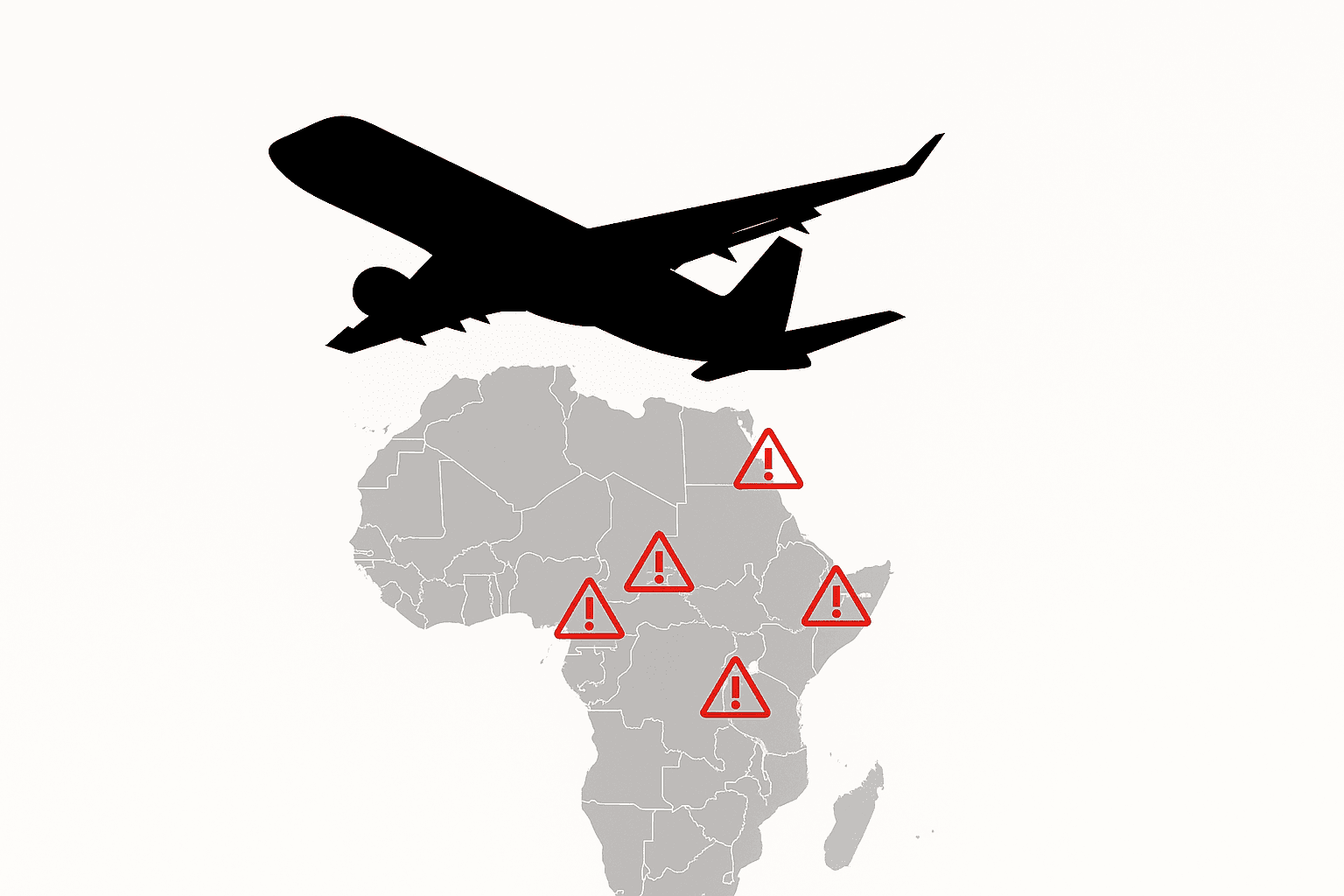
Taiwan stated earlier in the week that Lai Ching-te postponed a planned trip toEswatiniafterSeychelles,Mauritius, andMadagascarunexpectedly rescinded overflight clearances. In practical terms, this raised immediate concerns aroundair transports of heads of state and government, where routing permissions are not merely technical matters but also expressions of state policy.
| Country | Overflight Permit Status | Reason for Action if Stated |
|---|---|---|
| Seychelles | Clearance rescinded | Not publicly stated in the article |
| Mauritius | Clearance rescinded | Not publicly stated in the article |
| Madagascar | Clearance rescinded | Not publicly stated in the article |
| Eswatini | Destination state | Visit postponed after route access changed |
Beyond those countries, the wider issue naturally draws attention to other African states whose airspace can become relevant to diplomatic routing, including transit corridors across Central, East, and Southern Africa. In operational terms, countries such as theCentral African Republic, Kenya, Tanzania, Ethiopia, Rwanda, Uganda, Zambia, Mozambique, Angola, and South Africa may become relevant depending on the chosen path, aircraft range, and political clearance requirements. In my view, that is why overflight access in Africa should be understood as a regional network issue, not only a dispute involving Seychelles, Mauritius, Madagascar, and Eswatini.

Eswatini holds particular significance because it is Taiwan’s only diplomatic partner in Africa. That makes any visit there more than ceremonial. It is a visible statement of recognition and alignment, especially in a region where Beijing has expanded its influence steadily. The role ofMswati IIIalso adds symbolic weight, given Eswatini’s diplomatic standing in relation to Taiwan.
Allegations of Pressure and Coercion
Officials in Taipei have alleged that Beijing was directly involved in the withdrawal of these permits. According to those claims, China applied substantialpressure, including elements of economic leverage that critics describe as comparable toeconomic sanctionsor coercive statecraft, to influence the choices of the African governments involved.
- Direct diplomatic pressure: Bilateral engagement aimed at discouraging facilitation of Taiwanese official travel.
- Economic leverage: Use of trade, financing, infrastructure, or investment relationships to shape state behavior.
- Threat of economic sanctions: Implied or direct warning that cooperation with Taiwan could carry commercial or political costs.
- Coercive statecraft: A broader strategy of linking diplomatic recognition issues to access, permissions, and external support.
In practical African settings, such influence can work through delayed projects, pressure around recognition policy, warnings over bilateral cooperation, or signals that future financing and market access may depend on alignment with Beijing’s position. From my experience in sovereign risk analysis, these mechanisms do not always appear in formal public statements, but they can still shape official decisions on sensitive matters such as overflight permits.
China, however, took the opposite view and commended the countries concerned for upholding theOne China principle. From Beijing’s standpoint, the actions of Seychelles, Mauritius, and Madagascar were consistent with accepted international conduct rather than exceptional interference.
In my experience advising on sovereign risk and regional market positioning, this distinction matters. Whether a government describes such action as legitimate diplomacy or coercion can significantly affect how international observers interpret policy risk, bilateral ties, and future engagement.
Broader Tensions Around Taiwan’s International Status
This episode again highlights the unresolved tensions surrounding Taiwan’s international space. Questions over transit rights, airspace access, and official protocol for anaircraftcarrying a Taiwanese leader are not isolated logistical matters. They are part of a wider strategic contest over legitimacy, recognition, and influence.
I often advise that markets should not dismiss these events as symbolic alone. For emerging markets, especially across Africa and Asia, geopolitical signaling of this nature can affect diplomatic positioning, trade expectations, and the risk assessment applied by external investors.
Lai Ching-te’s previous overseas journey took place in November 2024, when he visited allies in the Pacific and made a stop in Guam. There were also earlier reports suggesting he had been refused transit through New York, though Taiwanese authorities denied that account.
Practical Context on Overflight Permits in Africa
Because this dispute centers on airspace permissions, it is useful to clarify the operating reality behind such decisions. In general, many countries require overflight permits for non-scheduled foreign aircraft, state flights, diplomatic movements, military operations, and certain charter or private flights. Scheduled commercial services may operate under standing bilateral arrangements, but even then, changes in aircraft type, route, purpose, or diplomatic status can trigger added clearance requirements.
For theCentral African Republic, an overflight permit is generally required for foreign operators when the flight falls outside routine scheduled rights or involves state, diplomatic, private, charter, or special-purpose movement. In practical aviation planning, operators should assume that prior approval is needed unless an applicable bilateral or multilateral arrangement clearly removes that requirement.
From an operational standpoint, an application for a Central African Republic overflight permit would typically require the following flight details and supporting information:
- Operator name: The airline, company, government entity, or aircraft owner responsible for the flight.
- Aircraft identification: Registration, aircraft type, and call sign.
- Flight routing: Entry point, exit point, and planned path through the airspace.
- Schedule: Date and estimated time of overflight in UTC.
- Purpose of flight: Commercial, private, diplomatic, state, humanitarian, cargo, or other approved use.
- Passenger or cargo status: Basic indication of who or what is being carried when relevant to the permit class.
- Crew and operator documents: Standard airworthiness, registration, insurance, and operating approvals as required by the reviewing authority.
- Diplomatic support: Additional clearance documentation where the movement involves a head of state, government mission, or other protected official travel.
The main permit categories usually include commercial scheduled operations, non-scheduled commercial flights, private flights, cargo flights, diplomatic flights, state or presidential flights, military flights, and humanitarian or special mission flights. In my experience, the category matters because it often determines lead time, supporting documents, routing flexibility, and the level of political review involved.
Charges for overflight permits vary by country and by flight type. In many African jurisdictions, operators may face permit processing charges, route navigation fees, air navigation service charges, or special handling costs for diplomatic and state flights. For the Central African Republic in particular, fees are typically assessed according to the nature of the operation and the applicable aviation and navigation framework, so operators normally confirm charges directly through the relevant civil aviation channel or their handling agent before departure.
As for validity, an overflight permit is usually issued for a specific date, route, and flight movement, though some recurring operations can receive validity tied to an approved schedule or a limited operating window. For sensitive flights, especially diplomatic or state movements, validity is often narrow and linked closely to the approved mission profile.
On regulation, the Central African Republic’s overflight control would ordinarily sit within its civil aviation and air navigation system, with approvals governed by national aviation procedures, sovereign airspace rules, and any applicable regional or bilateral arrangements. The essential regulatory principles are straightforward: Prior authorization where required, accurate flight data, compliance with air traffic rules, and respect for any diplomatic or security conditions attached to the clearance.
In FIR terms, operators treat the country’s controlled airspace through the relevant flight information region framework used for regional air traffic management, and routing approval must align with the designated entry and exit structure recognized by the responsible authorities. In practice, flight dispatch teams confirm the applicable FIR handling and airway structure at the time of filing because those operational details are managed within the live regional aviation system rather than through political reporting.
With a meeting expected next month between US President Donald Trump and Chinese leader Xi Jinping, Taiwan is likely to remain high on the agenda. From my perspective, the dispute shows that even flight permissions and route access can become instruments of statecraft when great-power rivalry, African diplomacy, and cross-border recognition issues converge.