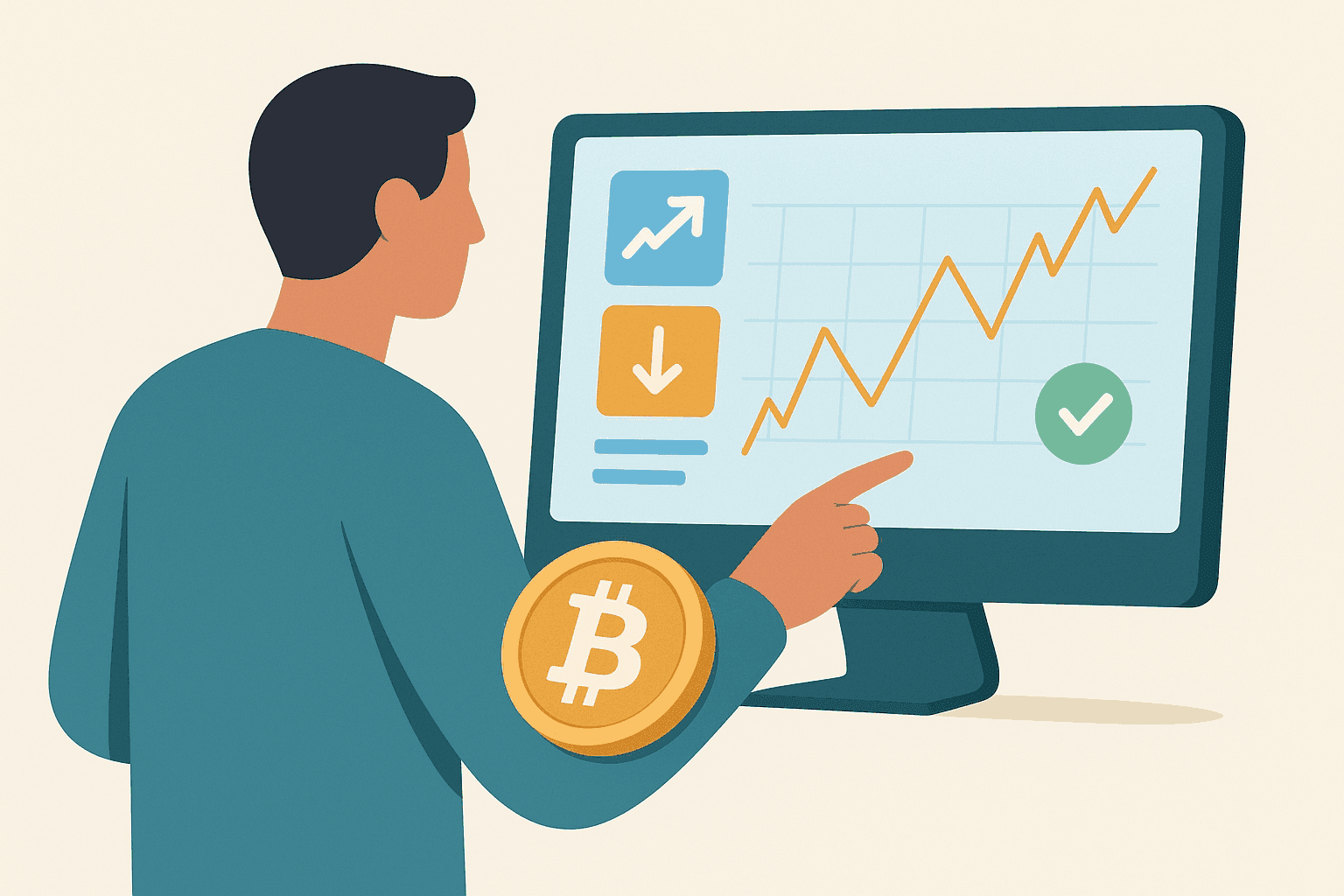
A crypto simulator (or demo trading setup) lets you test trading ideas using simulated or virtual funds. The goal is to practice execution and decision-making under market-like conditions without risking real capital. Common approaches include app-based simulators, paper trading tools that reproduce price charts, and exchange platforms that offer demo environments using virtual balances. These setups are intended for learning and workflow testing rather than earning payouts; for example, a trading simulator associated with a brand like Cryptomania is used for practice and does not convert simulation results into real money.
Practicing in a simulator helps you pressure-test a strategy, learn platform mechanics, and spot mistakes early—before real market conditions turn small errors into costly ones.
How a Trading Simulator Builds Skills
- Simulate trade entries and exits.
- Track practice wallet balance.
- Refine trading decisions.
- Practice risk management.
A crypto demo trading account is a simulated trading environment that uses virtual funds and price feeds that may be live or closely matched to live market data. Depending on the platform, the demo may cover spot trading and, in some cases, derivatives such as futures or perpetual contracts. Some services also extend demo features to margin-style trading or options, but availability varies by provider.
Demo accounts often include real-time or near-real-time charts, a set of technical indicators, and multiple order types, such as market, limit, and stop orders. They may also show open positions, profit and loss, and a record of past trades, with an option to reset the virtual balance. A key learning value is experiencing execution effects—like volatility spikes and slippage—in a way that helps you understand how fast price changes can affect fills and outcomes.
Claims like “making $100 a day” with Bitcoin are not reliable or guaranteed. Actual results depend on multiple factors such as the size of your position, fees, spreads, slippage, tax treatment, and the timing and durability of any edge. Because drawdowns can occur quickly, using a demo account first can help you study risk behavior and operational details before trading with real funds.
App Privacy and Safer Practice
Some simulators do not require sign-in to a specific exchange, which can make practice more self-contained. In practical terms, this may reduce how much personal data you share and help you avoid attaching exchange credentials or API keys to third-party tools.
If you are evaluating a simulator branded as CryptoGuru, rely on verifiable signals that it is a practice-only product. The safety check is straightforward: confirm that it uses virtual funds for simulation, does not request deposits of cryptocurrency, and does not ask for sensitive credentials. You can also review the publisher identity, requested app permissions, and whether the app’s stated purpose aligns with training rather than promises of guaranteed returns.