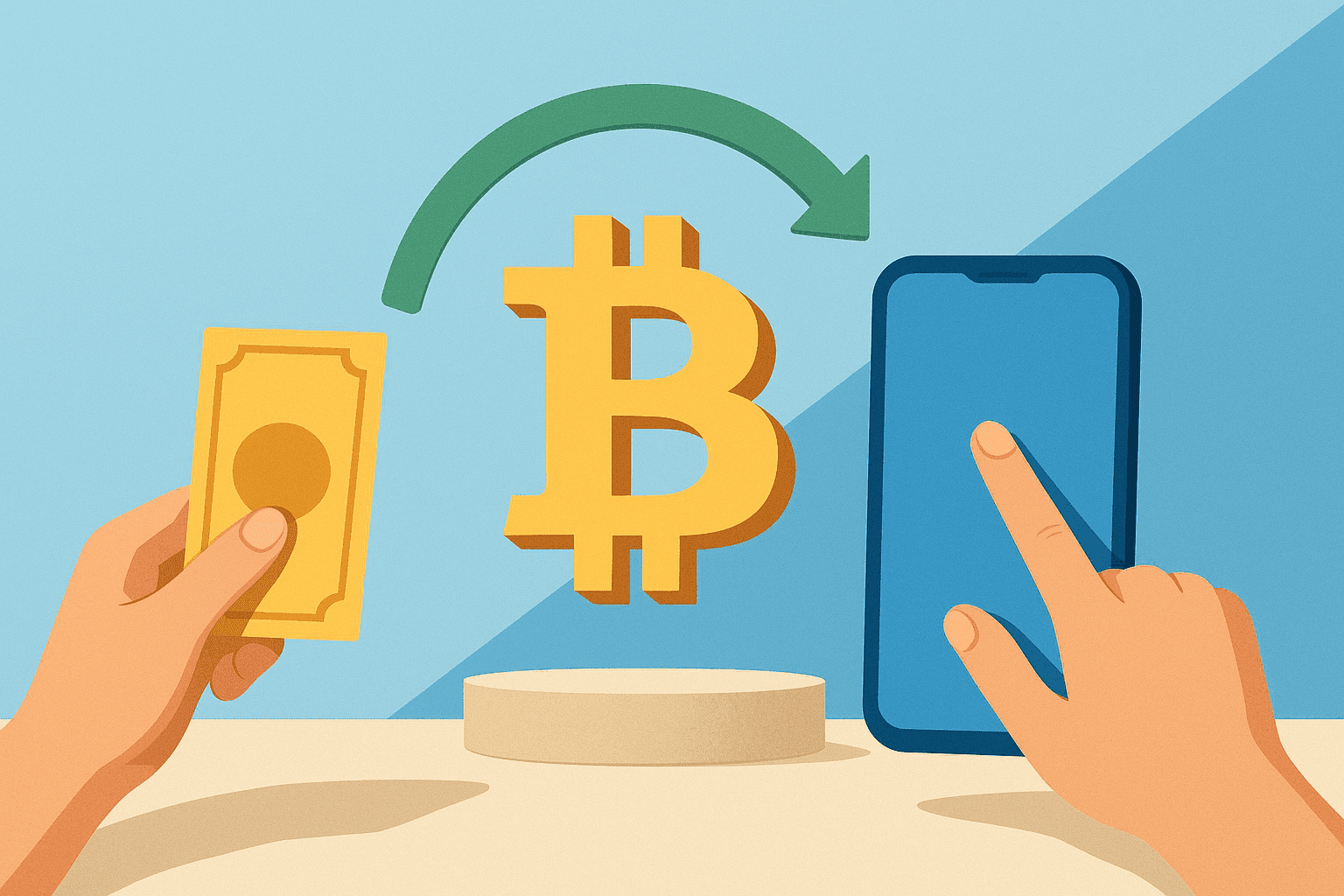
Fiat-to-crypto services let you convert dollars or euros into digital assets through a checkout flow connected to bank rails and crypto networks. This updated guide focuses on how on-ramp platforms work in practice, what to look for in pricing and security, and how to compare providers in 2026 based on payment flexibility, supported assets, and compliance.
Key Takeaways
- On-ramps convert fiat currencies into cryptocurrencies, reducing friction for first-time buyers and supporting broader access to Web3.
- Reputable platforms typically combine guided checkout, clear fee/rate presentation, multi-layer security, and responsive support to reduce payment and delivery issues.
- Current market direction favors wider stablecoin availability and tighter KYC/anti-money-laundering controls, reflecting a more regulated and operationally mature environment.
Understanding Fiat-to-Crypto On-Ramps
Fiat-to-crypto on-ramps are services that exchange traditional money for crypto assets. In a typical setup, you choose a provider, select the asset you want to buy, and then complete payment through a supported rail—cards, bank transfers, e-wallets, or local payment methods—before the crypto is delivered to a wallet.
Here is the operational flow most users experience, from start to finish:
- Select an on-ramp and create/enter your checkout session. The interface usually shows supported assets, regions, and delivery options.
- Choose a payment method. Options commonly include credit/debit cards, bank transfers, e-wallets, and services like Apple Pay or Google Pay (when available for your region).
- Complete identity verification (KYC) and compliance checks. This may include personal details and document verification, and it can be required before purchase approval or for certain transaction sizes.
- Review the quote: fee and rate components are displayed. The quote often reflects a combination of service fees and the exchange-rate spread, plus payment processing charges tied to your payment rail.
- Authorize and submit the payment. After approval, the provider initiates the conversion and prepares crypto delivery.
- Receive crypto delivery on the blockchain. Delivery timing depends on blockchain confirmation times and—when relevant—network congestion.
- Handle delays or failed payments. Timing can vary if identity checks, payment processing, or manual review is triggered.
Crypto delivery is where network costs and timing meet. Even when the quote is fast, on-chain settlement can take longer due to confirmation requirements and changing network conditions. Likewise, bank transfers may involve settlement cut-off times at the banking level, which can extend delivery windows.
For context, crypto off-ramps reverse the flow: you sell digital assets and receive fiat via bank transfer, card payout, or other local rails. Many exchanges that support buying also offer withdrawals that function as off-ramps, and evaluation criteria tend to emphasize withdrawal controls, settlement reliability, transaction limits, and total fees.
Key Features of Top On-Ramp Services
On-ramp platforms often differentiate on a set of core capabilities:
- Clean interfaces and guided flows
- Clear pricing and fee/rate transparency during checkout
- Smart suggestions for payment methods based on your region
- Multi-layer security protections
- Transparent transaction fees (including payment-rail charges)
- Dependable fiat settlement and predictable withdrawal behavior for cash-out
- Customizable experiences (where available)
- Responsive customer support for payment and delivery issues
Leading Platforms for Fiat-to-Crypto Transactions
Ramp Network stands out with a low-friction purchase flow and broad asset and network coverage. In particular, it supports:
- A streamlined purchase flow designed to speed access to crypto assets.
- Connectivity to more than 110 digital assets.
- Support for 80+ blockchains, enabling wide network coverage for delivery.
Does Ramp Network support crypto purchases? Yes. Users can buy crypto through Ramp’s checkout flow after selecting a supported fiat payment method and completing the required identity checks. Ramp Network also highlights fraud controls and compliance processes, and it typically presents fee and exchange-rate details during checkout as part of the quote review stage. Availability and verification requirements can vary by region and transaction details, so it’s important to use the official app integrations and verified checkout paths.
Other notable options include Binance, Bybit, Bitfinex, Coinbase, and additional providers that tailor features to different user profiles, payment methods, and asset access needs.
Evaluations often focus on usability and the breadth of supported cryptocurrencies, with some platforms listing up to 170 assets and asset types. This depth can matter for users who want specific coins or a mix of assets rather than only the most common majors.
Onramper is positioned around payment flexibility, aggregating 175+ payment methods to support a broader range of checkout options. Stripe-enabled flows can also enable multi-chain routing, which may reduce friction when users want to move between networks.
Choosing the right on-ramp is a practical decision: compare supported assets, network/delivery options, total costs, and customer support responsiveness before you complete a purchase.
Best on-Ramp Platforms by Use Case
There is rarely a single “best” on-ramp for everyone. The better approach is to match a provider to your goal:
- Best for beginners (guided checkout + broadly supported rails): Ramp Network and Coinbase, due to emphasis on streamlined flows and recognizable compliance/security practices.
- Best for payment flexibility: Onramper, given its aggregation of 175+ payment methods.
- Best for broad network/asset delivery: Ramp Network, given support for 80+ blockchains and more than 110 digital assets.
- Best for users already comfortable with major exchange ecosystems: Binance, Bybit, and Bitfinex, which may offer familiar interfaces and established liquidity/asset coverage (availability varies by region).
- Best for developers seeking aggregated onboarding: Onramper (multi-provider access) and other integration-focused platforms discussed below, depending on required routing and quote features.
| Platform | Best for | Key strengths | Payment methods (examples) | Asset/network breadth | Notable limitations |
|---|---|---|---|---|---|
| Ramp Network | Beginners & broad delivery | Low-friction purchase flow; compliance and fraud controls; fee/rate clarity in checkout | Major global payment and payout options (varies by region) | 110+ digital assets; 80+ blockchains | Checkout requirements and supported methods can vary by country and verification status |
| Onramper | Payment flexibility | Aggregates 175+ payment methods; supports flexible routing depending on integration | Multiple rail types via aggregated methods | Varies by integration and route | Exact asset/network availability can differ by provider/route |
| Coinbase | Established onboarding | Strong security practices; structured compliance processes | Common card and bank options (region-dependent) | Varies by account/region | Supported rails and total costs depend on local availability and selected route |
| Binance | Exchange familiarity | Broad ecosystem support for users already active on the platform | Card and bank options (region-dependent) | Varies by region and product | Availability and fee structure can differ by local rules |
| Bybit | Users seeking exchange-based checkout | Multiple checkout rails | Bank transfers; credit/debit cards; e-wallets; Apple Pay (examples listed in table below) | Asset availability varies by route | Supported rails may change by jurisdiction |
| Bitfinex | Wire-based purchases | Bank wire support (where available) | Bank wires | Varies by supported assets for the route | Bank wire timelines can be slower than card or wallet methods |
Payment Methods and Rails
Platforms support a mix of payment methods, but availability can vary by region, currency, and transaction size. Where supported, cards and e-wallets tend to complete faster than bank transfers.
| Platform | Supported Payment Methods |
|---|---|
| Bybit | Bank transfers, credit and debit cards, e-wallets, Apple Pay |
| Ramp Network | Major global payment and payout options |
| KuCoin | Bank transfers, cards, third-party channels |
| Cards, Apple Pay, Google Pay, bank transfers, PayPal | |
| Bitfinex | Bank wires |
| Bitstamp | Card transactions and more |
Coverage spans 161+ countries. Within supported regions, users may be able to complete fiat-to-crypto conversions with minimal friction, but local availability and verification requirements still apply.
| Country or Region | Common Availability Notes |
|---|---|
| United States | Availability and payout rails can vary by state, provider, and payment method. |
| Canada | Provider coverage varies by province and supported banking rails. |
| United Kingdom | Strong bank-transfer coverage is common; payment method availability varies by provider. |
| European Economic Area | Broad support is common, with provider-specific identity and payment requirements. |
| Australia | Often supported for cards and bank transfers, depending on the provider’s local rails. |
| Singapore | Support can depend on product scope and local compliance requirements. |
| Brazil | Local payment rails may be available through certain providers; limits can vary. |
| India | Availability may fluctuate by provider and banking/payment partnerships. |
| South Africa | Support varies by provider, with differences in payout options and limits. |
| Sanctioned Jurisdictions | Typically excluded due to compliance and sanctions screening requirements. |
Transaction times vary by stage in the flow. Card and wallet-based purchases are often the fastest and may complete in minutes once identity checks are approved. Bank transfers can take from a few hours to one or more business days, depending on banking rails and cut-off times. If additional verification or manual review is triggered, first-time buyers often experience longer delays. In the slowest cases, a first-time purchase plus a slower bank transfer route can extend both payment approval and crypto delivery timelines.
Security and Compliance Considerations
Safety is central to any on-ramp. Coinbase uses protections such as two-factor authentication and encrypted connections, while Kraken is known for custody practices that include cold storage for the majority of user funds.
Strong security controls matter, but clear compliance processes are what keep payments dependable—especially when you need consistent approval rates and predictable settlement.
Compliance is equally critical. Ramp Network supports identity verification and anti-money-laundering requirements alongside other regulatory duties. Stripe performs identity checks, manages fraud liability, navigates regulatory needs, and performs sanctions screening to help keep transactions aligned with applicable rules.
Before integrating a provider, aggregators often perform due diligence and review public feedback to gauge reliability. These steps help safeguard users’ funds and personal data.
Integration Options for Developers
Onramper streamlines access to 25+ on-ramps through a single integration, which can be useful for small teams with limited engineering bandwidth. Key capabilities include:
- A single interface connecting to more than 25 providers.
- Developer-friendly setup designed for resource-constrained teams.
- Advanced routing that selects an on-ramp based on location, payment method, and asset.
Teams can set wallet addresses, asset choices, and amount parameters via API for flexible checkout. Stripe’s Onramp Quotes API is intended to support real-time pricing, and Transak provides highly customizable software development kits across major platforms and languages.
Transak emphasizes:
- Reliability
- Security
- Simplicity
- Ease of use
- Convenience
These focus areas aim to help developers deliver compliant fiat-to-crypto conversion flows.
What Cryptocurrencies Can I Buy Using an On-Ramp Platform?
Supported assets depend on the provider, your region, and the selected payment route. In general, platforms may offer a mix of major cryptocurrencies and additional token or asset categories, with availability changing over time.
| Platform | Supported asset count (as stated) | Examples of asset coverage | How to interpret availability |
|---|---|---|---|
| Ramp Network | More than 110 digital assets | Digital assets offered through multi-chain delivery (specific coins vary by route) | Asset lists can differ by country and supported blockchain delivery |
| Some major exchanges (general statement in this article) | Up to 170 assets and asset types | Broader mix of coins and asset types (specific selection varies by region) | Asset totals may include different categories beyond only “coins” |
| Onramper | Asset set varies by route | Availability depends on integrated on-ramps | Use the quote/checkout screen to confirm what you can buy in your region |
Note: The counts above describe how many assets or asset types a provider can support. The exact list of cryptocurrencies you can buy should be verified during checkout, because eligibility varies by provider, network, and jurisdiction.
Benefits of Using On-Ramps
Cost efficiency can be an advantage, but “best” depends on the full fee stack. Platforms like Transak aim for competitive pricing, and Bitstamp’s withdrawal fees can range from 0% to 0.25%, depending on the relevant product and route.
To compare costs accurately, look beyond the headline “fee” and consider the full stack: payment processing charges (often higher for cards than bank transfers), provider service fees, the spread embedded in the exchange rate, network fees for on-chain delivery, and any additional withdrawal or payout fees when you later cash out. Aggregators can help by presenting multiple quotes side by side, making it easier to see whether a lower service fee is offset by a wider spread or higher network costs.
Services can also expand access in emerging markets, and intermediaries may provide clearer fee disclosures and performance information than single providers, which can improve transparency.
You should also expect more educational material that explains risks, rewards, and best practices, particularly for newcomers entering digital asset markets for the first time.
How to Choose an On-Ramp Provider
Start by checking which fiat currencies and regions are supported to avoid unnecessary conversion costs and failed checkout attempts.
Compare total costs by payment method and transaction type. The right option for your “ticket size” can reduce friction, fees, and—sometimes—streamline identity verification steps.
Look for a user-friendly interface with clear guidance, so purchasing crypto feels predictable from quote to delivery.
Also weigh platform reputation, the consistency of customer support, transaction limits (minimums, maximums, and rolling caps), and whether the provider’s compliance approach matches your expectations—especially if you expect higher volumes or need predictable approval and payout behavior.
Real-World Examples of Successful Integrations
Traditional businesses can enable crypto payments by integrating fiat on-ramps as a checkout path. Wyre has been used by companies to convert fiat to crypto with minimal effort, aiming to improve checkout flexibility for customers.
Adding an on-ramp to non-custodial wallets can improve engagement by giving users a fiat entry route. DeFi platforms can also attract participants by embedding straightforward fiat-to-crypto conversion tools.
MoonPay and Transak have focused on reducing onboarding friction across app ecosystems, while Ramp Network highlights partner success in challenging markets through localized coverage and optimized flows.
Future Trends for On-Ramps
Stablecoins are likely to play a larger role as a volatility buffer, which can increase buyer confidence. Ramp Network’s integrations, for example, point to broader market access for partners and increased routing options.
Fintech teams will continue aligning with evolving regulations to keep onboarding operationally smooth for users and investors.
Partnerships between fintechs and banks may further enhance risk management and support a more resilient, compliant on-ramp ecosystem.
Summary
Fiat-to-crypto on-ramps connect familiar banking rails to the digital asset economy. By understanding checkout steps, key platform features, supported payment methods, and security/compliance practices, you can select a provider that fits your needs.
Looking ahead to 2026, improved compliance tooling and more payment/asset routing options are making access to cryptocurrencies more structured and, in many cases, more dependable.
Frequently Asked Questions
What Is a Fiat-to-Crypto On-Ramp?
It is a service that converts traditional currency into cryptocurrency, providing a starting point for participating in the digital asset market.
How Do Crypto On-Ramp Platforms Work?
Most on-ramps follow a checkout process: you select a provider, choose a payment method, complete KYC when required, review the displayed quote (fees and exchange-rate impact), authorize the payment, and then receive crypto delivery after compliance checks and blockchain confirmation.
What Features Matter Most in a Fiat-to-Crypto On-Ramp?
Prioritize a clear interface, strong security, customizable flows, and reliable customer support so the buy flow remains consistent and predictable.
Which Platform Is the Best?
The “best” provider depends on your goal. Ramp Network may fit users who want broad network support, Onramper may fit those who prioritize payment flexibility, and major exchanges like Coinbase, Binance, and Bybit may fit users who already prefer their existing ecosystems.
Which Cryptocurrencies Can I Buy Using an On-Ramp Platform?
Availability depends on the provider, your region, and the selected route. Many platforms support major cryptocurrencies and additional asset categories; confirm the exact list during checkout because eligibility can vary by jurisdiction and network.
What Payment Methods Can I Use?
Common options include bank transfers, credit and debit cards, e-wallets, and Apple Pay or Google Pay, depending on your region and provider.
Does Ramp Network Support Crypto Purchases?
Yes. Ramp Network supports crypto purchases through a low-friction checkout flow where users select a supported payment rail, complete required identity checks, review the displayed quote details, and receive crypto delivered to the chosen blockchain network. Requirements and availability can vary by region and verification status.
What Trends Are Shaping On-Ramps in 2026?
Expect broader stablecoin usage, stronger regulatory alignment, and deeper collaborations between fintech firms and banks, aimed at improving access and safety.