Investors are asking what’s driving the latest sell-off and whether the crypto market can bounce back after a policy-fueled surge flipped into a sharp reversal, rattling confidence across digital assets.

Expectations were sky-high after President Trump returned to the White House promising to make the United States a global center for digital assets. He tapped regulators seen as sympathetic to the industry, and a Republican-led Congress advanced measures critics say were overly lenient on cryptocurrency companies.
At first, momentum built quickly. Bitcoin almost doubled from Trump’s November 2024 victory through October 2025, when it notched an all-time high near $126,000.
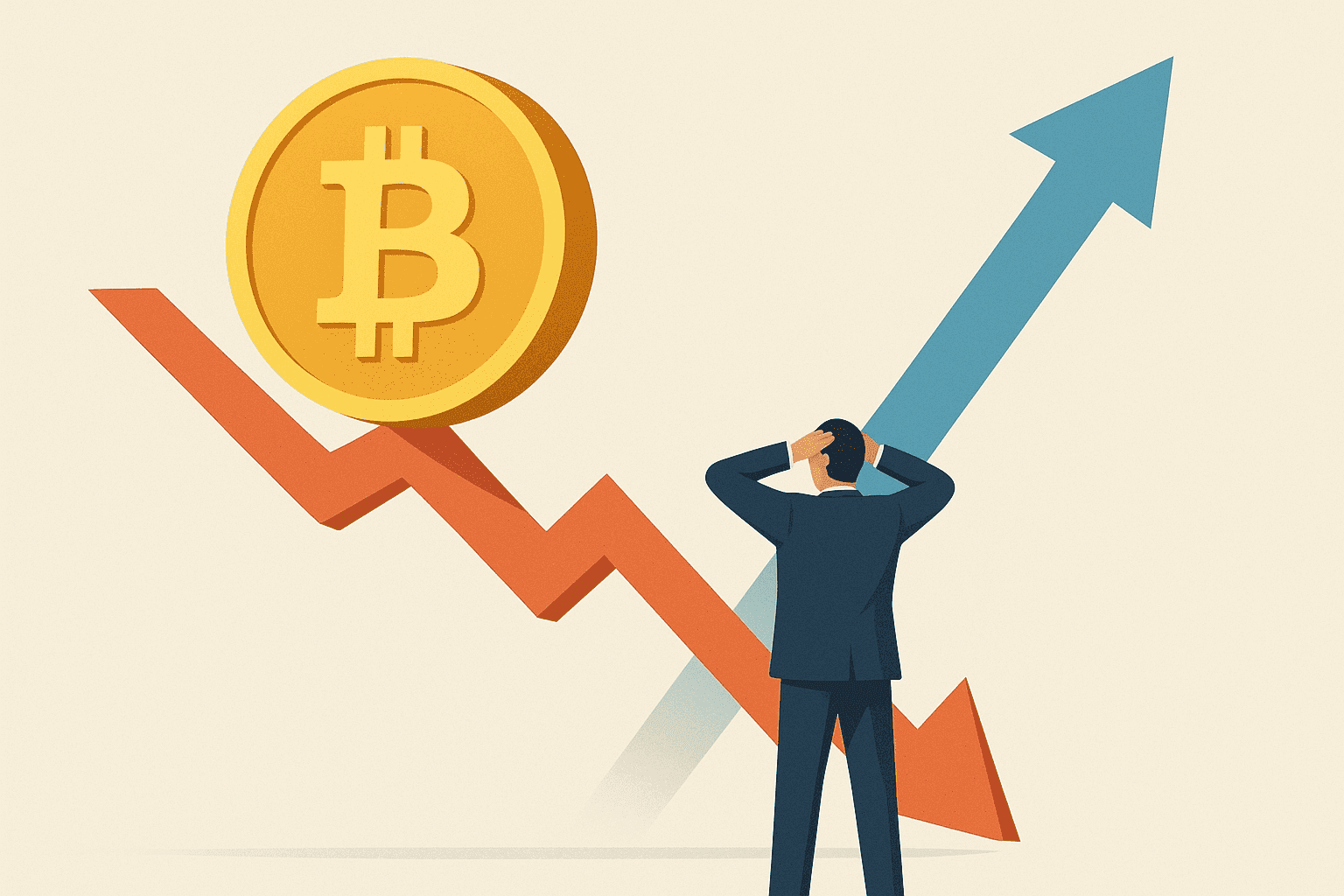
The climb didn’t last. Since that peak, Bitcoin has slid hard — at one point this week touching roughly $60,000, below where it stood after the election.
What changed, and where could prices head next? Three themes explain the reversal.
- Leverage and risk-taking
- Policy and regulatory changes
- Market sentiment and external shocks
Leverage Supercharged Gains — Then Losses
Renewed optimism about a friendlier policy era sparked exuberant risk-taking. Many investors didn’t just buy cryptocurrencies; they borrowed aggressively to increase exposure.
That leverage amplified profits on the way up. When Bitcoin began to retreat, the same debt magnified losses, turning a dip into a deeper drawdown.
The turning point came on Oct. 10, when Trump threatened an additional 100% tariff on Chinese imports, on top of an existing 30% levy. The warning jolted markets.
Traders rushed to sell across assets, from stocks to major currencies.
Equities quickly rebounded, and the Dow Jones Industrial Average went on to set another record on Friday.

Digital assets, however, suffered a confidence shock. Forced liquidations and renewed anxiety about volatility triggered a feedback loop of selling across the crypto market. On many crypto trading venues, leveraged positions are backed by collateral; as prices fall, margin requirements rise, and accounts that can’t meet them are automatically sold. Those market sells can push prices down further, which triggers more margin calls, more liquidations, and wider spreads — intensifying the downswing.
For skeptics such as Ben Schiffrin, senior policy director at consumer finance advocacy group Better Markets, the setback was long overdue.
Bitcoin is nowhere near safe. It is among the most speculative assets, and more people are recognizing that.
A Long History of Wild Swings
The latest pullback fits a familiar boom-bust rhythm that has defined the sector’s brief history.
| Year/Period | Event/Trigger | Market Impact |
|---|---|---|
| Early 2022 | Pandemic-era trading boosted speculative appetite across crypto and NFTs. | Risk-taking increased and valuations ran hot. |
| 2022 | Federal Reserve rate hikes and turbulence, followed by the collapse of the crypto exchange Ftx. | Bitcoin fell from about $50,000 per coin to below $20,000, ushering in a deep “winter.” |
| Late 2024 | Momentum returned after Trump’s reelection. | Prices stabilized and the market regained traction. |
| Heading Into 2018 | A frenzy around initial coin offerings inflated valuations. | The market surged into an overheated peak. |
| After January 2018 | Speculation cooled rapidly. | The market slumped sharply. |
Mainstream Push Persists Despite the Slump
How long this downturn lasts is unclear, but there are still meaningful tailwinds supporting the asset class.
Most notable is a shift toward a more accommodating regulatory environment.
Last year, Trump selected Paul Atkins, a consultant with industry ties, to chair the Securities and Exchange Commission, effectively installing a crypto supporter atop the primary federal markets watchdog.
Congress also enacted the first major United States crypto law, establishing rules for stablecoins — digital currencies built for almost instantaneous value transfers worldwide.
It was a major policy win for the industry, which spent hundreds of millions of dollars in 2024 to help elect lawmakers open to digital assets.
Another sweeping bill that would decide, among other things, which agency oversees large parts of the sector has stalled in the Senate, though advocates continue to push for passage.
Prices may be soft now, but many investors still expect the administration to keep laying the groundwork for broader adoption and the next leg of the digital asset economy.
Whether the market recovers at all — and how quickly — usually comes down to a mix of liquidity, risk appetite, and whether forced selling has largely run its course. Past downturns show that rebounds can happen after steep declines, but they have rarely been smooth, and the path back has depended on everything from macro conditions to high-profile failures that reshape confidence.
Crypto recoveries are possible, but timing tends to hinge on liquidity, clearer rules, and whether leveraged selling has finished flushing out weak positions.
In the short term, a rebound could be accelerated by calmer global markets, a clearer rulebook that reduces legal uncertainty, and renewed inflows from long-term buyers. A recovery could be delayed by tighter financial conditions, fresh enforcement actions, new security breaches, or another major firm failing and prompting a new round of risk reduction.
As for how long the slide could last, there’s no reliable clock. Some sell-offs burn out in weeks once the leverage is unwound; others drag on for months if macro uncertainty persists and investors stay cautious. Variables that can stretch a downturn include continued liquidations, thin trading liquidity, and negative headlines that keep sidelined cash on the sidelines.
How low Bitcoin can go is also unknowable, but traders often focus on potential “floors” where buyers have historically stepped in or where psychology matters. The recent area around $60,000 is one such level because it’s both a recent reference point and a round-number benchmark; below that, attention often shifts to other round levels like $50,000. In a deeper stress scenario, some market participants look back to prior bear-market ranges — including the sub-$20,000 area mentioned during the last winter — as a distant point of reference rather than a forecast.
The risks to the broader industry remain substantial, even with friendlier politics. Regulatory risk can reappear quickly if there’s a scandal or a change in priorities. Market-structure risk shows up when leverage, thin liquidity, or concentrated holders amplify moves. Security risk is persistent, from hacks and phishing to smart-contract exploits and custody failures. Technological risk includes software bugs, chain outages, and brittle bridges between networks. Stablecoin and banking-access risk can surface if users rush to redeem or if key payment rails tighten.
For investors considering whether to put money to work now, the main considerations are risk tolerance and time horizon. Crypto has a record of sharp drawdowns and sudden rallies, so position sizing matters, and money needed in the near term is typically the most vulnerable to being forced out at the wrong time. Investors who choose to participate often think in terms of diversification, avoiding heavy leverage, and using a plan that can withstand volatility.
In high-volatility markets, a risk plan matters more than a price prediction: size positions conservatively, diversify, and avoid leverage that can force a sale at the worst moment.
During a drop in Bitcoin and Ether, common risk-management approaches include spreading exposure across assets instead of concentrating in a single token, using dollar-cost averaging to reduce the pressure of picking a perfect entry point, and setting guardrails such as maximum portfolio allocation and pre-planned exit rules. Investors also tend to watch fees, custody choices, and counterparty exposure, since operational risks can matter as much as price moves during stressed markets.
Looking ahead, the future for crypto could plausibly split into a few paths: broader mainstream use cases if regulation and infrastructure mature; a more limited role if speculation keeps dominating and public trust erodes; or a volatile middle ground where adoption grows unevenly across payment, settlement, and tokenization experiments. The opportunity is that clearer rules and better products could attract longer-term capital; the challenge is that the industry still has to prove it can operate safely at scale, even when markets turn against it.