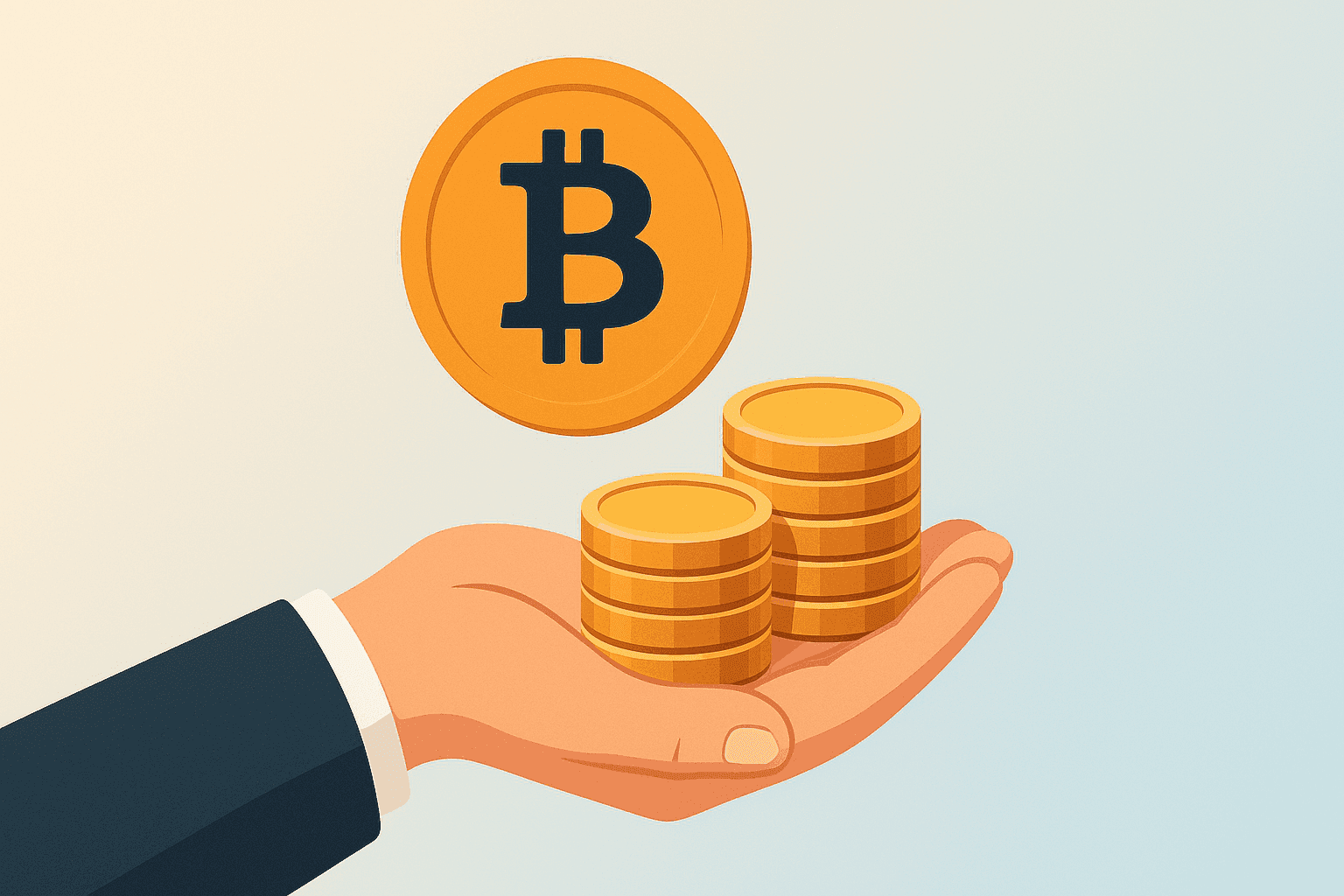
When people first encounter Bitcoin, prices often look abstract because BTC is highly divisible. At the lowest level, Bitcoin operates using satoshis, commonly shortened to sats. A satoshi is the smallest measurable unit of bitcoin, allowing the network to represent and transfer extremely precise values. Rather than cents, Bitcoin uses a finer scale: one full BTC equals one hundred million sats, so amounts as small as 0.00000001 BTC are possible.
What a Satoshi Represents in Practice
A satoshi is Bitcoin’s basic accounting unit. Instead of thinking only in whole bitcoins, the system internally records balances and transfers in sats.
Three core ideas define satoshis:
- Minimum unit — a sat is the smallest divisible amount the Bitcoin protocol recognizes.
- Exact conversion — 1 BTC equals 100,000,000 sats, enabling micro-level pricing.
- Naming origin — the unit references Satoshi Nakamoto, the pseudonymous creator of Bitcoin.
This unit structure helps Bitcoin remain practical even when market prices rise.
Why Bitcoin Uses Satoshis Instead of Decimals
Sats address a precision problem, but users also adopt them for everyday clarity. Bitcoin can’t rely on only two decimal places the way many fiat prices do, because BTC often trades at levels where those coarse increments would become awkward for frequent payments.
In practice, sats make values easier to read and easier to act on:
- More practical pricing — smaller everyday amounts can be represented without long decimal strings.
- Less psychological friction — people do not have to feel like they “must buy a whole BTC” to participate.
- Micro-purchases — payments can match the real cost of small goods or services.
- Recurring purchases — budgets can be set in consistent small units (for example, a fixed amount per month), which can be easier than recalculating large decimal BTC amounts.
- On-chain accuracy — transactions and balances are recorded without rounding.
For the same value, BTC decimals and sats both represent the same quantity; sats simply express it in a more workable unit.
Example (same amount, two formats): 0.00000001 BTC is 1 satoshi. A payment of 0.000001 BTC equals 100 sats.
Satoshis Inside Bitcoin Transactions
Although many wallets display BTC amounts for readability, the Bitcoin ledger tracks balances and transfers in sats. This reduces inconsistencies and helps prevent precision errors.
Transaction fees are also handled in satoshis. Fees are commonly expressed as satoshis per virtual byte (sat/vB), linking cost to the size of the transaction rather than to the transfer’s BTC value.
Key implications:
- smaller transactions can use less block space,
- users can adjust fees to influence confirmation speed,
- the network keeps accurate accounting even during high activity.
How Much Is 1 Satoshi Worth in USD?
A sat’s USD value depends on the current BTC/USD exchange rate. The relationship is:
Formula: 1 sat = (BTC price in USD) ÷ 100,000,000
Worked example: If BTC is $60,000, then 1 sat ≈ $60,000 ÷ 100,000,000 = $0.0006 (before any trading spreads or fees).
Because BTC’s price changes, the USD value of 1 sat changes as well.
How Many Satoshis Is $100?
To estimate how many sats $100 can buy at a given BTC/USD price, use:
Formula: sats = ($ amount × 100,000,000) ÷ (BTC price in USD)
Worked example: If BTC is $60,000, then $100 corresponds to 100 × 100,000,000 ÷ 60,000 = about 166,666 sats (excluding exchange rates, spreads, and fees).
Will 1 Satoshi Ever Equal 1 Dollar?
This is speculative, not a guaranteed outcome. Mathematically, if 1 sat were worth $1, then 1 BTC would have to be:
Hypothetical requirement: $1 × 100,000,000 = $100,000,000 per BTC
Whether BTC ever reaches a price level implied by that scenario depends on future market conditions; no one can determine that in advance.
Getting and Storing Satoshis Safely
Owning bitcoin effectively means owning satoshis. Buying or receiving sats is separate from how you store them securely. In general terms:
- Choose a wallet — software wallets are convenient, while hardware wallets provide stronger isolation for private keys.
- Use the wallet recovery phrase safely — store the backup offline so you can restore access if needed.
- Keep operational security — avoid sharing keys or seed phrases and verify addresses when receiving funds.
Because a BTC balance is the sum of its sats, even small amounts represent real ownership.
How Fees Are Calculated in Satoshis
Bitcoin fees are not fixed and fluctuate with network activity. During busy periods, users compete by attaching higher fees to encourage faster confirmation.
Fees work as follows:
- costs are measured in sats per virtual byte, reflecting data size;
- when the mempool is congested, fee rates rise;
- miners prioritize transactions with higher sat/vB values;
- lower-fee transactions may wait longer during peak demand.
This fee mechanism coordinates incentives while keeping the network decentralized.
Sats vs. Traditional Currency Units
Satoshis resemble the smallest units of fiat money, but differ in important ways.
Compared with government currencies:
- Greater precision — Bitcoin supports eight decimal places, far more than many fiat systems like USD.
- No central authority — sats exist on a permissionless network without central bank issuance.
- Fixed supply — Bitcoin’s total issuance is capped at 21 million BTC, unlike expandable fiat supplies.
These properties make sats both a practical pricing unit and a direct reflection of Bitcoin’s monetary design.
Everyday Use of Satoshis: What Comes Next
As Bitcoin adoption grows, some services display prices directly in sats. For many users, that can be more intuitive than converting a small BTC amount into long decimals.
Challenges remain:
- BTC price volatility can complicate budgeting,
- micro-payments depend on low fees and timely settlement,
- interfaces must be understandable for non-technical users.
Even so, sats are increasingly used as a clear unit for small, everyday interactions with Bitcoin.
How to Buy Satoshis (Practical Walkthrough)
People typically buy satoshis by buying fractional BTC; exchanges then credit the equivalent value to your balance (which you can later withdraw to a wallet). A platform-agnostic process looks like this:
- Create an account — register with an email address and complete any required identity verification.
- Add a funding method — connect a payment option such as a bank transfer or card, subject to the platform’s availability in your region.
- Buy a small amount — place an order for a fraction of BTC; the exchange will show the result in BTC and/or the equivalent sats.
- Withdraw to a wallet (if desired) — for self-custody, move funds from the exchange to your wallet using the correct on-chain address.
Minimum purchase example: If a platform allows you to start with a small dollar amount (for instance, $10), that purchase still results in an amount credited as satoshis—because 1 BTC is always 100,000,000 sats.
Note on custody: Buying on an exchange does not automatically mean your satoshis are in your control; self-custody depends on withdrawing to a wallet you control.
Lightning Network: Scaling Payments With Sats
For high-frequency, low-value transactions, Bitcoin commonly relies on second-layer solutions. The Lightning Network enables instant transfers by opening payment channels where balances are tracked in sats.
Instead of recording every small payment on the base chain:
- payments happen off-chain within channels,
- only the final channel balance is settled on Bitcoin’s main ledger,
- congestion is reduced while throughput increases significantly.
This design supports many tiny sat-denominated payments without overwhelming the main network.