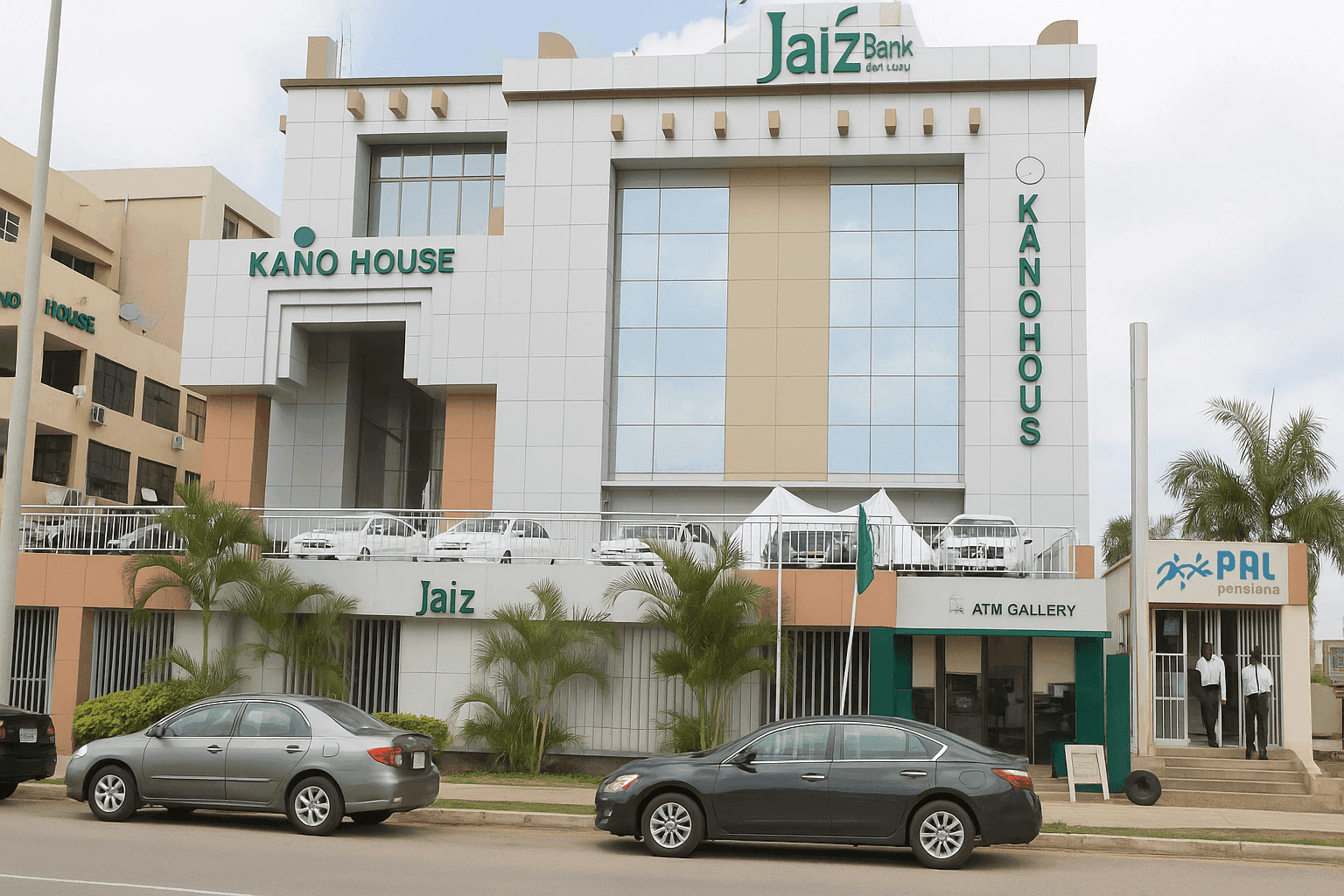
I’m Kabiru Sadiq, and with more than 30 years of experience across Nigeria’s finance sector, capital markets, and public advisory, I have closely followed the rise of islamic banks in nigeria as part of the broader evolution of ethical banking. In my experience, demand for Shariah-compliant financial services has expanded well beyond Muslims, as many customers now value transparency, disciplined risk sharing, and stronger ethics in banking.
Islamic banking is gaining real momentum in Nigeria. A growing number of individuals and businesses want banking solutions aligned with Islam and free from interest-based structures. Unlike conventional institutions, these banks avoid riba and instead build transactions around trade, partnership, lease arrangements, and identifiable asset backing. The current landscape of islamic banks in nigeria includes institutions such as Jaiz Bank, Lotus Bank, TAJ Bank, and The Alternative Bank, all of which offer credible non-interest finance options.
From my perspective, one of the important shifts has been the integration of modern service delivery with Shariah principles. Customers can now access digital channels, mobile platforms, and online account management while still operating within Islamic banking and finance rules. This guide explains the leading Islamic banks in Nigeria, how they function, the services they provide, and what to expect in 2026.
Islamic Banking: What Is It?
Islamic banking is a system of finance built on Shariah principles. Its central rule is the prohibition of interest, meaning money should not generate a return merely because it has been lent. Instead, value creation must arise from real economic activity, shared commercial risk, ownership participation, trade, or a lease structure tied to a real asset.
In practical terms, this means Islamic banks use products such as Murabaha for cost-plus sale transactions and Ijara for lease-based financing. A loan in the conventional sense is generally replaced by a financing arrangement linked to commerce, usage, or ownership. In my experience, this model appeals not only to Muslims seeking compliance with religion, but also to customers interested in ethical banking, clearer pricing, and better transaction discipline.
These institutions are open to both Muslims and non-Muslims. Their appeal often rests on fairness, accountability, transparency, and the avoidance of sectors considered harmful, such as gambling and alcohol-related activities. That emphasis on ethics has made Islamic banking increasingly relevant in modern economics and customer management.
Growth of Islamic Banking in Nigeria
I have observed that Islamic banking in Nigeria moved from a niche concept to a recognised segment of the banking industry over the past decade. The launch of Jaiz Bank Plc in 2012 marked a major turning point, as it became the first full-fledged non-interest commercial Bank in the country. That development created institutional credibility and demonstrated that Shariah-compliant finance could operate within Nigeria’s regulatory framework.
Since then, the market has broadened with the emergence of Lotus Bank, TAJ Bank, and later The Alternative Bank. Public awareness has improved, customer adoption has increased, and digital channels have made access much easier. More Nigerians now use non-interest banking platforms for transfers, account monitoring, payments, and business finance.

The Central Bank of Nigeria has played a meaningful role by licensing operators and providing the regulatory base for non-interest banking. In my experience advising across emerging markets, sector growth usually depends on three things: regulation, public education, and product relevance. Nigeria is gradually strengthening all three.
Official List of Islamic Banks in Nigeria (CBN Approved)
Below is the current list of CBN-recognised full non-interest banks operating in Nigeria.
| Bank Name | Year Started | Head Office Location |
|---|---|---|
| Jaiz Bank Plc | 2012 | Abuja |
| Lotus Bank | 2021 | Lagos |
| TAJ Bank | 2019 | Abuja |
| The Alternative Bank | 2023 | Lagos |
Among these institutions, Jaiz Bank has built notable visibility in digital banking, while Lotus Bank and TAJ Bank continue to deepen their presence in retail and business finance.
Services Offered by Islamic Banks in Nigeria
Islamic banks in Nigeria provide many of the services customers expect from a modern Bank, but they structure those services in accordance with Shariah. Clients can open transaction accounts, maintain a savings account, access business funding, and use retail products designed around trade or lease contracts rather than interest payments.
- Current accounts
- Savings products
- Business finance
- Consumer asset acquisition
- Murabaha (cost-plus sale) facilities
- Ijara (lease-based) facilities
In a Murabaha transaction, the Bank purchases an asset and sells it to the customer at a disclosed markup. In an Ijara arrangement, the customer pays to lease an asset over an agreed term. These structures replace conventional interest-bearing facilities with asset-linked finance.
Digital access has also improved substantially. Customers can check balances, transfer cash, pay bills, and complete account processes through mobile applications and online portals. From my perspective, this is essential because the long-term success of Islamic banking depends not only on compliance, but also on convenience, speed, and reliable customer service.
Comparison: Islamic vs Conventional Banks in Nigeria
The primary distinction is straightforward: Islamic banks do not pay or charge interest. Conventional banks largely earn through interest margins on deposits and loans, while Islamic institutions generate returns through trade-based, partnership-based, and lease-based structures.
Another difference lies in use of funds. Shariah-compliant institutions avoid financing activities considered impermissible under Islam, including gambling and certain speculative or harmful sectors. This creates a framework many customers associate with stronger ethics and a more disciplined approach to risk.
I often advise clients to look beyond labels and examine transaction substance. In conventional finance, a loan may be purely monetary. In Islamic banking and finance, the transaction is often tied to an asset, service, or commercial exchange. That difference can improve clarity for the customer and reduce ambiguity in contract management.
For those asking whether Jaiz Bank is interest-free, the answer is yes. Its operating model is built around non-interest principles and Shariah governance, which is why it remains one of the most visible Islamic finance institutions in Nigeria.
Which Conventional Banks in Nigeria Offer Islamic Banking Services?
In addition to full non-interest banks, some conventional banks in Nigeria have also offered Islamic banking services through non-interest windows, subsidiaries, or specialised product lines. The most visible example is Sterling Bank, which developed The Alternative Bank as its non-interest banking business before it gained stronger standalone visibility in the market.
The regulatory basis for this comes from the Central Bank of Nigeria’s non-interest banking framework, which allows licensed institutions to operate either as full-fledged non-interest banks or through approved non-interest windows and dedicated business structures. In my experience, this framework has helped widen customer access because it gives conventional institutions a lawful path to provide Shariah-compliant products without converting their entire banking model.
How to Open an Account in an Islamic Bank in Nigeria
Opening an account with an Islamic Bank is generally straightforward. A customer can either visit a branch or complete much of the process through digital channels, depending on the institution. In most cases, the requirements are similar to those in mainstream banking: identification, contact details, regulatory verification information, and basic documentation.
Many customers now begin through the bank’s website or mobile app. Once the application is submitted and validated, the account can usually be activated without unnecessary delay. I have seen increasing operational efficiency in this process, especially as banks improve digital onboarding and customer verification systems.
Customers should also review the bank’s policies on account usage, fees, transaction limits, privacy, and data handling. While privacy in banking is standard, digital platforms may also rely on technical tools such as an HTTP cookie to improve session management and user experience. Even in digital banking, customers should remain aware of data protection, internal controls, and transaction risk.
Who Should Use Islamic Banking?
Islamic banking is suitable for a wide range of users. It is particularly relevant for Muslims who want financial services aligned with Islam and who wish to avoid riba in personal or business transactions. At the same time, it also serves non-Muslims who prefer ethical banking models built on transparency and fairness.
In my experience, students, traders, professionals, farmers, and small business owners can all benefit from these institutions when the products match their needs. A savings account structured under non-interest principles may appeal to customers focused on disciplined cash management, while business clients may find Murabaha or lease-based finance more predictable than floating-rate borrowing.
These banks can also be attractive to customers who want clearer contractual terms and fewer hidden charges. The emphasis on identifiable assets, documented markups, and transparent obligations often improves customer confidence.
Challenges Facing Islamic Banks in Nigeria
Despite strong progress, several constraints remain.
- Limited public education and awareness
- Competition from established conventional banks
- Challenges of scale, including capital, technology, management capacity, and product depth
- Liquidity, credit, operational, and reputational risk management
Many Nigerians still do not fully understand how Islamic banking works, and some incorrectly assume it is exclusively religious in a narrow sense. Better education is necessary to explain that the model is commercially viable, regulated, and open to everyone.
Competition from long-established conventional banks remains significant, especially because they often have wider branch networks, deeper balance sheets, and stronger legacy visibility. This is especially important in rural and semi-urban markets, where physical presence still matters.
There is also the challenge of scale. Non-interest banks must continue building capital, investing in technology, improving management capacity, and expanding product depth. Like every other financial institution, they must manage liquidity, credit risk, operational risk, and reputational risk carefully.
From my perspective, sustained growth will require stronger public awareness, more talent development, better product innovation, and continued regulatory support.
Future of Islamic Banking in Nigeria (2026–2030 Forecast)
I have analyzed this segment for years, and my assessment is that Islamic banking in Nigeria is positioned for further expansion between 2026 and 2030. Demand for alternative finance is rising, and customers are becoming more conscious of fairness, compliance, and ethical conduct in financial transactions.
From my perspective, the long-term future of Islamic banking in Nigeria will be shaped by how well institutions combine Shariah compliance with innovation, digital convenience, SME financing, and customer education.
Jaiz Bank, Lotus Bank, TAJ Bank, and The Alternative Bank are likely to deepen their reach through digital banking, broader customer acquisition, and more refined product offerings. If this is supported by stronger education and regulatory consistency, the sector should continue gaining market share.

The long-term opportunity is significant. Nigeria has a large population, a strong retail banking gap, rising demand for ethical banking, and growing acceptance of non-interest finance. In broader economics terms, this creates room for institutions that can combine ethics, efficiency, and accessibility. I also expect greater innovation in SME finance, digital onboarding, public sector partnerships, and structured asset-backed products.
If regulators continue refining the framework and banks continue investing in management systems and customer education, Islamic banks in Nigeria should become a more familiar and trusted part of the national financial architecture.
Final Thoughts
The current list of Islamic banks in Nigeria shows that the sector is no longer experimental. It is now a meaningful part of the country’s finance ecosystem. Customers who want to avoid interest, seek more ethical financial relationships, or prefer transactions tied to real assets now have credible options in the market.
In my experience, Jaiz Bank, Lotus Bank, TAJ Bank, and The Alternative Bank each reflect the growing maturity of Islamic banking and finance in Nigeria. Their presence demonstrates that banking can be commercially practical, operationally modern, and grounded in ethics at the same time.
For anyone considering a switch, the right choice depends on service quality, accessibility, product suitability, and institutional strength. But the broader conclusion is clear: islamic banks in nigeria are helping reshape how many people think about Bank services, Finance, Risk, Customer trust, and long-term value creation.
FAQ
1. How Many Islamic Banks Are There in Nigeria?
As of 2026, the principal fully licensed non-interest banks in Nigeria include Jaiz Bank, TAJ Bank, Lotus Bank, and The Alternative Bank.
2. Which Islamic Bank Is Strongest in Nigeria in 2026?
In my assessment, Jaiz Bank is generally the strongest and most suitable option for many Muslims in Nigeria in 2026 because it has the longest operating history among full non-interest banks, the strongest national visibility, a broader branch presence, and a more established product range. That said, customers in Lagos and other key urban markets may also find Lotus Bank, TAJ Bank, or The Alternative Bank highly suitable depending on service access, digital experience, and specific financing needs.
3. How Large Is the Islamic Banking Industry in Nigeria?
The sector has continued to expand as demand for ethical and non-interest finance grows. Market size estimates vary, but the industry is clearly moving into a more material position within Nigeria’s banking system.
4. How Many Banks Operate in Nigeria Altogether?
Nigeria has a mix of conventional and non-interest commercial banks licensed by the Central Bank of Nigeria. The total number can change over time due to regulatory actions, mergers, or licensing decisions.
5. Are There Islamic Microfinance Institutions in Nigeria?
Yes, some microfinance institutions in Nigeria offer Shariah-compliant services. These can support smaller customers and communities seeking non-interest financing solutions at the grassroots level.