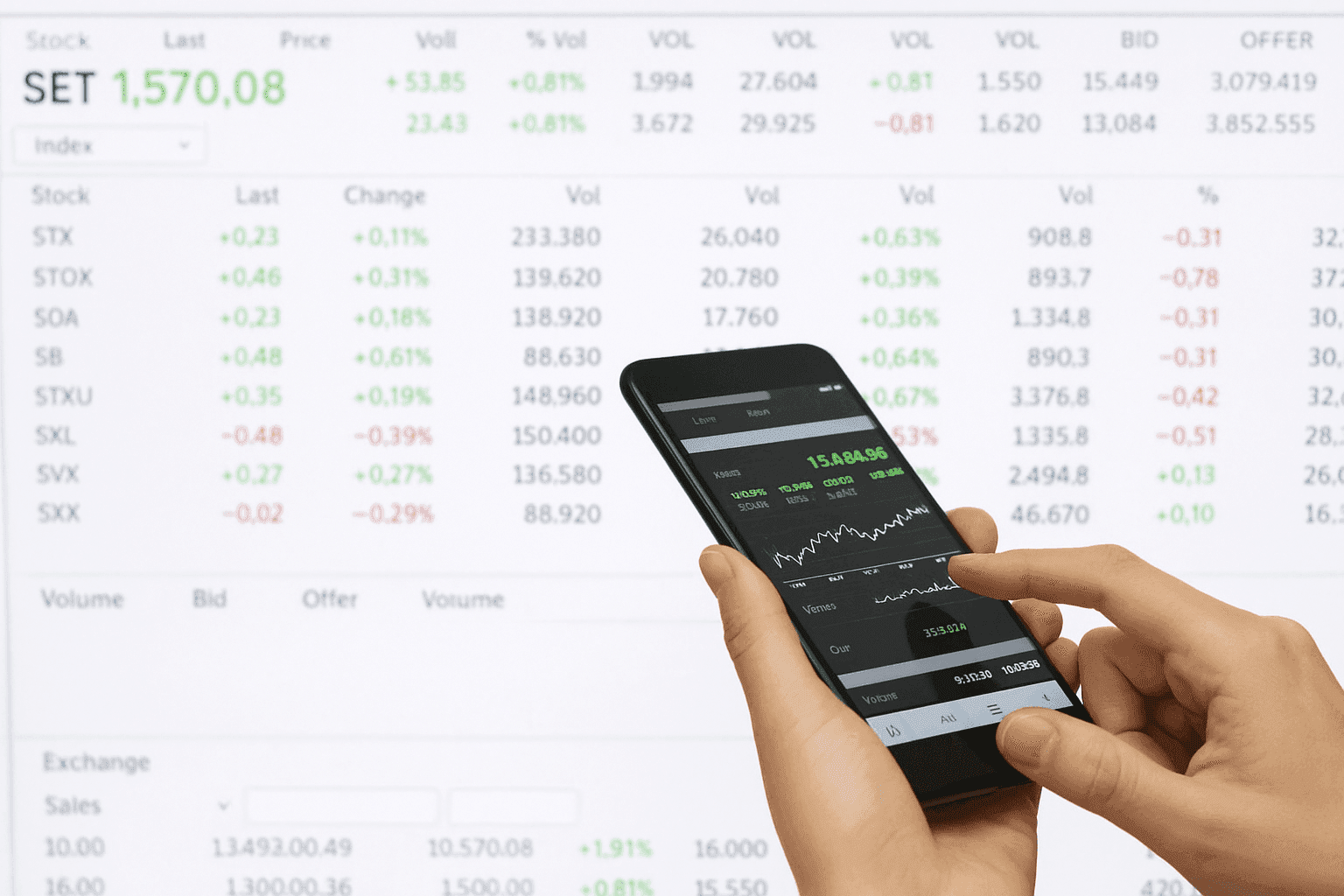
As Kabiru Sadiq, I have spent more than 30 years advising institutions, government bodies, and private investors across Nigeria and West Africa on finance, capital markets, and investment strategy. From my perspective, the recent strength in the NGX has renewed interest in the best stock apps in Nigeria, as more people look for efficient ways to put money to work through a mobile phone and participate in the stock market.
Over the past three months, the Nigerian Exchange Limited has sustained a strong upward trend, drawing a wider base of participants into equity trade. I have seen this pattern before in Lagos and other major financial centres: when market momentum improves and price performance becomes visible, retail and institutional investor activity tends to rise sharply.
The All Share Index recently advanced to a historic level, and cumulative gains ran into trillions of Nigerian naira. In an environment shaped by inflation, changing income expectations, and the search for real wealth preservation, many Nigerians are reassessing how to allocate money beyond the traditional Bank deposit option.
Individuals increasingly want accessible, real-time platforms for investment management. Nigeria’s expanding economy, deepening capital market structure, and improving digital payment systems have made stock investing more practical for a broader class of investor.
Leading Platforms for Real-Time Stock Trading in Nigeria
In my experience, several digital platforms now provide a useful entry point into the Nigerian stock market. If the question is simply which investment apps in Nigeria allow buying stocks, the most commonly discussed names include Trove, Chaka, Meritrade by Meristem, Afrinvestor 2.0, , Bamboo, Risevest, Cowrywise, and PiggyVest, although not all of them are focused on direct stock trading in the same way. Each company offers a different mix of access, security, information, and execution tools, so the right option depends on an investor’s objectives, risk tolerance, and need for local or international exposure.
| Platform | Local Stocks | International Stocks | Other Products | Regulatory Status | Key Features |
|---|---|---|---|---|---|
| Trove | Yes | Yes | Varies by offering | Platform access should always be checked against current disclosures | Simple interface, portfolio monitoring, access to local and foreign instruments |
| Chaka | Yes | Yes | Varies by offering | Investors should confirm current operating structure and disclosures | Domestic and international market access, decision-support information |
| Meritrade by Meristem | Yes | No emphasis in this context | Bonds | Linked to an established Nigerian brokerage | Execution reliability, access to Nigerian stocks and bonds |
| Afrinvestor 2.0 | Yes | No emphasis in this context | Bonds | Operated by Afrinvestor Securities Limited | Advisory background, broader portfolio management framework |
| Yes | Yes | Varies by offering | Associated with a SEC-regulated Nigerian market operator | Local and foreign exposure, digital funding support |
Trove
Trove remains one of the more straightforward platforms available to Nigerian users. I often advise new entrants to start with systems that simplify trade execution and portfolio monitoring, and Trove fits that requirement well. It allows investors to buy local and foreign stock instruments through an interface designed for ease of use, which is valuable for anyone beginning to build long-term wealth through disciplined investment.
If you are asking whether Trove is the No. 1 stock market app in Nigeria, my answer is that there is no single universally accepted No. 1 platform. The strongest choice depends on what the investor values most: ease of use, product range, access to foreign stocks, research tools, or brokerage pedigree.
Chaka
Chaka offers access to both domestic and international markets, making it relevant for investors who want broader diversification. From my perspective, one of its strengths is the range of information available to support decision-making. In a market where risk management matters as much as return potential, investors need timely data, research support, and practical visibility on price movements before committing capital.
Meritrade by Meristem
Meritrade benefits from the established reputation of Meristem in Nigeria’s financial services industry. I have worked with market participants long enough to know that brand credibility and execution reliability are essential in securities trading. Through Meritrade, investors can access Nigerian stocks and bonds, which makes it a sensible option for those seeking a platform linked to a recognized brokerage with experience in investment management and capital market operations.
Afrinvestor 2.0
Afrinvestor 2.0 is the digital trading platform of Afrinvestor Securities Limited, a firm with a strong advisory orientation in West Africa. That background matters. In finance, the quality of strategic guidance can materially affect investor outcomes, particularly when balancing stock exposure with fixed-income securities or a mutual fund allocation. The platform provides access to Nigerian stocks and bonds, giving users a broader framework for portfolio management.
is structured for investors seeking both Nigerian and foreign market exposure. It supports access to international stocks while also enabling transactions on the local exchange. The platform is operated by WealthTech Limited and is associated with Sankore Securities Limited, which is registered with the Nigerian Exchange Limited and regulated by the SEC in Nigeria. In my view, this regulatory alignment is important for security, compliance, and investor confidence. Payment processing is handled through Flutterwave, which adds operational efficiency for users funding accounts digitally.
In my experience, regulatory compliance and investor protection are not optional considerations. They are central to judging whether a stock app deserves your trust.
How to Start Investing in the Nigerian Stock Market Through an App
For many first-time investors, the process is more straightforward than it appears. In practice, the usual steps are as follows.
- Choose a suitable platform: Compare product access, reputation, fees, usability, and regulatory disclosures before opening an account.
- Create your profile: Register with your email address, phone number, and basic personal details.
- Complete verification: Most platforms require identity checks such as a valid means of identification, BVN, proof of address, or other compliance documents.

- Fund the account: Add money through bank transfer, card payment, or other supported digital payment channels.
- Review available securities: Study the stocks, bonds, or related products offered on the app and examine price, valuation, and risk.
- Place your order: Select the security you want, enter the amount you wish to invest, and confirm the transaction.
- Monitor the portfolio: Track performance, dividends where applicable, and changes in your risk exposure over time.
What You Can Invest With ₦5,000 or ₦10,000
One of the most practical questions I hear from younger investors is whether a small amount is enough to begin. In many cases, yes. Depending on the platform’s minimum funding rule and the price of the available asset, ₦5,000 or ₦10,000 may be enough to start building a position.
On apps that support fractional or small-ticket investing, that amount may allow exposure to selected local or foreign stocks without requiring the investor to buy a large volume at once. On platforms linked more directly to Nigerian brokerage services, the usable amount will depend on the price of the stock, applicable fees, and any minimum account threshold. For products beyond equities, such as mutual fund or fixed-income offerings, small balances may sometimes be easier to deploy than in higher-priced shares.
My advice is simple: check the minimum funding amount, minimum trade size, and total transaction cost on each app before sending money. A platform may permit account opening with a small amount, but the actual product you want to buy may require more than ₦5,000 or ₦10,000 once fees and asset pricing are considered.
What Investors Should Consider Before Choosing an App
When evaluating the best stock apps in Nigeria, I encourage investors to look beyond convenience alone. A sound decision should weigh several factors that influence both performance and investor protection.
- Security: The platform should demonstrate credible controls around account protection, transaction integrity, and broader security in financial operations.
- Information: Investors need reliable market data, research tools, and transparent reporting to make informed decisions.
- Payment: Funding and withdrawal processes should be efficient, traceable, and compatible with trusted payment infrastructure.
- Privacy: Users should review how the company handles personal data, account records, and any cookie-related practices under its privacy policy.
- Risk: Every stock investment involves market uncertainty, so the app should help investors understand exposure rather than encourage impulsive trade behaviour.
- Management: Strong operational management and customer support often distinguish a durable platform from a weak one.
- Option: Some investors may want access not only to equities but also to other products over time, including bonds, mutual fund offerings, or future finance-related options where permitted.
In summary, I advise investors to focus on these key decision points: platform security, quality of market information, ease of payment and withdrawal, privacy standards, risk transparency, operational management, and the breadth of investment options available.
I also advise investors to compare locally focused platforms with emerging alternatives such as Bamboo, especially where the objective includes exposure to the United States market. International diversification can be useful, but it should be aligned with currency considerations, Nigerian naira volatility, and the investor’s time horizon.
How to Fund and Withdraw Money on Investment Apps
From my experience, the operational side of investing is just as important as choosing the stock itself. Most apps follow a fairly standard process for deposits and withdrawals.
- Funding: After account verification, investors typically transfer money from a bank account, use a debit card, or use another approved digital payment method supported by the app.
- Verification: Some platforms will not allow full access to deposits or withdrawals until identity and compliance checks are completed.
- Settlement: Once money is received, the balance may reflect immediately or after a short processing period, depending on the payment channel.
- Withdrawal Request: Investors usually submit a withdrawal instruction within the app to move cash back to a registered bank account.
- Timeline: Processing time varies by platform, internal controls, and whether the funds are proceeds from a recent sale that still need to settle.
- Fees: Some apps may apply transfer charges, brokerage-related deductions, or other administrative costs, so it is wise to confirm the schedule in advance.
Investors should also remember that selling a stock and withdrawing cash are not always the same event. In many cases, the security must first be sold, the transaction must settle, and only then can the cash be withdrawn to a bank account.
Risks and Challenges of Using Investment Apps in Nigeria
Digital access has improved participation, but investors should not confuse convenience with the absence of risk. The main challenges I pay attention to include the following.
- Market Risk: Share prices can rise or fall sharply, and losses are possible even when the platform itself works properly.
- Platform Risk: App outages, execution delays, pricing display issues, or weak customer support can affect the investor’s ability to trade effectively.
- Regulatory Risk: Rules, product structures, and compliance expectations can change, especially where local and foreign securities are involved.
- Cybersecurity Risk: Weak passwords, phishing, device compromise, or poor internal controls can expose users to theft or unauthorized access.
- Liquidity Risk: Some securities may be harder to sell quickly at a fair price, particularly in thinner segments of the market.
- Currency Risk: Where international assets are involved, naira weakness or exchange-rate volatility can materially change returns.
- Behavioural Risk: Mobile convenience can encourage impulsive trading, short-term speculation, and poor investment discipline.
In my work, I remind investors that the purpose of an app is to provide access, not to eliminate uncertainty. Sound judgment, diversification, and patience remain essential.
Practical details matter as well. Many users now discover and install these platforms through Google Play, and the convenience of mobile phone access has widened participation in the capital market. Even so, investors should still examine company disclosures, policy standards, customer support quality, and how client assets are held. For foreign securities exposure, it is also wise to understand whether protections comparable to the Securities Investor Protection Corporation framework in the United States are relevant, directly or indirectly, to the structure being offered.
In conclusion, Nigeria’s digital investment landscape is improving rapidly, and that is positive for financial inclusion and capital formation. However, the best platform is not merely the one with the most visibility; it is the one that aligns with your investment objectives, protects your data and money, supports disciplined management of risk, and provides a credible path to long-term wealth creation in an evolving stock market.