Expanding reliable electricity access remains one of the most urgent development priorities across the African continent. With large segments of the population still disconnected from stable power supplies, governments and private companies are exploring alternatives to conventional nationwide grids.
At the World Governments Summit, energy access featured prominently in discussions about long-term infrastructure strategy. One solution drawing increasing attention is the deployment of localized solar mini-grids designed to operate independently or alongside existing national systems.
Decentralization as a structural necessity
Walid Sheta, regional executive for Africa and the Middle East at Schneider Electric, emphasizes that Africa’s geographic scale and demographic distribution make full reliance on interconnected national grids impractical in many areas. Vast rural zones, long transmission distances and infrastructure limitations complicate the rollout of centralized systems.
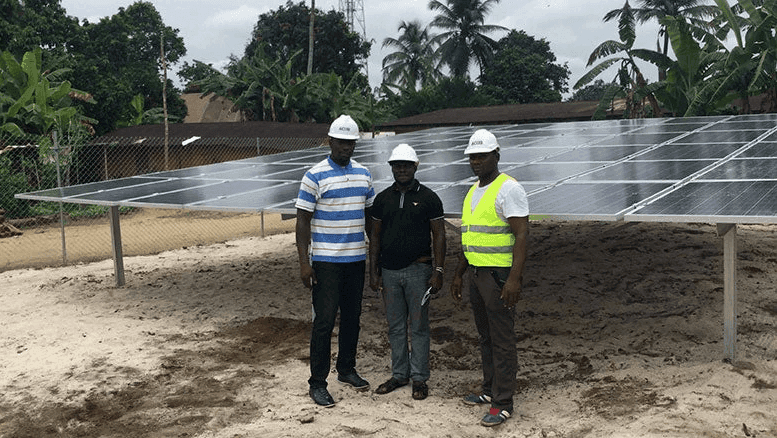
Mini-grids provide an alternative architecture. Built to serve defined communities, these compact networks generate and distribute electricity at a local level. Solar power typically forms the backbone of such installations, although hybrid configurations may incorporate additional sources to enhance reliability.
Rather than waiting for high-voltage transmission lines to extend into remote districts, communities can gain faster access through decentralized generation tailored to local demand.
More than technology: aligning finance and policy
Sheta underscores that electrification projects cannot succeed through equipment deployment alone. Effective regulation, clear licensing frameworks and viable funding mechanisms are equally critical. Development agencies and private investors are already active in supporting rural energy initiatives, but coordination between stakeholders remains essential.
Creating sustainable mini-grid markets requires aligning public authorities, financial institutions and energy developers around common objectives. Without regulatory clarity and long-term investment models, expansion could stall despite strong technical potential.
Expanding adoption across regions
Momentum is particularly visible in Nigeria and Kenya, where mini-grid projects are multiplying. Parts of Central Africa are also seeing increased deployment as both local entrepreneurs and international firms enter the sector.
Importantly, decentralized systems are not limited to rural villages. Urban commercial sites, hospitality facilities and industrial parks are increasingly installing on-site solar infrastructure to supplement unstable national grids. Hybrid configurations that combine public electricity supply with independent renewable generation are becoming standard practice in certain markets.
As energy providers adapt to managing multiple supply streams within single networks, Africa’s growing mini-grid ecosystem reflects a broader transformation in how electricity infrastructure is planned and delivered.