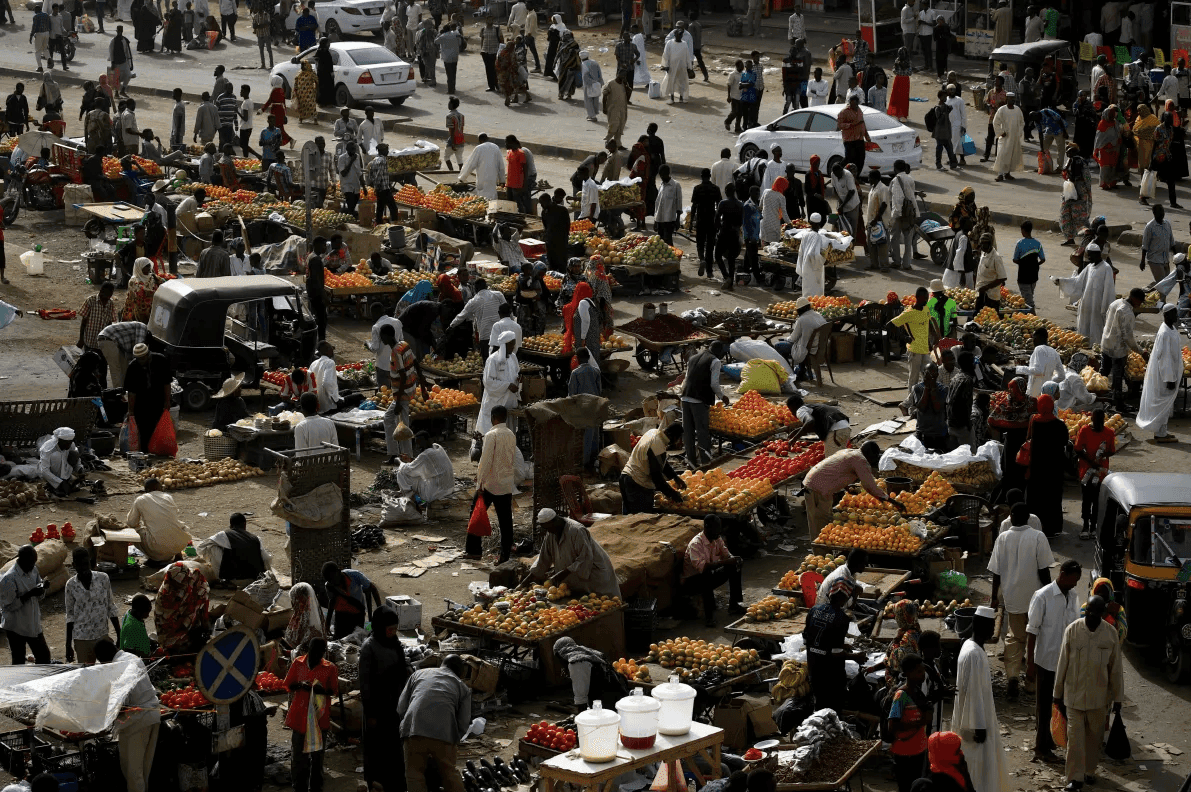
Commercial life is slowly re-emerging in the heart of Khartoum as stability returns to the Sudanese capital. Traders have begun reopening stalls in the central market following the restoration of army control, marking a cautious step toward normalcy after prolonged violence.
While foot traffic and trade are increasing, vendors say the current conditions remain far from what they were before the conflict disrupted daily life and supply chains.
Security Gains Bring Limited Relief
Heavy fighting erupted in central Khartoum in April 2023, when clashes between the national army and a powerful paramilitary force engulfed key commercial districts. After months of instability, the army launched an offensive that pushed rival forces out of the area, allowing markets to reopen under tighter security.
Merchants say improved safety has encouraged customers to return, but lingering concerns over transport routes and sporadic insecurity continue to affect deliveries from farms and wholesalers.
Rising Costs and Economic Pressures
Despite renewed activity, traders report that operating costs have surged. Transportation challenges and higher fuel expenses have driven up prices, making it harder for vendors to maintain profit margins while keeping goods affordable for customers.
The broader economic crisis has compounded these difficulties. The national currency has sharply depreciated since the start of the conflict, dramatically reducing purchasing power and limiting cash flow within the market.
Recovery Amid a Humanitarian Crisis
Although Khartoum is no longer facing the immediate threat of mass starvation seen in frontline regions and displacement camps elsewhere, economic recovery remains fragile. Vendors cite shortages of workers, limited access to capital, and reduced consumer spending as persistent obstacles.
The conflict has taken a devastating toll nationwide, with tens of thousands killed and millions forced from their homes. As Sudan continues to grapple with the world’s most severe humanitarian emergency, the slow revival of Khartoum’s market offers a modest sign of resilience, even as long-term recovery remains uncertain.