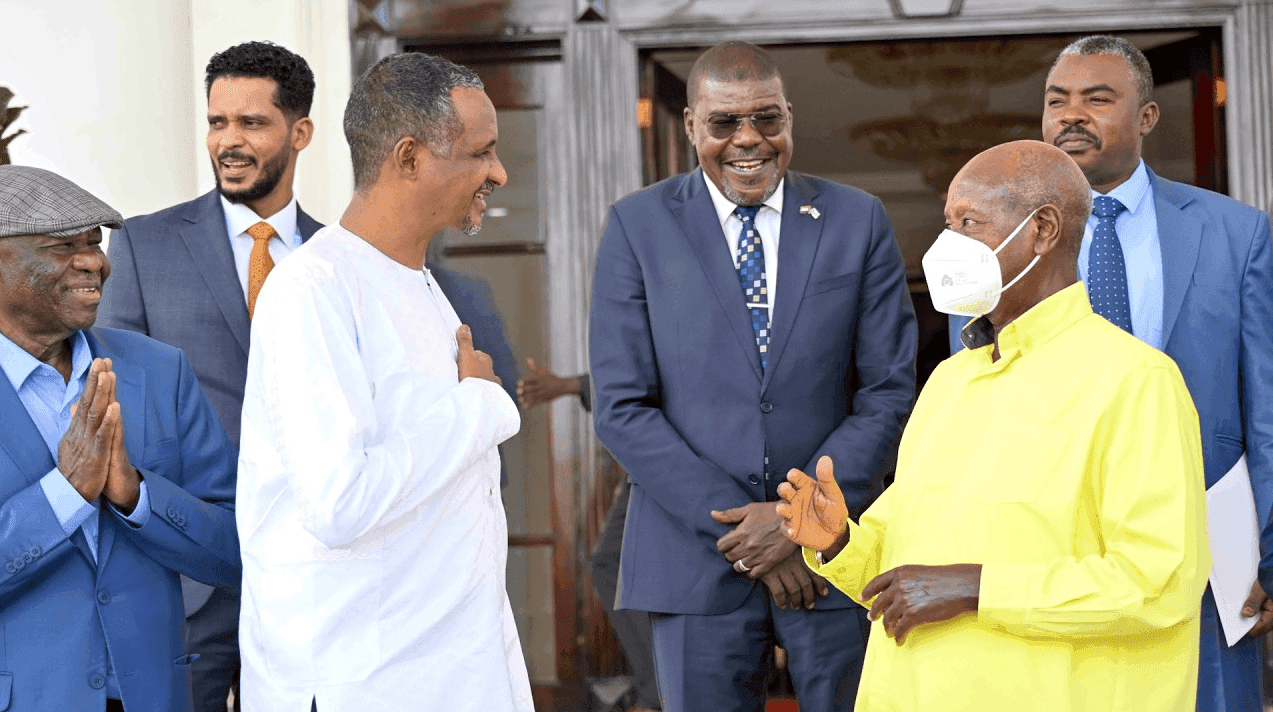
Uganda’s long-serving president, Yoweri Museveni, held discussions at State House in Entebbe with Mohamed Hamdan Dagalo, the head of Sudan’s paramilitary Rapid Support Forces. The meeting centered on possible pathways to halt the protracted conflict that has devastated Sudan and destabilized the wider region.
Fighting between the RSF and the Sudanese Armed Forces erupted nearly three years ago and has since escalated into a severe humanitarian emergency. Millions have been displaced, and basic services have collapsed in several areas.
Emphasis on Dialogue Over Military Victory
During the talks, Museveni underscored his longstanding belief that a negotiated settlement offers the only realistic route to durable peace. He argued that reliance on battlefield gains would prolong suffering rather than resolve underlying political divisions.
The Ugandan leader has been tasked by the African Union with chairing a committee intended to facilitate direct engagement between Dagalo and Sudan’s army chief, Abdel Fattah al-Burhan. The initiative reflects calls for African-led mediation efforts in addressing continental conflicts.
Dagalo reportedly acknowledged the scale of Sudan’s institutional breakdown and humanitarian distress, expressing support for renewed efforts toward a peaceful resolution.
Fragile Ceasefire Prospects
Despite repeated diplomatic initiatives, attempts to secure lasting ceasefires have repeatedly collapsed. The conflict continues to divide urban centers and strategic sites between rival forces.
Al-Burhan recently indicated that he would reject proposals for a humanitarian truce advanced by international partners, including the United States, unless RSF units withdraw from areas they currently control. That position highlights the deep mistrust that continues to obstruct compromise.
The Entebbe discussions mark Dagalo’s first widely publicized international appearance in months. Whether the renewed engagement can revive stalled peace efforts remains uncertain, but regional actors appear determined to prevent further deterioration of the crisis in Sudan.