Before exploring what an SBT in crypto means, remember that NFTs have existed for years but exploded into public view when digital artist Beeple sold a collection for over $69 million in March 2021. In short, an NFT is an on-chain representation of a unique digital asset that people can buy, sell, or trade.
One core role of NFTs is signaling ownership. Built on the ERC-721 standard, they record holder details and metadata on a public blockchain. However, this model focuses on possession rather than proving merit or capability.
NFTs Are Transferable
From art and real estate to play-to-earn games and collectibles, NFTs excel at representing scarce items. Because they are transferable, any buyer can become the holder. That flexibility suits marketplaces but falls short for verifying earned attributes such as skills, experience, or knowledge.
Take the Proof of Attendance Protocol (POAP) as an example: attendees receive a digital badge for being present. If that badge is sold, someone who skipped the event can still “own” it. Transferability lets personal achievements and credentials drift to others, undermining authenticity. This is the gap soulbound technology intends to close.
What Are SBTs?
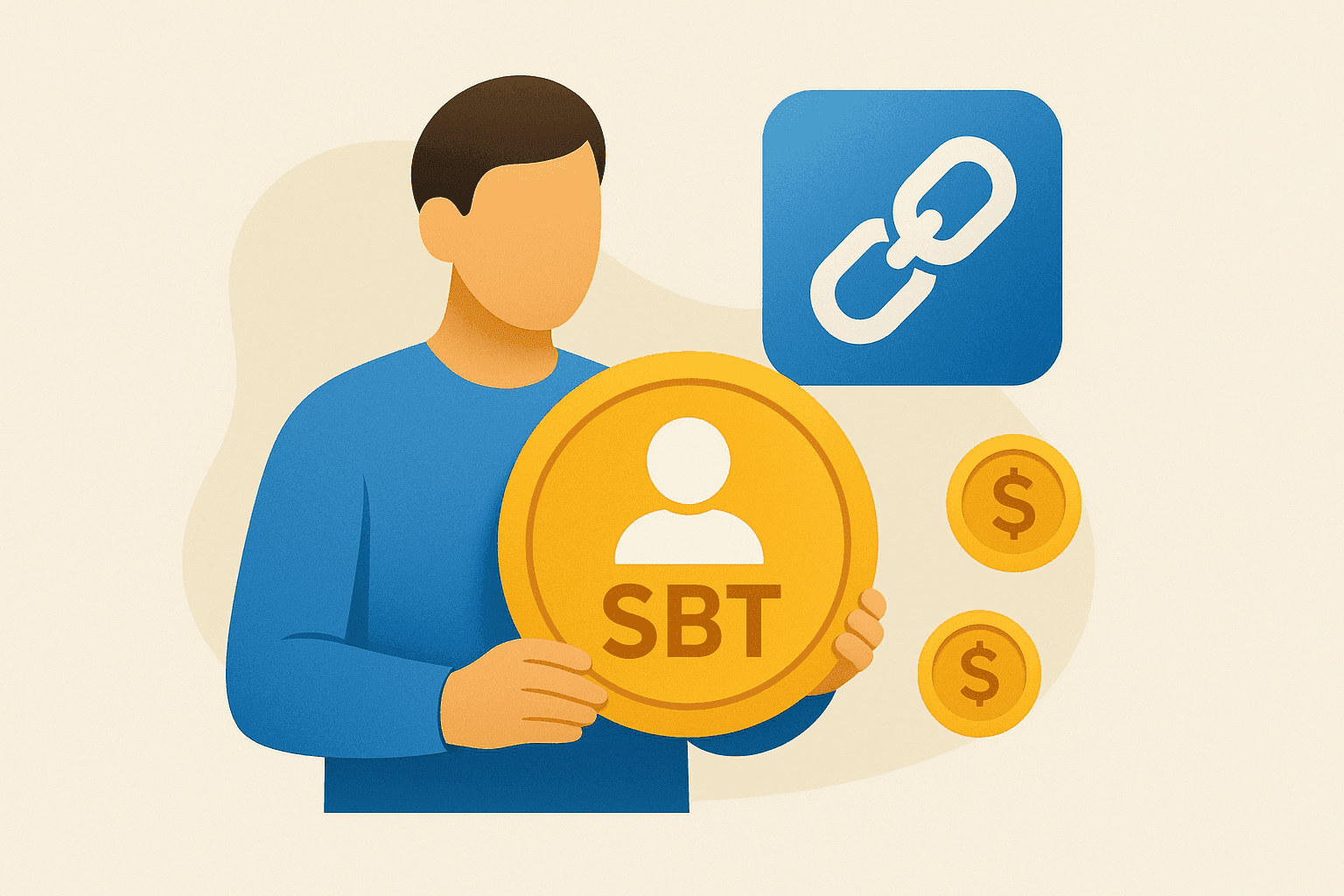
A widely discussed white paper by Vitalik Buterin, Glen Weyl, and Puja Ohlhaver outlines a decentralized society (DeSoc) and introduces soulbound tokens, a term borrowed from World of Warcraft. SBT stands for Soulbound Token, and SBTs are non-transferable NFTs held in specialized wallets often referred to as Souls.
Because they cannot be moved after minting, an SBT stays linked to your wallet and identity. You cannot sell or gift it, making this format fit for credentials, reputation proofs, certifications, or medical records—items that should not be acquired by purchase.
This permanent bond enables fine-grained permissions. Typically, an issuer mints the token directly to a wallet address after you meet some requirement (such as completing a course or attending an event). A verifier can then confirm the claim by checking that the token exists, that it was minted by the expected issuer, and that it is currently valid. If access needs to change over time, the issuer can revoke the credential on-chain (for example, by invalidating or burning it), while the holder controls what gets revealed for viewing or verification and can withdraw permission to share.
In the TON (The Open Network) ecosystem, the same concept applies: projects can issue non-transferable, NFT-like tokens to a TON wallet to represent membership, achievements, or access rights. The main differences are practical rather than philosophical—SBTs on TON are implemented using TON’s smart contracts and wallet flows, and they tend to be distributed through TON-native apps and communities rather than Ethereum-focused tooling.
Soulbound Tokens shift “proof” from what you can buy to what you can actually do, letting communities and institutions issue credentials that are easy to verify and hard to fake.
Adoption Is Essential for Success
Issuers must participate for the model to gain traction. In practice, any organization or community that can manage a wallet and the associated issuance process can issue Soulbound Tokens, including universities, employers, recruiters, event organizers, DAOs, and protocols. To get an SBT, you generally do not buy it on a marketplace; you receive it by qualifying for it (for example, verifying eligibility, completing an action, or participating in an event) and then having the issuer mint it to your wallet for later verification.
Practical Use Cases
SBTs can support many scenarios. Some examples include:
- Education and Work History —Institutions can issue graduation certificates from their Soul wallet as SBTs. Tokens can carry degrees, awards, and employment milestones, creating a verifiable on-chain resume for job seekers and career progression.
- Credit History —Lenders could review repayment behavior encoded in SBTs, improving underwriting with verifiable records and reducing information asymmetry when evaluating loan applicants.
- Medical Records —Binding health data to a patient enables consent-based sharing when switching doctors or arranging insurance, streamlining identity checks and avoiding repeated explanations of medical history.
Constraints and Risks
Several concerns frequently arise with non-transferable credentials.
If identity becomes portable and permanent, the safeguards around privacy, revocation, and recovery matter as much as the tokens themselves.
- Private key loss and recovery —If you lose access to the wallet that holds an SBT, you generally cannot “move” the token to a new wallet, because transferability is the feature being removed. Recovery depends on what was set up in advance. If the wallet supports social recovery, designated guardians can help restore access; if no recovery path exists, you may need to create a new wallet and ask the original issuer to reissue a replacement credential, while the old token remains stranded.
- Data security and privacy —Storing sensitive information on-chain raises questions about exposure and misuse. Even when visibility controls exist, holders still need to think carefully about what is published, what is shared for verification, and what should remain private.
- Potential misuse (e.g., social credit scoring, blacklists, surveillance) —Critics warn about systems resembling social credit scoring. Tying online activity to real-world identities and persisting data could enable blacklists or ratings, echoing initiatives under development in some jurisdictions and raising serious ethical concerns about privacy and surveillance.
Where Non-Transferable Credentials May Be Headed
Blockchain’s promise goes beyond value storage: it is about user sovereignty over data. With SBTs, individuals control how identity and reputation are verified and who gets access, marking a shift from centralized databases to decentralized, consent-driven records across Web3 and DeFi.
In short, SBTs extend decentralization from payments to proofs about people. The open question is how quickly standards, wallets, and issuers will align to realize that vision.