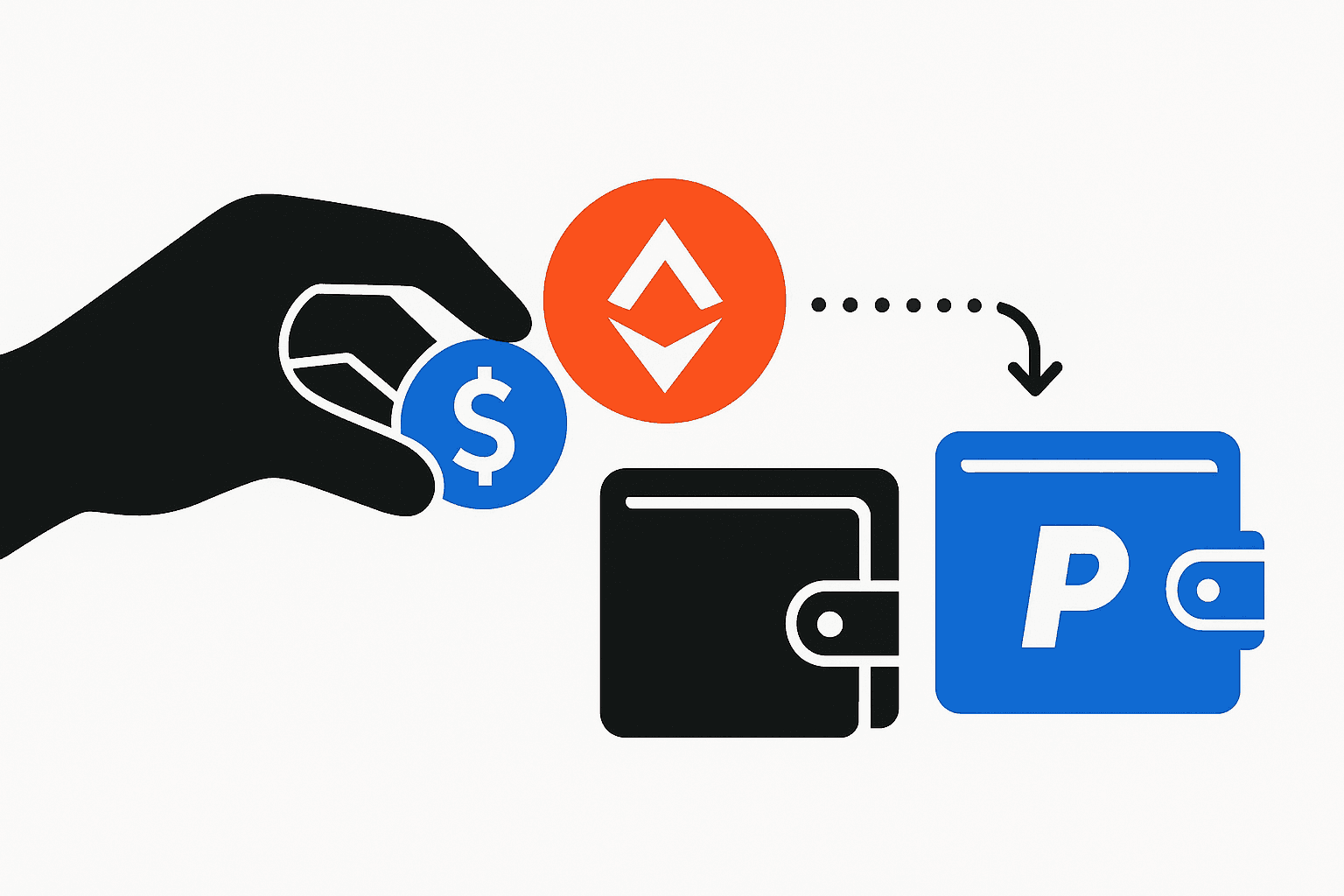
Yes—if you have completed Venmo identity verification, you can transfer crypto from the Venmo app to other Venmo users, PayPal users, or supported external wallets, and you can also receive crypto. Transfers are managed from the Crypto tab, where you choose the asset, select Send or Receive, and confirm the correct blockchain network and any required memo/tag details.
Before moving any digital coins, confirm your profile is authorized. Inside Venmo, you can send to other Venmo users, PayPal accounts, or a self‑custody wallet. In the sections below, this guide explains how to manage crypto transfers safely, including networks, timing, and fees.
Send Crypto From Your Venmo Account
Once your requirements are handled and your identity is verified, the Venmo app lets you start a transfer in a few taps. Open the Crypto tab (the area labeled for digital assets) to begin.
Next, choose the asset you want to move. If you are sending PayPal USD (PYUSD), keep in mind that it can only be sent to wallet types that explicitly support that token.
From the lower-right corner, tap the double‑arrow icon to begin. When prompted, review the next screen and tap Send to proceed.
Then enter the recipient. You can type a Venmo username, paste an outside wallet address, or pick a recent recipient. If PYUSD is involved, the app may ask you to confirm the recipient’s supported wallet type.
For the amount, enter how much you want to send. In the Venmo app, any applicable fees (if shown) are displayed during the flow. In some cases, you can also select a network—both sides must use the same one or the transfer may not be recoverable. Some blockchains require additional fields such as a destination tag or memo; match those fields exactly to what the recipient provides.
Before committing, scrutinize the details. Because crypto transfers are typically irreversible, sending to the wrong handle, an incorrect address, or an unsupported network can permanently remove access to your assets. Once everything matches, confirm with the button to initiate the transfer.
For reference, earlier activity appears in the feed within the Crypto section.
Wallet Support for PYUSD
PayPal USD (PYUSD) is a stablecoin issued by PayPal. In practice, PYUSD transfers are supported to most ERC‑20 Ethereum addresses and to Solana SPL wallets, and you can also move PYUSD between Venmo and PayPal accounts. If you use a third‑party wallet, verify PYUSD support before you start.
Understanding Networks for Cryptocurrencies
A network is the blockchain route that carries a digital asset and determines how transactions are formatted. For example, Ether operates on the Ethereum main chain. Some assets available through PayPal, including PayPal USD (PYUSD), can operate across multiple networks—so you may be able to choose where deposits and withdrawals occur.
Your network choice can affect settlement speed and total cost. In many ecosystems built around Ethereum, Layer 2 options may help reduce fees and improve throughput. However, some routes may require extra metadata (for example, memos on the Stellar network), and in certain regions specific networks may be unavailable due to regulatory constraints.
When you initiate or accept through Venmo, PayPal, or a third‑party wallet, the flow should show supported networks. Key rule: both sides must use the identical network for the transaction. If the networks don’t match, funds can be lost.
Receive Crypto in Your Venmo Account
If your profile has completed identity checks, you can receive funds from Venmo contacts, PayPal users, or a self‑custody wallet. In the app, open the section for digital assets, select the asset you want to receive, and tap the two‑arrow icon. Choose Receive to display your deposit details.
Venmo then shows a QR code and your receiving address. If the asset is PYUSD, you may be able to toggle between supported options such as Ethereum and Solana; ensure you and the sender select the same network. Depending on the path, extra information (for example, a memo on Stellar) may be required—if the app displays additional fields, share them with the sender. To share, copy your address or let the other person scan the QR code.
After the transfer completes, an email confirmation is sent, and you can track the status anytime in the Crypto section.
For safety, match each asset to the correct address format. BTC should go to a BTC address, while ETH must use an ETH address. Sending bitcoin (BTC) to a bitcoin cash (BCH) address, or choosing a route your destination wallet does not support—such as using Arbitrum when the wallet only accepts Ethereum mainnet—can lead to permanent loss.
For privacy reasons, Venmo may generate a fresh deposit address after each arrival; prior addresses can still remain valid and can usually accept funds.
Fees for Crypto Transfers on Venmo
As a baseline, transfers between Venmo accounts and PayPal accounts do not typically add a Venmo-specific fee. If you send crypto outside the Venmo and PayPal ecosystem to a public blockchain or external wallet, a network fee applies. The exact network fee details and any in-app charges (if applicable) are shown during the transfer flow. Learn more about Venmo fees.
Transfer Timing and Status
Once both accounts are on Venmo, delivery happens immediately. For third‑party wallet transfers, arrival can range from minutes to a few hours depending on the blockchain and network congestion. The app provides an estimated completion time when you start the transfer.
On rare occasions, a transfer from a third‑party platform may not arrive by the expected time. If this happens, contact that provider for a more specific update.
If a recipient on Venmo has not completed ID checks, they have thirty days to finish verification; otherwise, the assets are returned to the sender. To complete verification, follow the in-app steps for accepting funds: open the Crypto area, choose the asset, use the arrows, and pick Receive; if needed, you’ll be prompted to verify.
If you want to check progress yourself, use the hash (transaction ID) from your confirmation email and confirm the status in your preferred blockchain explorer.
Why you may not be able to transfer crypto
Crypto transfers in the Venmo app can be blocked or fail for several common reasons. If you run into issues, work through the checks below.
- Your identity is not verified: Confirm that you have completed Venmo identity checks. If verification is pending, complete it in the app, then try the transfer again.
- The recipient is not verified (for incoming transfers): If the recipient has not finished ID checks, they have thirty days to complete them; otherwise, the crypto is returned to the sender.
- Unsupported wallet type or token (e.g., PYUSD): For PYUSD, make sure the recipient’s wallet explicitly supports PYUSD and the correct token format.
- Wrong network selection: Ensure both sides select the same network. If the network doesn’t match, funds may not be recoverable.
- Missing required memo/tag or extra fields: If the transaction flow asks for a destination tag or memo (based on the network), enter it exactly as provided by the recipient.
- Destination address format mismatch: Use the correct address format for the asset (for example, don’t send BTC to an ETH-formatted address).
- Network availability limits in your region: Some networks may be unavailable depending on regulatory or operational constraints. If the option is not shown in the app, use only the supported networks displayed there.
Crypto transfer limits on Venmo
Venmo sets limits for crypto transfers. If you need to transfer more than the allowed amount, the app may prevent completion until you reduce the transfer size or wait for limits to reset.
- Weekly crypto transfer limit: $25,000 per week.
Note: crypto purchase limits are separate from transfer limits.
Who Can Use Crypto Transfers?
Only customers who have verified their identity are eligible to use crypto transfer features in the Venmo app.
Can I cash out or transfer my crypto on Venmo?
Crypto transfers in Venmo refer to moving crypto between your Venmo account and other supported recipients or external wallets. “Cash out” typically means selling or converting crypto into cash via available in-app options, which is distinct from sending the same crypto elsewhere. If you are trying to move your crypto to another wallet or to a recipient, use the Send or Receive transfer flow described above.