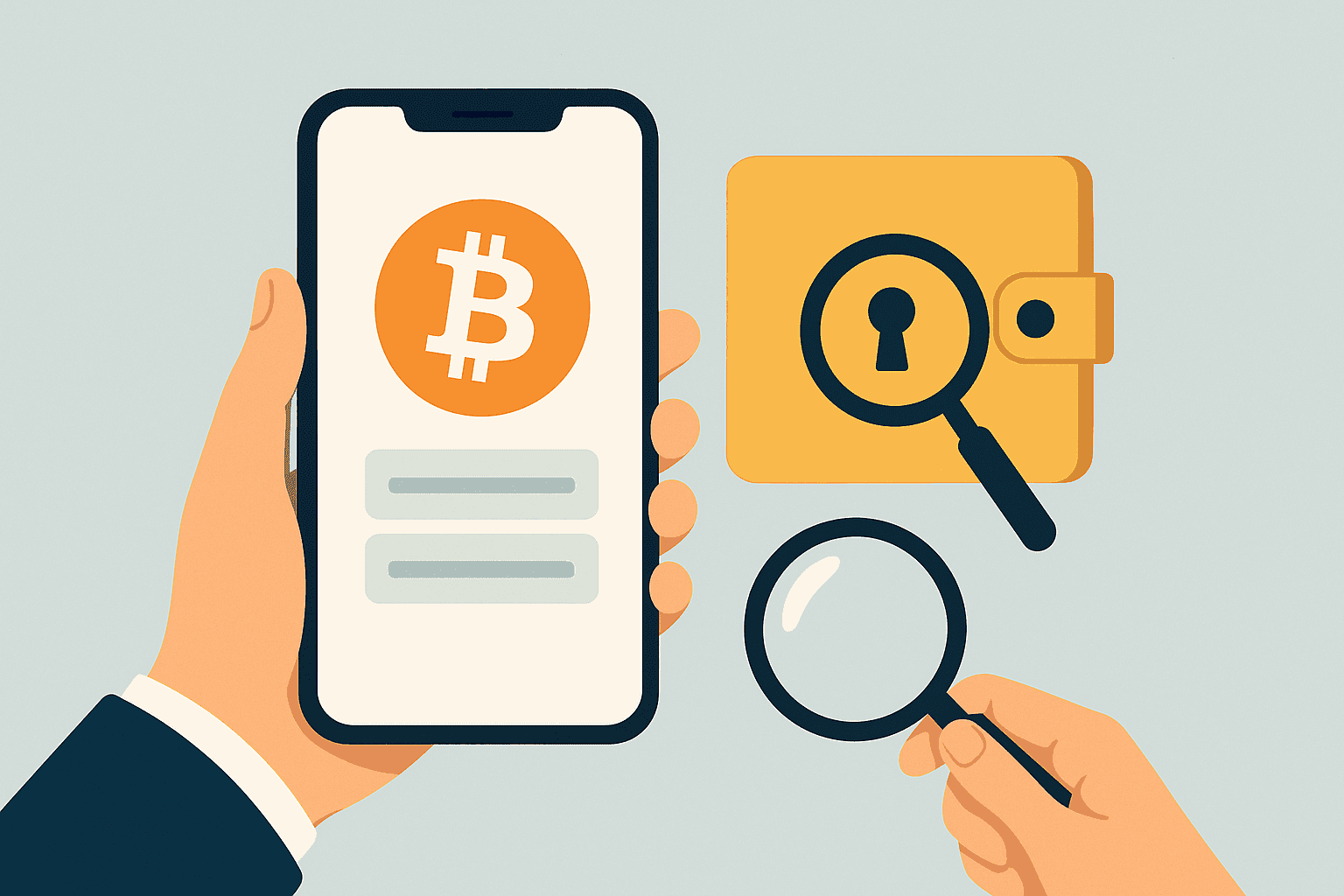
Lost access to a Bitcoin wallet isn’t just folklore about vanishing riches—it’s a consequence of decentralization and irreversible transactions. If you’re searching for a find lost crypto wallet app, remember there is no help desk on the Bitcoin network to undo mistakes. Send BTC to a wrong address or misplace private keys, and those coins can become effectively unreachable.
So-called crypto wallet finder apps and tools can sometimes help you locate wallet files on a computer, identify which wallet software you used, or monitor an address on-chain. What they cannot do is recover coins without the private key, seed phrase, or another valid backup.
It’s also not possible to physically track the location of a “lost wallet” device using the blockchain or wallet finder apps. Blockchain explorers can show balances and transaction activity for an address, but they can’t reveal a device’s location or reliably identify the person controlling it.
If your own Bitcoin wallet is out of reach, you’re likely asking whether recovery is still possible.
It can be, but it takes patience, technical know-how, and a clear plan. This guide lays out the core concepts, tools, and actionable steps to improve your odds—and shows how to prevent future loss.
Let’s jump in.
When Does a Bitcoin Wallet Become “Lost”?
Bitcoin wallets, often holding significant untapped value, can become inaccessible for several reasons. Knowing how and why wallets get lost helps you both prevent loss and improve the chances of retrieval. Here are the most frequent causes.
| Cause | Description |
|---|---|
| Misplacing the private keys | Losing the keys (or seed phrase) that control the funds prevents you from signing transactions. |
| Theft of funds | Attackers gain access via phishing, malware, or social engineering and move assets away. |
| Accounts frozen by custodial services | An exchange or platform can restrict access due to compliance flags, suspected compromise, or account disputes. |
| Owner death without succession plan | Without documented instructions or accessible backups, heirs may be unable to access the wallet. |
| Burn addresses for Bitcoin | Coins sent to provably unspendable addresses are intentionally removed from circulation. |
| Transfers to an incorrect address | Transactions are irreversible; sending to the wrong address typically means the funds won’t return. |
| Long-idle Bitcoin wallets | Wallets can remain untouched for years due to forgotten credentials, lost backups, or intentional long-term holding. |
1. Misplacing the Private Keys
Private keys unlock control over a wallet’s funds. Lose them, and it’s like misplacing the combination to a safe. Keys can disappear through forgetfulness, device failure, or corrupted data. Because cryptocurrencies run on decentralized rails, there’s no central authority to restore access, making secure storage practices essential.
2. Theft of Funds
Cybercriminals target crypto wallets using malware, phishing, and other exploits to seize control and move assets elsewhere.
3. Accounts Frozen by Custodial Services
Using a custodial wallet through a centralized platform can backfire if your account is frozen. While intended to block suspicious activity, freezes can also lock out rightful owners after credential compromise or compliance errors.
4. Owner Death Without Succession Plan
Without documented estate plans that share private key or seed phrase details, a deceased owner’s Bitcoin can be permanently stranded. Including digital assets in wills and instructions is critical to ensure beneficiaries can access funds.
“Dead man’s switch” solutions exist for crypto. These services rely on smart contracts that grant trustee access only if the owner fails to respond within a set window due to death or incapacity.
5. Burn Addresses for Bitcoin
Burn wallets are addresses that no one can access. Coins are intentionally sent there to remove them from circulation—often to increase scarcity—and cannot be recovered once moved.
6. Transfers to an Incorrect Address
Mistyping or pasting the wrong destination is easy to do. Because blockchain transactions are final, funds sent to the wrong address cannot be reversed. Double-check every detail before sending.
7. Long-Idle Bitcoin Wallets
Wallets with no activity for years may reflect forgotten holdings or lost access. Although not “lost” by definition, these dormant balances sit outside active circulation and add to perceived scarcity.
The Five Most Notorious Lost Bitcoin Wallets
Crypto history includes not only breakout gains and pioneering tech but also high-profile losses and unresolved mysteries. The following five cases are cautionary legends. To dig deeper into large dormant holdings, consider using a Bitcoin wallet tracker tool.
Satoshi Nakamoto’s Wallet
Bitcoin’s pseudonymous creator is believed to control roughly 1.1 million BTC. With Bitcoin’s rise, this cache represents a massive slice of supply. The coins remain untouched, fueling debate: were they purposely sidelined or are they simply inaccessible? The silence keeps the legend alive.
Unknown Mt. Gox Wallet
At its peak, Mt. Gox processed more than 70% of Bitcoin trades. In 2014, a devastating breach resulted in the loss of 850,000 BTC, much of which remains unaccounted for. Later court filings tied large portions of the stolen coins to subsequent transfers and defunct exchange activity.
Investigators allege that from 2011 to 2014, attackers siphoned at least 647,000 BTC from Mt. Gox wallets, sending about 300,000 BTC to the exchange BTC-e, which was shuttered in 2017 amid criminal allegations.
Stefan Thomas and the Lost Password
Programmer Stefan Thomas forgot the password to an IronKey drive protecting 7,002 BTC. With only ten attempts allowed before permanent lockout, the stakes were extreme. In 2023, recovery specialists at Unciphered said they could breach a similar device using high-performance computing after an immense number of tries.
The method was intended to unlock Thomas’s vault, holding a fortune secured in a Swiss bank. He declined the offer due to prior commitments with other teams. The episode underscores technical, ethical, and contractual tensions in wallet recovery—and how human decisions can keep vast sums out of reach.
The Buried Treasure of James Howells
In 2013, James Howells discarded a hard drive containing nearly 8,000 BTC. He has long sought permission to excavate the landfill where he believes it lies. Despite legal help, expert plans, and rewards, local authorities denied the dig over environmental risks.
By 2023, Howells proposed using artificial intelligence to triage about 100,000 tons of waste, but approvals still had not materialized.
The ‘Disappearance’ of Gerald Cotten
QuadrigaCX chief executive officer Gerald Cotten reportedly died in 2018, taking control of wallets holding roughly 190 million Canadian dollars to the grave. Doubts about the death and the exchange’s controls kicked off years of speculation.
The plot thickened when previously “dormant” addresses moved funds in 2022 to multiple destinations, including a Wasabi mixer, which only added intrigue to the bankruptcy saga.
Individual X: The 69,000 Bitcoin Cache
An unknown figure dubbed Individual X allegedly looted the Silk Road marketplace of 69,000 BTC. United States authorities later seized those coins, illustrating how anonymity, crime, and law enforcement intersect on the blockchain.
Together, these tales reveal how technology, human error, and immutable ledgers can freeze fortunes in place.
Where Do Lost Bitcoin End Up?
“Lost” coins don’t vanish; they sit at addresses that cannot be controlled without the correct private keys. Those keys are both lock and key—without them, funds remain untouched on-chain indefinitely.
To track a Bitcoin wallet address, paste the address into a blockchain explorer and review its confirmed transactions, current balance, and whether funds have moved to new addresses. This kind of tracking can show activity patterns and where coins went, but it does not reveal the owner’s identity or any real-world location.
How Much Bitcoin Is Gone for Good?
Analysts estimate that around 29% of circulating BTC may be stuck in long-dormant addresses untouched for five years or more. Bitcoin’s fixed cap of 21 million increases the impact of these losses, separating it from endlessly printable fiat currency.
While some quiet addresses reflect long-term holding, many represent misplaced keys or failed backups. Every stranded wallet shrinks available supply, reinforcing the need for rigorous private key and seed phrase management.
How Many Wallets Sit Abandoned?
Beyond outright loss, many wallets show no activity for years. Some are truly abandoned; others belong to owners who simply choose not to move funds. Exact counts are hard to determine.
How to Recover a Lost Bitcoin Wallet
Wallet recovery can feel like a blend of digital forensics and puzzle-solving. Whether credentials were misplaced, a device failed, or an old wallet resurfaced, the path back is challenging—but not hopeless. Use the steps below to improve your chances.
Crypto wallet finder apps and tools generally fall into two buckets: tools that search your own devices for wallet artifacts (like wallet files, backups, or remnants of deleted data), and tools that search the blockchain for address activity (like explorers and address-monitoring utilities). They can help you find clues, but they can’t “find” private keys on-chain, and they can’t recover funds without some form of legitimate recovery material.
Because this niche attracts scams, treat wallet finder tools with caution. Prefer well-known, widely used software; avoid “too good to be true” promises; and never share private keys or seed phrases with untrusted services or websites.
Before you run any recovery tool, verify exactly what it does, where it came from, and what data it will access—unclear provenance is a risk signal in wallet recovery.
If you do hire help, expect professional recovery services to be expensive and uncertain. Some charge an upfront fee for assessment or password work, while others charge a contingency percentage of recovered funds (often in the 10% to 30% range). Recovery is never guaranteed; success depends on what you still have (device, backups, wallet files, or partial credentials) and the specific failure mode.
1. Identify the Wallet Type You Used
Start by recalling where you stored funds: a web wallet, a mobile app, a hardware device, or a paper printout?
If you recall any transactions, review them on a blockchain explorer to rediscover addresses and hints about the platform or wallet type. Tracking known addresses tied to your activity can also reveal the original setup.
Each wallet category follows different recovery procedures, so correct identification matters.
In practice, recovery usually hinges on what you can locate: a seed phrase; a private key; a wallet file (such as a ); a password or passphrase; the original device or storage media; and any notes about where backups were stored.
2. Start the Recovery Process
Recovering a Paper Wallet
Paper wallets were not designed with recovery in mind. Unless you have a duplicate printout or saved private keys on a storage device, options are limited.
Recovering Custodial (Exchange) Wallets
First, determine which exchange you used. Then look for login emails or records. Platforms such as Coinbase and Binance typically support password resets via email-based flows.
If an active exchange froze your account, you may be unable to proceed without resolving compliance flags. If the platform no longer exists, funds are likely unrecoverable—one reason many prefer non-custodial control.
Recovering a Software (Hot) Wallet
Locate the original device. Early wallets often relied on per-account private keys stored in local files or printed on paper. Search computers, flash drives, external drives, tapes, writable discs for saved keys.
Modern wallets commonly use a seed phrase. Hunt for that mnemonic in notebooks, safes, or other physical storage. With the phrase, you can restore on any compatible seed-phrase-based wallet interface.
If you lack both keys and seed but still have the device, try extracting the wallet data. Wallets may keep files in known directories (for example, a ). Tools like Recuva, Puran File Recovery, or TestDisk can sometimes resurrect deleted files or partitions.
Recovering a Hardware Wallet
If you still have the device, attempt the passcode only if you’re confident—most signers wipe after a small number of failed tries.
No passcode? Use the seed phrase you recorded during setup. Search every plausible hiding place for the recovery card or backup copy.
If nothing works, specialized services may attempt hardware-level extraction on some brands. Ledger signers are built to resist physical compromise; other devices have been recovered in limited cases.
3. Lock Down Access So You Don’t Lose It Again
After regaining control, resecure your holdings. Consider consolidating into a wallet you use regularly and back up the seed phrase with redundancy.
A hardware signer keeps private keys offline, reducing exposure to malware. Many let you manage multiple accounts in one interface and restore them with a single seed, simplifying disaster recovery.
How to Avoid Losing Access to Your Bitcoin Wallet
Self-Custody Best Practices
Non-custodial control ensures only you hold the keys. Many modern crypto wallets support seed phrase recovery across compatible seed-phrase-based wallet software, giving you final authority over your digital assets.
Seed Phrase Backup Options
Reliable backup is nonnegotiable. Combine durable physical storage with encrypted digital safeguards or a secondary hardware backup to protect long-term holdings. For anything protected by a password, use a reputable password manager and keep its own recovery method secured. Also, periodically test your backups by doing a dry-run restore on a spare device, and consider secure offsite storage so a single disaster doesn’t wipe out every copy.
Physical Storage
Write down your secret recovery phrase and store it where it can survive fire and water. Steel solutions such as a metal seed storage case help protect against physical disasters and remote theft.
Backup Device
With a hardware signer like a Ledger device, a second unit can mirror access without duplicating paper backups. Keep one secure and separate—potentially in another location or even country—for resilience.
Ledger Recover
Ledger Recover is an optional paid service that creates an encrypted backup of your seed phrase. It’s designed for users who need secure, location-independent restoration without carrying a physical seed everywhere.
Lost Bitcoin Wallets: Final Thoughts
Bringing a lost wallet back to life can require diligence, technical skills, and sometimes luck. The experience highlights why disciplined key management and routine backups are vital. Safeguard anything that might be needed later, and consider using a Ledger signer to manage assets with true self-custody.
Frequently Asked Questions About Lost Bitcoin Wallets
Is Satoshi’s Address the Largest Lost Bitcoin Wallet?
Yes. Satoshi Nakamoto is widely believed to control about 1.1 million BTC accumulated in Bitcoin’s early days. This hoard has remained motionless for years, leading many to treat it as the largest dormant—or effectively lost—stash by volume.
How Do You Claim an Unclaimed Bitcoin Wallet?
Without the private keys or seed phrase, claiming a wallet is cryptographically impossible. Even if it were technically feasible, taking control of a wallet you don’t own would be unlawful and unethical.
If you have lawful rights—such as being an heir—recovery depends on locating the keys or seed phrase in the owner’s records, devices, or secure storage.
The Shift: From Hardware Wallet to Signer
As crypto matured, user experience evolved quickly while language lagged. Calling devices “hardware wallets” blurred the role of secure hardware versus companion software like Ledger Live, leaving many users confused.
Common misconceptions emerged:
- People thought the value lived on the device.
- They feared losing the device meant losing assets.
- They assumed the device was the end goal.
- They believed 24 words were only for experts.
These myths slow adoption. For the next stage, clarity matters. We’re changing how we describe our products—and, in turn, how people understand digital ownership.