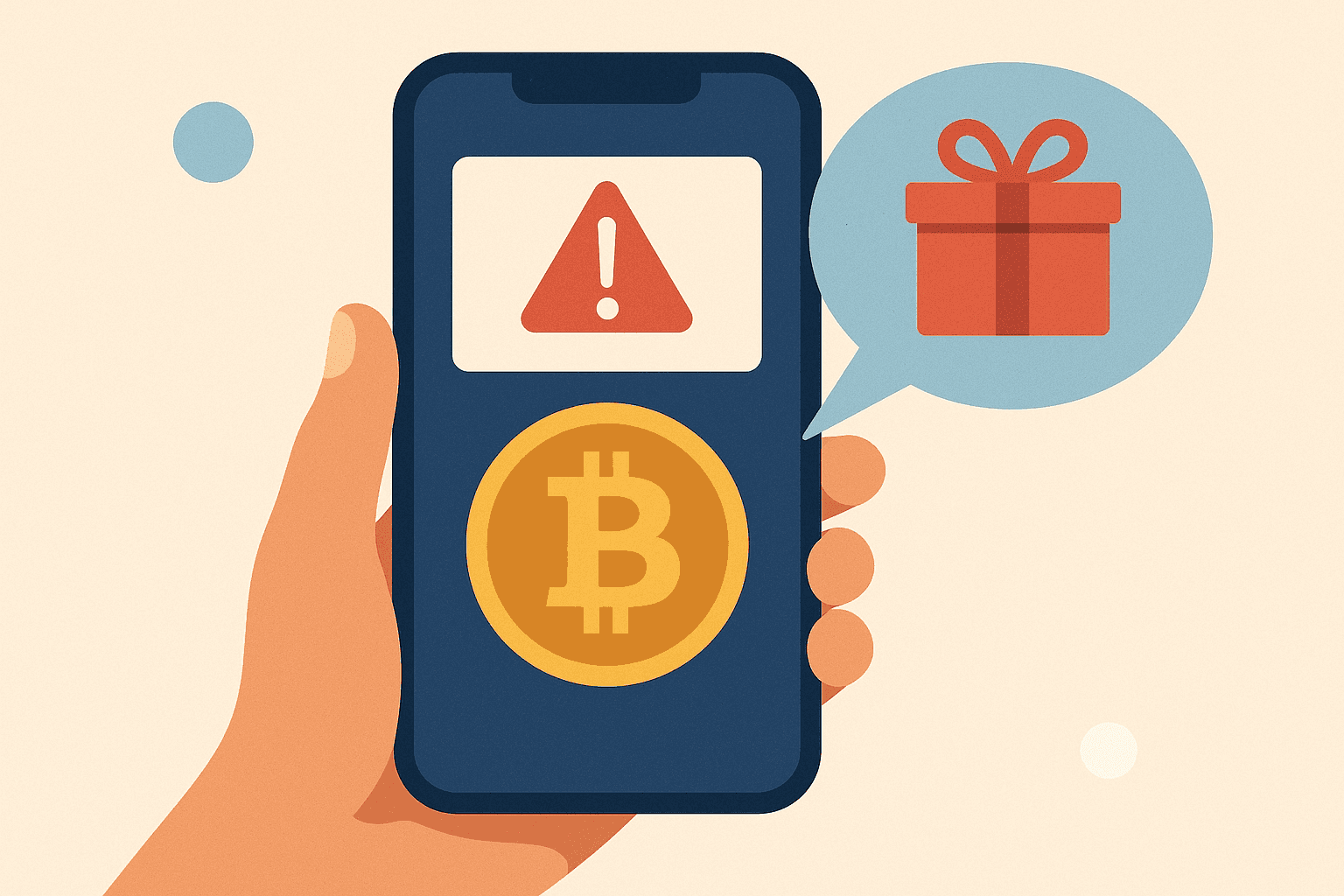
Across social networks—most notably Twitter and Instagram—fraudsters are pushing the so‑called crypto giveaway. They dangle free tokens, gadgets, or other perks in return for follows, likes, comments, or retweets. The offer is a ruse designed to siphon personal data, cryptocurrency, or other assets.
Impostor Accounts: How the Giveaway Scam Unfolds
Typically, a scammer spins up a profile that imitates a real cryptocurrency exchange or a recognizable industry figure. They publish a flashy announcement promising digital coins, luxury items, or similar prizes, then lay out “entry” steps: follow the account, like or repost the message, and sometimes submit a form that asks for personal information.
Tactics Used to Steal Coins and Data
Once people engage, the impersonator may slide into direct messages requesting a wallet address, seed phrase, or even private keys. Another angle is a small payment for supposed “transaction fees” or “gas” to unlock the reward. After the victim sends money or sensitive details, the account disappears and the prize never arrives.
Not every promotion is fake. Real crypto giveaways and airdrops do exist, but they tend to have clear rules, a documented organizer, and a verifiable distribution process. A legitimate giveaway usually spells out eligibility (who can enter, where it is available, and how winners are chosen), while an airdrop typically uses on-chain criteria (such as holding a certain token, interacting with a protocol, or completing a specific task) and then provides a claim path that does not require handing over secret wallet credentials.
Legitimate giveaways are built around clear written rules and official verification, not urgency, secrecy, or requests for wallet recovery details.
If you want to participate in real promotions, start from official sources: the project’s own website, its established social profiles, and announcements inside its confirmed community channels. Typical entry requirements for legitimate giveaways can include following an official account, completing a “learn-and-earn” lesson, or meeting stated eligibility rules; what should never be required is your seed phrase, private keys, or an upfront transfer to “unlock” a reward.
There are also legitimate ways people sometimes earn small amounts of crypto without “winning” anything, including airdrops tied to a project’s rules, faucets that pay tiny amounts for simple tasks, staking rewards (which depend on the asset and the amount staked), and learn-and-earn programs offered by some exchanges. These options still carry tradeoffs—privacy, time, volatility, and sometimes identity verification—so “free” rarely means “risk-free.”
Be wary of “unclaimed Bitcoin” pitches. In practice, “unclaimed” usually refers to coins that are inaccessible because the owner lost the keys, abandoned an old wallet, or never completed a recovery process. There is no legitimate public registry that lets strangers claim someone else’s Bitcoin; the only real paths involve lawful ownership (such as inheritance or documented business control) and access to the correct keys or recovery materials. Scammers often use “unclaimed” language to bait victims into paying bogus recovery fees or sharing wallet details.
Claims about making $100 a day with Bitcoin should be treated cautiously. Some people try to reach that kind of daily target through active trading, mining, staking, or paid work that settles in Bitcoin, but outcomes vary widely and losses are common—especially with short-term trading. Mining depends on hardware cost, electricity prices, and network difficulty; staking and similar yield strategies generally scale with the amount you commit and can involve lockups or platform risk. A more realistic approach is to think in terms of risk management, time horizon, and capital rather than a guaranteed daily number.
Avoiding a Giveaway Scam: Practical Steps
Use the following safeguards to reduce your risk:
| Safeguard | Description |
|---|---|
| Be Skeptical | If it looks unreal, treat it as such. Truly “free” crypto is more often seen in structured cases like a documented airdrop, a learn-and-earn reward, or a clearly stated community incentive—each with published rules and a verifiable organizer. Treat it as a scam if it relies on urgency, vague terms, or promises that are wildly out of proportion to the effort required. |
| Verify the Source | Confirm the profile is genuine by starting from the organization’s official website and following its outbound links to social accounts. Check for lookalike handles, subtle misspellings, recently created accounts posing as established brands, and posts that route you to unfamiliar domains. If the “giveaway” cannot be found on the project’s official channels (not just reshared screenshots), assume it is fraudulent. |
| Protect Your Secrets | Do not share private keys, seed phrases, or other sensitive wallet details online under any circumstances. |
| Do Not Pay to Win | Legitimate promotions do not require you to send crypto to “verify” a wallet or cover “processing” costs. Decline any request for upfront transfers, no matter how small. |
| Report and Move On | Use the platform’s reporting tools to flag impersonation and scam content, and document what you can (usernames, message screenshots, and transaction details) while the evidence is still available. |
If you fall victim, act quickly: stop communicating with the scammer, revoke any wallet permissions you granted to suspicious sites, and move remaining funds to a fresh wallet you control if you believe your wallet was compromised. Change passwords on related accounts (especially email), enable two-factor authentication where available, and contact any exchange or payment service involved to see whether it can freeze assets or flag the destination.
Reporting can also help limit harm to others. File a report with the social platform, notify the legitimate brand being impersonated, and consider reporting to local law enforcement or your country’s cybercrime reporting channel. If you shared identity details, consider credit monitoring or other protective steps appropriate to your jurisdiction.
As for legality, crypto giveaways can be lawful, but rules vary by location and by how the promotion is structured. Some jurisdictions treat giveaways like sweepstakes or promotional contests, which can require disclosures, eligibility limits, age restrictions, “no purchase necessary” conditions, and specific handling of winners. Participants may also face tax reporting obligations on rewards, depending on local rules.
In summary, these cons are spreading fast, and careful scrutiny is essential when engaging with online promotions. By applying the tips above, you can lower your exposure to fraud and navigate the cryptocurrency space more safely.