As Kabiru Sadiq, I have spent more than 30 years advising on capital markets, public finance, and investment strategy across Nigeria and West Africa, and in this article I assess the best stock to buy in Nigeria from a disciplined market perspective. In my experience, no single stock should be judged in isolation; every investment decision must be anchored in valuation, market position, income potential, and risk management.

How I Measure Share Performance
I have analyzed Nigerian equities for decades, and one lesson remains constant: investors use different benchmarks to evaluate a stock, depending on their objectives, time horizon, and tolerance for volatility. A widely used starting point is the price-to-earnings ratio, which helps indicate how the market is valuing a company relative to its earnings.
The P/E ratio is derived by dividing the current share price by earnings per share over the trailing 12 months. From my perspective, however, valuation should not stop there. Total return matters greatly, especially in Nigeria, where dividends can play a meaningful role in portfolio outcomes. I also advise investors to review 52-week performance and year-to-date movement before classifying any listed security as attractive.
Beyond P/E, I pay close attention to dividend yield, particularly in the Nigerian market where cash income remains a major attraction for many shareholders. Price-to-book ratio is also useful when reviewing banks, insurers, and other asset-heavy companies because it gives a clearer picture of how the market values the balance sheet. Market capitalization helps investors distinguish between large, established counters and smaller, more speculative names, while trading volume gives insight into liquidity and the ease of entry or exit. In practice, these metrics work best when interpreted together rather than in isolation.

5 Shares I Consider Notable on the Nigerian Exchange
| Company Name | Ticker | Sector | Market Capitalization (NGN) | YTD Performance (%) | Key Strengths |
|---|---|---|---|---|---|
| Morison Industries Plc | MORISON | Healthcare | 2.17 billion | 10.1% | Healthcare demand resilience and specialized product positioning |
| United Capital Plc | UCAP | Financial Services | 76.2 billion | 28.3% | Diversified fee-based income and regional client reach |
| Royal Exchange Plc | ROYALEX | Insurance | 5.25 billion | 15.9% | Broad insurance platform with related financial services exposure |
| Honeywell Flour Mills Plc | HONYFLOUR | Consumer Goods | Not stated | Not stated | Recognizable food brands and staple product exposure |
| Guinness Nigeria Plc | GUINNESS | Consumer Goods | 198 billion | 132% | Strong brand equity and diversified beverage portfolio |
| Zenith Bank Plc | ZENITHBANK | Banking | Not stated | Not stated | Consistent profitability, scale, and dividend relevance |
| Dangote Cement Plc | DANGCEM | Industrials | Not stated | Not stated | Market leadership and strong domestic infrastructure exposure |
Morison Industries Plc (NGX: MORISON)
Morison Industries operates in Nigeria’s healthcare supply space, importing and distributing medical, surgical, and hospital consumables while also producing and marketing pharmaceutical and hygiene products. In my experience, healthcare-related businesses often deserve close attention because demand can remain resilient even during broader market stress.
The company has built strength in areas such as wound care, trauma and arthroplasty products, as well as bone graft solutions. That positioning has helped it establish a credible presence within its segment of the Nigerian market.
At the time of assessment, Morison Industries ranked as the 105th most valuable stock on the NGX, with a market capitalization of NGN 2.17 billion, representing roughly 0.0077% of the equity market.
The share opened the year at 1.99 NGN and appreciated by 10.1%, placing it 46th on the exchange in year-to-date terms.
United Capital Plc (NGX: UCAP)
United Capital is one of the more established financial services groups in Nigeria, with operations spanning investment banking, asset management, trusteeship, securities trading, and insurance. I have worked with institutions across the region, and firms with diversified fee-based income streams often show stronger resilience across economic cycles.
Although Nigeria remains its core market, the company also engages governments, institutions, and high-net-worth clients across Africa. That broader footprint gives it strategic depth beyond its domestic base.
Its market capitalization stands at NGN 76.2 billion, equivalent to about 0.271% of the Nigerian equity market, making it the 28th most valuable listed stock.
United Capital began the year at 9.90 NGN per share and gained 28.3%, which placed it 24th on the NGX by year-to-date performance.
Royal Exchange Plc (NGX: ROYALEX)

Royal Exchange is a Nigerian insurance company active in both life and non-life business lines. Its offerings extend across general insurance, health insurance, and life cover, which gives it a broad operating base in a sector that remains underpenetrated in Nigeria.
The business also participates in related financial services, including asset management, credit financing, and microfinance-linked activities. From my perspective, that level of diversification can be useful, though investors must still assess earnings quality and execution discipline.
Royal Exchange ranked as the 80th most valuable stock on the NGX, with a market value of NGN 5.25 billion, representing about 0.019% of the exchange’s equity market.
The share price started the year at 0.88 NGN and advanced by 15.9%, placing it 41st on the NGX on a year-to-date basis.
Honeywell Flour Mills Plc (NGX: HONYFLOUR)
Honeywell Flour Mills is a Nigerian food processing and flour milling company engaged in the production and sale of flour, semolina, wheat meal, brown flour, pasta, and noodles. In a market like Nigeria, I often advise investors to pay close attention to consumer-facing businesses because demand patterns in staple goods can provide useful signals on pricing power and operating resilience.
Its products are marketed under the Honeywell brand, which has a recognizable presence in the domestic market. The company, formerly known as Gateway Honeywell Flour Mills Limited, adopted its current name in 1995.
Honeywell Flour Mills operates from Lagos and is part of Siloam Global Services Limited. For investors, this is a stock that should be reviewed not only through brand visibility but also through margins, cost pressures, and raw material exposure.
Guinness Nigeria Plc (NGX: GUINNESS)

Guinness Nigeria, a subsidiary of Diageo Plc in the United Kingdom, began operations in 1962 with the establishment of a brewery in Ikeja, Lagos. I have seen over the years that companies with long operating history and strong brand equity often hold an advantage in difficult market conditions.
In November 1963, the first bottle of Guinness Foreign Extra Stout was produced locally, making the operation the first Guinness brewery outside the British Isles. The company joined the Nigerian Stock Exchange two years later.
Guinness Nigeria stands out as a broad-based beverage business with offerings across spirits, lagers, ales, and non-alcoholic drinks. That diversified portfolio is significant in a consumer market where brand loyalty and distribution reach can influence long-term value.
It is the 17th most valuable stock on the NGX, with a market capitalization of NGN 198 billion, accounting for approximately 0.705% of the Nigerian equity market.
The stock began the year at 39.00 NGN and rose by 132%, making it the fifth-best performer on the NGX in year-to-date terms.
Zenith Bank Plc (NGX: ZENITHBANK)
Zenith Bank deserves mention among notable Nigerian stocks because it has maintained a strong reputation for profitability, capital strength, and dividend distribution over time. In my experience, banking names that combine earnings consistency with disciplined balance-sheet management often remain central to serious equity portfolios in Nigeria.
For income-focused investors, Zenith Bank is frequently discussed among the market’s leading dividend payers. That said, I always caution that a high dividend yield should be tested against earnings sustainability, capital adequacy, and the wider interest-rate environment before any conclusion is reached.
Dangote Cement Plc (NGX: DANGCEM)
Dangote Cement is another stock I consider notable because of its scale, market leadership, and strategic relevance to infrastructure and construction activity in Nigeria. From my perspective, industrial leaders with dominant domestic positioning can provide investors with exposure to long-term economic expansion, although they are still vulnerable to energy costs, currency pressure, and cyclical demand.
The company’s importance on the NGX also reflects how heavily institutional investors monitor industrials when assessing broad market direction. For many investors, it is not simply a cement stock; it is a proxy for infrastructure momentum and private-sector capital formation.
How I Evaluate the Right Share Broker in Nigeria
In my experience, market participants in Nigeria are entering a more competitive brokerage environment than ever before. This is beneficial for investors because lower transaction costs and improved digital tools are becoming more common across the market.
Those seeking access to global instruments can also consider forex and CFD providers, but broker selection should never be based on marketing claims alone. I often advise investors to assess the broker’s product range, cost structure, governance standards, and execution quality before opening an account.
- Product range
- Cost structure
- Governance standards
- Execution quality

Commission Charges
Brokers typically offer access to instruments such as equities, options, mutual funds, exchange-traded funds, and bonds. Some also provide exposure to forex, futures, and digital assets.
The relevance of a broker depends on whether its product offering matches your investment objectives. Equally important are the fees attached to the transactions you expect to make. I always encourage investors to review commission schedules carefully before committing capital.
Overall Reliability
The brokerage market includes long-established operators as well as newer entrants. A newer platform is not necessarily unreliable, but investors should confirm the quality of oversight, licensing, and operational controls before transferring funds.
Where a broker handles client transactions, regulatory supervision is essential. Credibility improves when the institution is subject to recognized standards and transparent compliance procedures.
Account Fees
Account-related fees may not disappear entirely, but they can often be managed. Many brokers impose charges for withdrawals, account closure, or transfer of holdings, although some incoming firms may absorb part or all of those transfer costs.
- Annual maintenance fees
- Inactivity fees
- Subscription costs for trading platforms
- Payments for market data or research
In my experience, these costs can materially affect returns if ignored.
Pricing and Execution on Trades
Trading costs have declined significantly, and commission-free dealing is increasingly common. Even so, execution quality remains crucial, especially for active traders who depend on efficient price fills.
I often advise market participants to understand how orders are routed and whether any pricing practice could reduce execution quality. A small difference on a single trade may appear insignificant, but over time it can erode performance meaningfully.
Additional Tools, Educational Materials, and Features
For new investors, a strong brokerage platform should provide educational support through the following resources:
- Webinars
- Tutorials
- Practical guides
- Glossaries
- Other learning resources
In a market where many retail participants are still developing analytical discipline, this support can be valuable.
It is also important to assess whether the broker explains the hazards associated with more sophisticated strategies. Education should not simply promote activity; it should help the investor understand risk, product suitability, and capital preservation.

Small-Scale Investing With 10,000 Naira
For investors asking what 10,000 Naira can realistically buy, my answer is that it is enough to begin building market discipline, even if it is not enough for broad diversification at once. In Nigeria, that amount can be directed into lower-priced NGX shares, money market funds, or saved gradually until it is sufficient to buy stronger blue-chip names in meaningful quantity.
Examples may include selected low-priced banking, insurance, or consumer stocks where the entry ticket is modest, but price alone should never be mistaken for value. A small investor should focus on transaction costs, liquidity, and the quality of the business, because fees and poor execution can damage returns quickly at that level of capital.
Where direct equities appear too narrow, I often advise beginners to consider pooled products or simply accumulate cash until they can spread risk more intelligently. The key lesson is that 10,000 Naira is not too small to start learning, but it is small enough that discipline matters more than excitement.
Dividend Stocks and Income Considerations
Many investors also want to know which Nigerian stock pays the highest dividend. In practice, that answer changes with market price, declared payout, and timing, so I do not treat any single name as permanently holding that position. A stock may show the highest dividend yield at one point simply because its share price has fallen sharply, which is why I always test yield against earnings quality and payout sustainability.
Among the stocks that are commonly regarded as strong dividend payers in Nigeria are Zenith Bank, United Capital, and other established financial names with a record of returning cash to shareholders. Their appeal usually rests on a combination of recurring earnings, relatively strong cash generation, and management willingness to maintain distributions, but even then, investors should examine whether the payout is covered by profits and whether future conditions can support the same level.
For income investing, I place more value on sustainable dividend culture than on a headline yield alone. A modest but repeatable payout is often more useful than an unusually high yield that cannot be maintained.
Key Sectors I Watch in the Nigerian Market
The Nigerian stock market is shaped by a few sectors that investors should study closely before allocating capital. Banking remains central because it drives market liquidity, dividend activity, and broad sentiment on the NGX. Consumer goods are significant because they reflect household demand, pricing power, and inflation pressure. Oil and gas matters because of Nigeria’s dependence on energy revenues and the sector’s influence on foreign exchange and fiscal conditions.
Industrials, especially cement and building materials, are important because they provide exposure to infrastructure and domestic construction trends. Telecommunications has become increasingly relevant because of recurring demand, scale, and digital expansion. Agriculture and agro-processing also deserve attention because food supply, import substitution, and population growth continue to shape long-term opportunity in Nigeria.
Investment Strategies I Consider Effective in Nigeria
There is no single best strategy for every investor in the Nigerian stock market, but I generally find that a disciplined mix of value investing, dividend investing, and selective growth exposure works better than speculation. Value investing helps investors identify companies trading below their intrinsic worth, while dividend investing supports cash flow and total return in a market where income still matters. Growth investing can also be rewarding, but it requires patience and a strong understanding of execution risk.
Sector rotation can be useful when inflation, interest rates, or policy changes begin to favor one part of the market over another. For less active investors, index-oriented exposure or a diversified basket of quality names can reduce single-stock risk. In Nigeria, the most effective strategy is usually the one that respects liquidity, governance quality, earnings resilience, and the investor’s own time horizon.
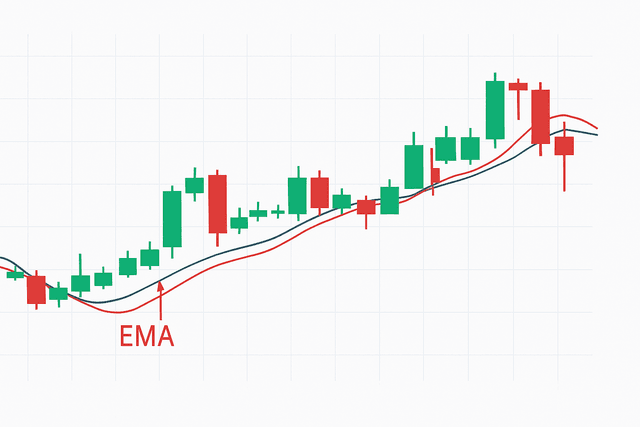
In Nigerian equities, I have found that the strongest decisions usually come from combining fundamental analysis with technical review rather than relying on one method alone.
Cheap Stocks on the NGX and Risk Management
Some investors are specifically interested in cheap stocks for strategic entry. I always clarify that a cheap stock may mean a low share price, a low P/E ratio, a price below book value, or a recent decline that has created value. These are not the same thing, and confusing them is one of the most common mistakes I see among newer investors.
Low-priced shares in insurance, smaller industrial, or thinly traded financial counters may appear attractive at first glance, but they can carry liquidity risk, weak earnings visibility, and governance concerns. In my experience, the better approach is to ask whether the stock is genuinely undervalued relative to fundamentals, not merely inexpensive in nominal terms.
As to whether Nigerian stocks are safe, I would say they can be suitable for disciplined investors, but they are never risk-free. The NGX operates within a regulated framework, which offers a degree of market structure and investor protection, yet volatility, currency pressure, policy changes, and company-specific governance issues remain real risks. Risk can be reduced through diversification, careful broker selection, attention to liquidity, and a focus on companies with understandable businesses and credible financial records.
Conclusion
I have analyzed the companies above as notable candidates for investors looking at the best stock to buy in Nigeria, but no list should be treated as a guarantee of future performance. Every security is exposed to changing market conditions, and prices remain dynamic rather than fixed.
Share price on its own is never a complete measure of a company’s financial strength or long-term potential. From my perspective, investors in Nigeria should combine fundamental analysis with technical review, assess sector trends carefully, and always align each investment with their objectives, liquidity needs, and tolerance for risk.