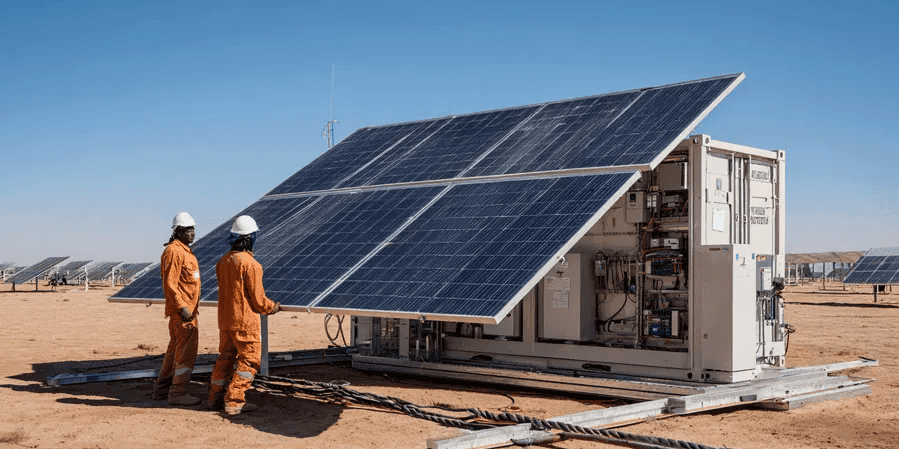
African nations are dramatically increasing their investment in solar energy, supported by a sharp rise in panel shipments from China. Data published by Ember shows that imports of Chinese-made solar modules climbed by 60 percent over the 12 months ending in June.
As the world’s dominant manufacturer of photovoltaic equipment, China accounts for roughly four-fifths of global panel production and continues to serve as Africa’s principal supplier.
Record import volumes across the continent
During the latest reporting period, 25 African countries brought in at least 100 megawatts of solar capacity each, compared with 15 nations the previous year. Total imports reached 15 gigawatts, marking a substantial increase from 9.4 gigawatts a year earlier.
This rapid expansion signals a structural shift in the continent’s energy mix, as governments seek alternatives to costly and carbon-intensive power sources.
Shifting market leaders
South Africa remained the largest single buyer of Chinese panels, although procurement volumes moderated as national electricity supply conditions improved. Meanwhile, Nigeria advanced to second place, surpassing Egypt with more than 1,700 megawatts of acquired capacity. Algeria ranked third among leading importers.
In smaller markets such as Sierra Leone, the installed panels could eventually generate electricity equivalent to more than half of the country’s total power production recorded in 2023.
Economic rationale behind the transition
Analysts highlight the financial benefits driving the solar push. In several African economies, high fuel import bills strain public finances. Expanding domestic renewable generation reduces reliance on diesel and other imported energy sources.
In markets like Nigeria, specialists estimate that solar investments can recoup initial costs in as little as six months due to savings on fuel expenditures. As installation capacity grows and equipment prices remain competitive, solar power is increasingly viewed not only as an environmental solution but also as a fiscally pragmatic strategy for energy security across Africa.