What should have been a season of collection and storage has turned into a period of loss and uncertainty for millions of households across West Africa. In farming communities where granaries are usually full by now, fields lie submerged, livestock is gone, and next year’s planting plans are already being discussed—not out of strategy, but necessity.
In north-central Nigeria, entire rice paddies were swallowed by floodwaters long before harvest. Instead of gathering crops, farmers are scrambling to secure seedlings for a future that feels increasingly unstable. In Benue State, often described as Nigeria’s agricultural backbone, the normal rhythm of planting and harvesting has been violently interrupted, leaving food producers themselves exposed to hunger.
Flooding on a Scale the Region Hasn’t Seen in Years
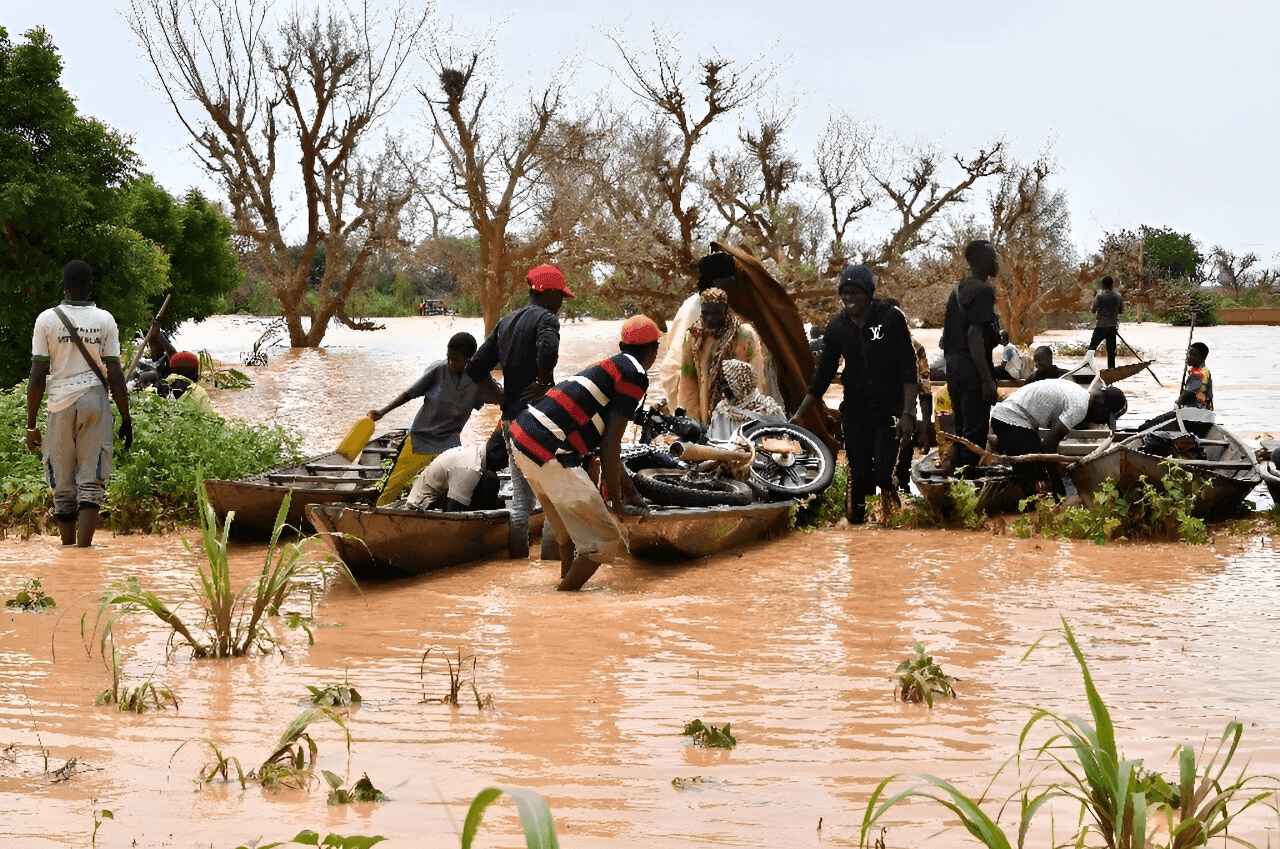
Nigeria has suffered the heaviest blow. Authorities report that flooding this year has claimed more than 600 lives and forced approximately 1.3 million people to abandon their homes. Roads, storage facilities, and irrigation systems have been destroyed, compounding the damage to agriculture and rural economies.
But this is not a Nigeria-only disaster. Across West and Central Africa, unusually intense rainfall has disrupted daily life for millions. According to international humanitarian assessments, roughly five million people in nearly 20 countries have been affected by flooding events this year alone. In Chad, the situation deteriorated so rapidly that the government declared a nationwide state of emergency after floodwaters reached more than one million residents.
Officials there describe the disaster as a catalyst—intensifying existing vulnerabilities such as poverty, weak infrastructure, and limited access to food.
Displacement, Disease, and Structural Weakness
As water recedes, secondary crises are emerging. Overcrowded shelters, contaminated water sources, and collapsed sanitation systems have contributed to a rise in preventable illnesses. Health organizations warn that outbreaks of cholera and other waterborne diseases are spreading, particularly in Nigeria, where emergency services are already overstretched.
Climate researchers point to two overlapping causes: increasingly erratic rainfall patterns linked to climate change, and long-standing government failures to invest in early warning systems, flood control, and land-use planning. In many parts of the region, drainage infrastructure is outdated or nonexistent, turning heavy rain into a humanitarian emergency almost overnight.
Agriculture Takes the Hardest Hit
Even before this year’s floods, West Africa was grappling with its most severe food insecurity in a decade. Inflation, conflict, and global supply disruptions had already pushed millions toward hunger. The floods have now accelerated that trajectory.
Farmers in Nigeria report losing up to three-quarters of their planted crops. In low-lying states like Bayelsa, livestock losses have been catastrophic. Poultry farms have been wiped out, with thousands of birds dying from exposure and disease. For small-scale producers, these losses are not temporary setbacks—they represent total economic collapse.
Similar patterns are emerging in Niger and Cameroon, where tens of thousands of people have been displaced and farmland rendered unusable. In northern Cameroon, rainfall has persisted well beyond the typical wet season, preventing recovery efforts and prolonging damage to crops and housing.
Rising Prices and Shrinking Time
Economists warn that reduced harvests across the region will almost certainly translate into higher food prices. This comes at a moment when inflation is already punishing consumers—hovering above 20% in Nigeria and surpassing 37% in Ghana. For low-income households, even modest price increases can mean skipping meals or relying on aid.
Humanitarian agencies have begun distributing emergency food supplies in some of the hardest-hit areas, including parts of northeastern Nigeria. Yet funding gaps remain severe. Aid organizations estimate that hundreds of millions of dollars are needed in the coming months to prevent the flooding crisis from evolving into a prolonged famine.
Without rapid intervention, what began as an environmental shock risks becoming a long-term humanitarian disaster—defined not only by water and destroyed fields, but by deepening hunger across an already fragile region.