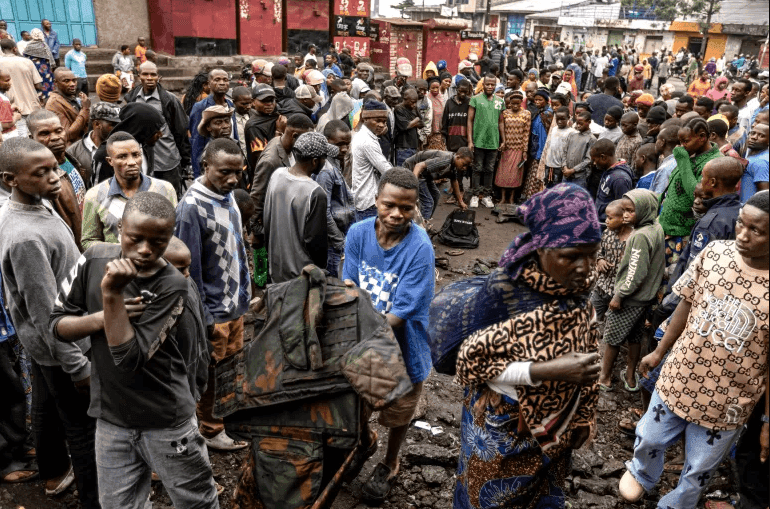
A year after armed fighters took control of Goma, daily life in the eastern Congolese city has become a constant struggle. What was once a lively commercial hub is now marked by shrinking trade, widespread unemployment, and a financial system that has largely ground to a halt.
The prolonged conflict has reshaped the city’s economy, leaving families with fewer options and little confidence that conditions will improve in the near future.
Markets Empty as Prices Soar
Goma’s central market, once crowded with buyers and sellers, now reflects the depth of the economic crisis. Many traders sit idle for hours, waiting for customers who can no longer afford basic goods.
Vendors say the cost of supplies has surged while purchasing power has collapsed. Products that were once bought in bulk at manageable prices are now far more expensive, forcing sellers to reduce stock and profits. For many families who depend on small trade to survive, income has steadily declined over the past year.
Jobs Disappear as Businesses Close
The conflict has driven many local businesses to shut their doors, while international companies and organizations have scaled back operations or left the city entirely. As a result, job opportunities have all but vanished.
Residents who once relied on short-term contracts or informal work say even those options have dried up. With organizations cutting staff and investment frozen, unemployment has surged, leaving households dependent on irregular support or dwindling savings.
Banking Shutdown Freezes the Economy
One of the most visible signs of economic paralysis is the closure of banks and microfinance institutions across Goma. Buildings that once handled daily financial transactions now stand locked and unused.
Economists warn that without access to banking services, recovery is nearly impossible. The absence of credit, investment, and secure savings has stopped money from circulating, deepening the city’s stagnation. Without functioning financial institutions, businesses cannot restart and households have no safe way to manage what little income they earn.
As the conflict continues and displacement rises across eastern Congo, Goma’s residents remain caught between insecurity and economic collapse, struggling to endure a crisis with no clear end in sight.