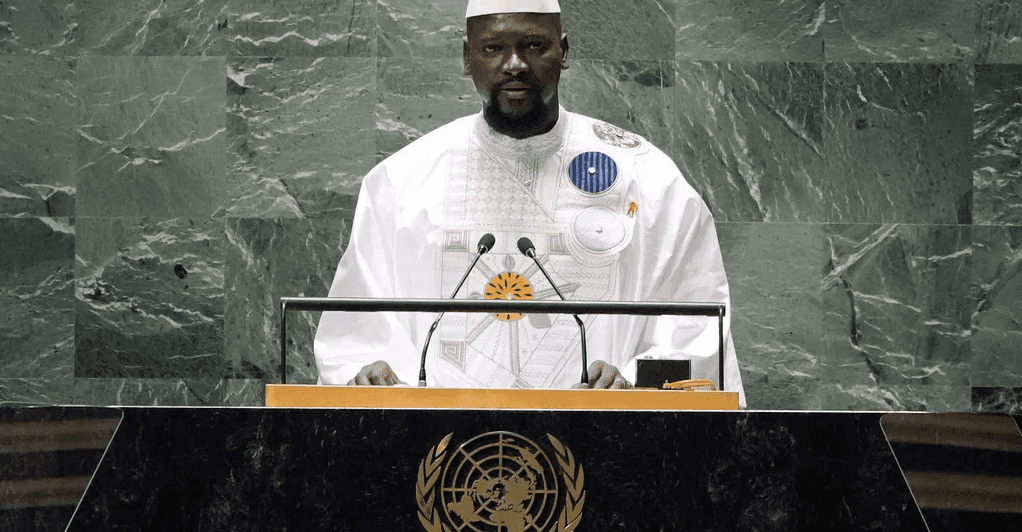
Guinea has entered a new political chapter after General Mamadi Doumbouya was formally inaugurated as president, consolidating his hold on power following a decisive victory in the country’s presidential election. The ceremony marked the transition from military leadership to an elected presidency under a revised constitutional framework.
The swearing-in took place during a high-profile event attended by regional leaders and international representatives, signaling a moment of regional attention for the West African nation.
From Coup Leader to Elected President
Doumbouya first rose to power through a military takeover in 2021, pledging at the time that he would not seek elected office. That stance later shifted as constitutional reforms were introduced, removing restrictions on military figures running for president and extending the presidential term length.
These changes paved the way for his candidacy and ultimately his election, a move that has drawn criticism from political groups and civil society organizations questioning the fairness of the transition process.
Election Outcome and Opposition Claims
Official results credited Doumbouya with an overwhelming majority of the vote, leaving his challengers far behind. Critics argue that the political environment leading up to the election was heavily constrained, with limited space for dissent and opposition campaigning.
Although a legal challenge was briefly filed by the runner-up alleging irregularities in the vote count, authorities confirmed that the complaint was withdrawn shortly before the final validation of results by the country’s highest court.
Economic Pressures and Development Focus
Despite Guinea’s vast mineral wealth, much of the population continues to face economic hardship and food insecurity. Addressing these issues has emerged as a central challenge for the new administration.
The government has identified large-scale mining development as a key pillar of its economic strategy, particularly a major iron ore project with significant foreign investment. Officials hope increased production and exports will help stimulate growth and provide much-needed revenue for social and infrastructure programs.
As Doumbouya begins his presidential term, expectations remain high while concerns persist over political freedoms, economic inclusion, and the long-term direction of governance in Guinea.