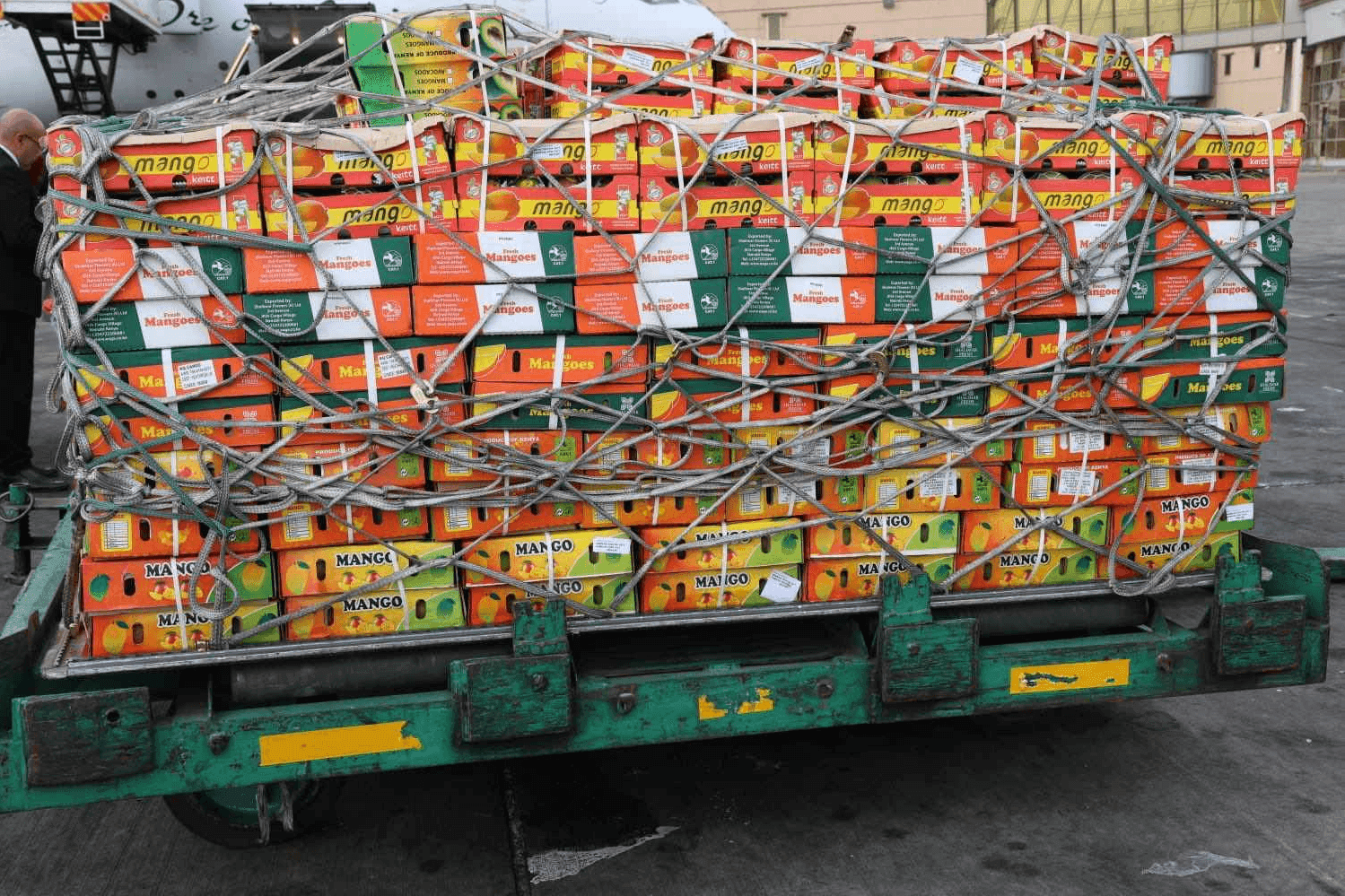
Kenya has crossed a long-standing threshold in its agricultural trade after managing to place its first shipment of Apple mangoes on shelves destined for the United Kingdom. The move signals entry into one of the most heavily regulated fresh-produce environments globally and comes at a strategically important moment ahead of peak seasonal demand.
Rather than being a routine export transaction, the shipment reflects years of systemic changes across Kenya’s mango supply chain. Local producers were required to demonstrate end-to-end control — from pest management in orchards to traceability, temperature stability, and handling discipline after harvest. These requirements had previously kept Kenya’s most common mango variety outside the UK market.
Britain remains a high-value destination for tropical fruit, absorbing tens of thousands of tonnes annually. For Kenya, approval of Apple mangoes — a variety grown at scale across the country — unlocks retail channels that were previously reserved for suppliers with a longer compliance track record.
Today, Apple mangoes dominate Kenya’s mango landscape, accounting for the vast majority of output. That dominance is the result of decades of agronomic upgrades, including improved planting material, modern orchard techniques, and tighter post-harvest controls. The fruit’s visual consistency, sweetness, low fibre structure and durability during transport make it well suited to demanding international retail standards.
At the centre of this expansion are smallholder growers. The mango sector remains largely decentralised, supporting rural incomes while creating entry points for women and younger participants across multiple production regions. Export access strengthens these local networks by shifting demand toward quality and reliability rather than volume alone.
Kenya’s annual mango production runs into hundreds of thousands of tonnes and generates billions of shillings in value, placing the country among Africa’s leading producers. Yet progress toward premium destinations stalled for years following fruit fly incidents that prompted a self-imposed export halt earlier in the decade. The recovery process involved rebuilding systems from the ground up — national surveillance, mandatory producer registration, stricter residue testing, and reinforced cold-chain oversight.
Although restrictions were lifted several years ago, confidence among foreign regulators and buyers returned slowly. The UK shipment is now being framed as proof that long-term investment in compliance infrastructure can reverse reputational damage and restore access under existing trade agreements.
Industry leaders have described the development as a structural turning point rather than a one-off success. Exporting Apple mangoes at scale strengthens Kenya’s competitive standing while delivering tangible gains to small-scale producers operating at the base of the value chain.
UK officials have also pointed to the shipment as evidence of incremental progress under bilateral trade cooperation frameworks designed to reduce friction and expand two-way commerce over the coming decade.
Trade specialists involved in the pilot say the export reflects a broader transition in Kenya’s strategy — away from raw volume and toward standards-driven competitiveness. The shipment was supported through a UK-backed regional trade initiative delivered in partnership with public authorities and private horticultural stakeholders, positioning it as a model for future market re-entry efforts.