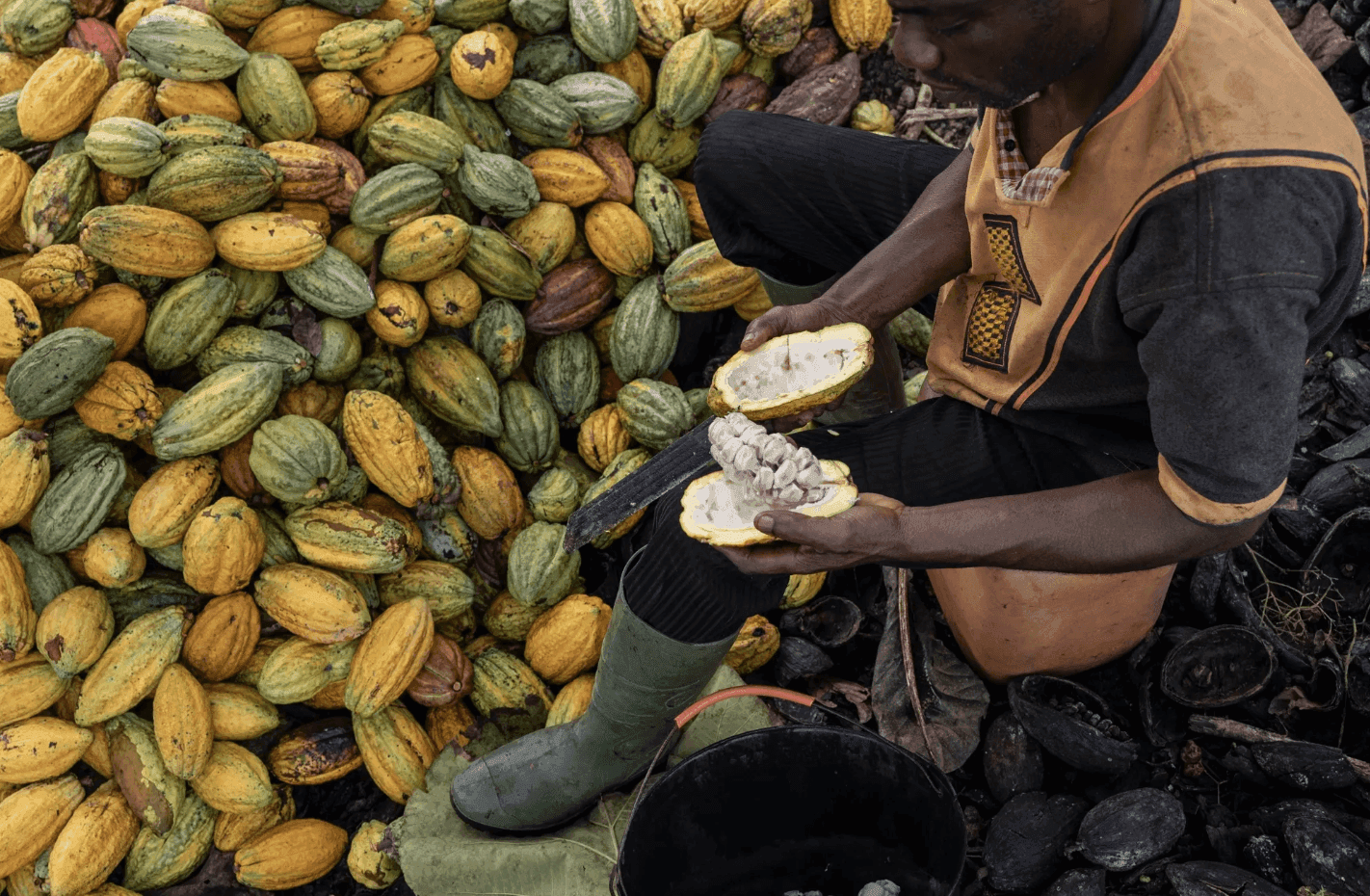
Ivory Coast’s cocoa sector is experiencing a period of severe uncertainty as declining global prices disrupt exports and leave large quantities of cocoa unsold. As the world’s leading cocoa producer, the country depends heavily on the crop, making the current slowdown a serious economic and social concern.
Since late last year, international market conditions have sharply reduced demand, creating a bottleneck that has affected farmers, cooperatives, and exporters alike.
Farmers Caught Between Costs and Falling Income
Local producers say the situation has become increasingly desperate. While cocoa beans remain available, many farmers are unable to convert their harvest into stable income. Cooperative leaders describe cases where growers cannot afford basic necessities, including healthcare and funeral expenses, despite having valuable produce stored in warehouses.
Government-set farm-gate prices are revised only twice a year, leaving farmers exposed when international prices fluctuate rapidly. As global cocoa values dropped to around five dollars per kilogram, some growers were forced to sell well below the official rate simply to cover urgent expenses.
Price Controls and Market Mismatch
The gap between fixed domestic prices and volatile international markets has intensified pressure on rural communities. Farmers report that buyers often impose lower prices than those announced by authorities, citing oversupply and weak export demand.
Rising living costs have further worsened the situation. With inflation affecting food, transport, and household goods, reduced cocoa income has eroded farmers’ ability to sustain their families, particularly in remote producing regions.
Industry Assurances and Economic Impact
Officials overseeing the cocoa sector have attempted to calm concerns, insisting that all cocoa produced during the season will eventually be purchased. They point to forecasts suggesting that exports will resume once market conditions stabilize.
Cocoa remains a pillar of Ivory Coast’s economy, with an estimated one in five people depending on the crop either directly or indirectly. Until prices recover and exports regain momentum, however, the industry remains in a state of uncertainty, leaving millions of livelihoods vulnerable to global market forces.