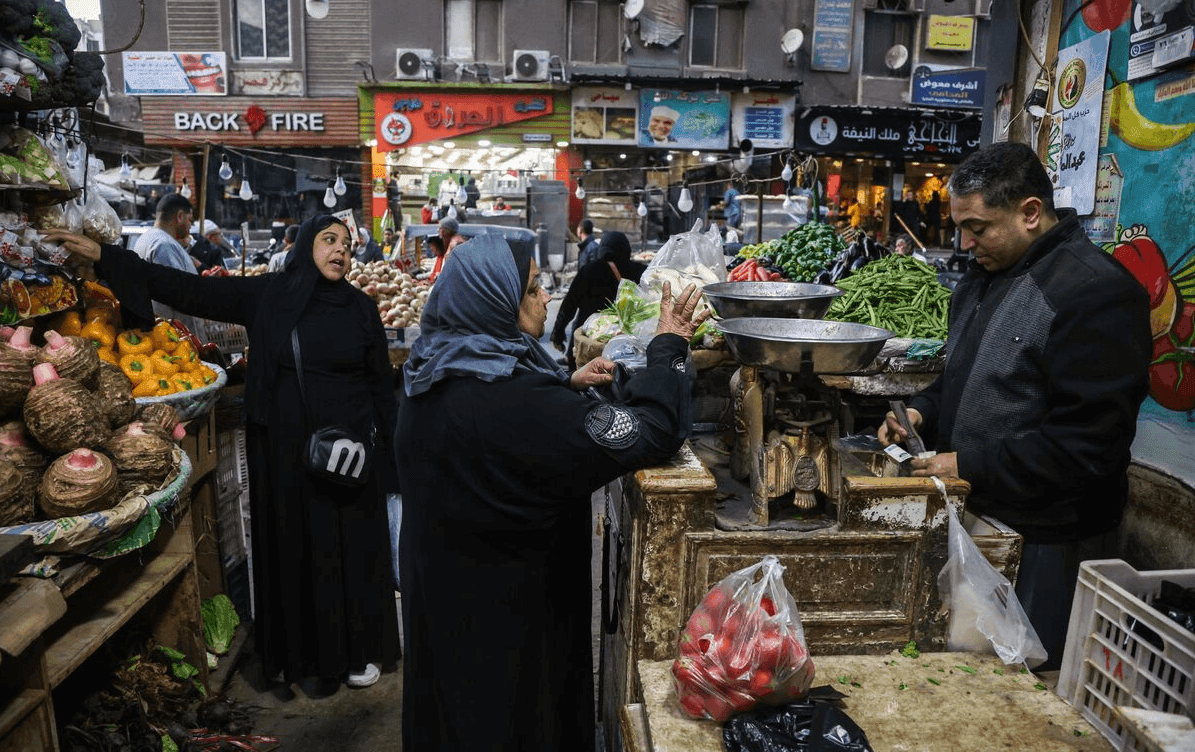
Inflationary pressures in Egypt continued to ease in January, with annual urban consumer prices rising at a slower pace than in the previous month. According to a survey of analysts conducted in early February, headline inflation is estimated to have dropped to 23.0 percent year-on-year, compared with 24.1 percent recorded in December.
Economists attribute the moderation largely to a favorable base effect, as price comparisons are now measured against periods of sharper increases last year. Stable costs for essential items such as food and pharmaceuticals also contributed to the softer reading, even though construction materials showed some volatility.
Downward Trend Since Late 2024
Price growth had accelerated during late summer and early autumn but began retreating toward the end of the year. The current rate remains well below the peak reached in September 2023, when inflation climbed to approximately 38 percent.
Core inflation, which excludes more volatile components, is also expected to have declined. Several analysts forecast a drop to around 21.8 percent in January, down from 23.2 percent the previous month.
Official figures are due to be released by CAPMAS, the country’s central statistics authority.
Monetary Expansion and Price Pressures
Despite the recent slowdown, inflationary dynamics remain influenced by rapid monetary expansion. Data from the central bank show that Egypt’s M2 money supply expanded at a record pace in 2024, increasing by more than 31 percent. Economists note that such liquidity growth can sustain price pressures even when short-term indicators show improvement.
While January’s moderation offers cautious optimism, policymakers will be monitoring whether the easing trend can be sustained amid ongoing fiscal and currency challenges.