Is it possible that Africa’s vast off-the-books economy is not a liability—but the continent’s most overlooked investment play?
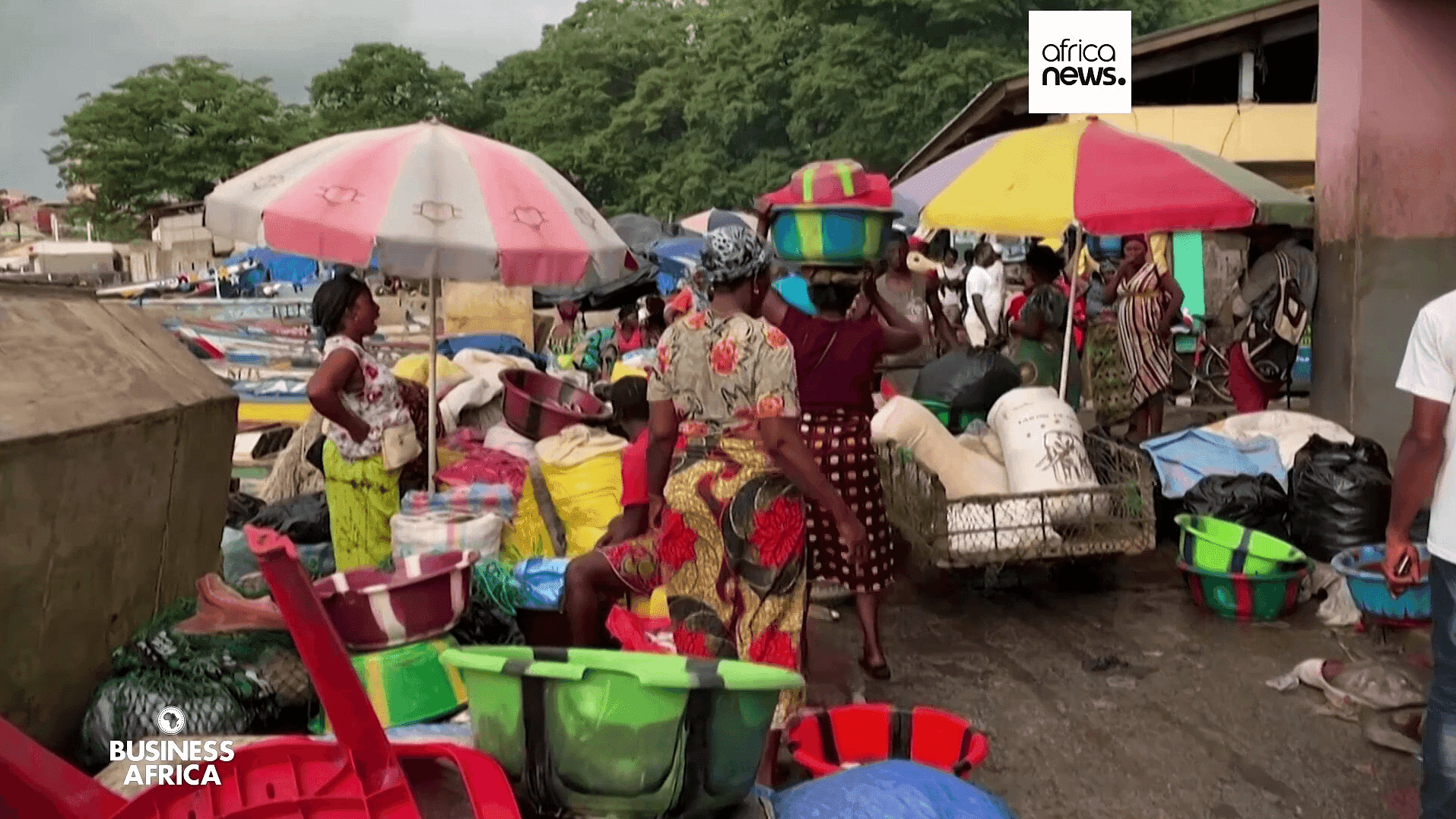
Across much of Africa, economic activity rarely fits into formal records. Roughly 85% of the workforce operates outside regulated frameworks, relying on cash flows, personal networks, and informal agreements rather than institutional systems.
For years, this opacity has discouraged international capital. Limited transparency typically equals elevated risk in the eyes of global investors. Yet that assumption misses a deeper truth: beneath the absence of documentation exists a highly adaptive, deeply rooted, and constantly moving economic ecosystem. The conversation has shifted—from questioning its relevance to exploring how it can be systematically unlocked for investment.
This transition is already taking shape. Richard Okello, Co-Founder and Partner at Sango Capital, is among those actively working at this intersection. His firm is committing up to $1 billion toward connecting fragmented informal markets with structured institutional funding.
At the core of Sango Capital’s approach is a simple but powerful idea: transform relationship-based commerce—often described as a “handshake economy”—into formalized, scalable business structures. By selecting strong informal operators and embedding them into organized value chains, the firm seeks to convert uncertainty into measurable opportunity and generate repeatable returns.
The bigger question, however, is scalability. Can this approach be applied broadly across diverse African markets? One path points toward digital infrastructure—capturing transactions, building data layers, and increasing visibility. Another suggests policy reform—where governments formally recognize informal participants, granting them access to credit systems and investment channels.
In a global environment shaped by instability and geopolitical friction, including tensions between Iran and Israel, Africa’s largely cash-based consumer ecosystems may hold unexpected appeal. Their relative insulation from global financial shocks allows them to absorb volatility differently, positioning them as a potential diversification tool—especially for investors from regions like the Gulf.
Kenya’s Housing Market: Growth Without Enough Supply
In Kenya, the real estate sector continues to expand, with projected growth around 5.7%. Despite this upward trajectory, supply still lags far behind actual housing needs.
Authorities have announced aggressive plans to increase affordable housing availability by 2026, responding to rapid urbanization and a widening housing gap. At the same time, private developers are navigating a more competitive environment, as government-backed projects and new players enter the market.
Several constraints continue to slow progress: rising building costs, limited financing access, and challenges in securing land. Meanwhile, demand—especially for affordable housing—keeps climbing. For a large portion of the population, owning a home remains financially unattainable, underscoring the need for new funding mechanisms and stronger collaboration between public and private sectors.
Burundi’s Youth-Driven Marketplace Is Redefining Access
A different model of economic change is emerging in Burundi, centered on young entrepreneurs.
In Bujumbura, the Kigega marketplace has become a launchpad for nearly 90 youth-led ventures. Its structure removes a key barrier: instead of managing sales and logistics themselves, creators rely on the marketplace to handle distribution, allowing them to concentrate fully on production.
With backing from government initiatives, the model is already delivering measurable outcomes. Within a single month, more than $20,000 was distributed among participating entrepreneurs—an impactful figure in a market where access to customers is often the biggest obstacle.
More importantly, Kigega reflects a broader evolution. It demonstrates how structured support systems can elevate informal and small-scale businesses into more sustainable operations. By minimizing the gap between creation and commercialization, it offers a replicable framework for empowering the next wave of African entrepreneurs.