If you’re looking for the meaning of ZkGM in crypto, you’ve probably run into Ethereum, smart contracts, and zero-knowledge concepts; most roads lead to zkEVM, so let’s unpack it and see why this innovation is shaking up blockchain right now.
In general, “zk crypto” is a catch-all term for blockchain tools that use zero-knowledge cryptography. “Zk” stands for “zero-knowledge,” meaning one party can prove something is true (like a transaction is valid) without exposing the private details behind it. On-chain, this shows up anywhere a network wants public verification without public disclosure.
ZkGM is mostly community shorthand—think “good morning” for the zero-knowledge crowd—used in chats and social feeds to signal, “I’m here for ZK.” It solves a simple problem: in noisy crypto timelines, a shared tag makes it easier to find the right people, start a conversation, and cluster around zero-knowledge topics without a long explanation.
Common zero-knowledge use cases include private transactions, identity verification (proving you qualify without revealing everything about yourself), voting systems with verifiable integrity, and confidential data sharing where others can validate claims without seeing the raw data.
What zkEVM Means
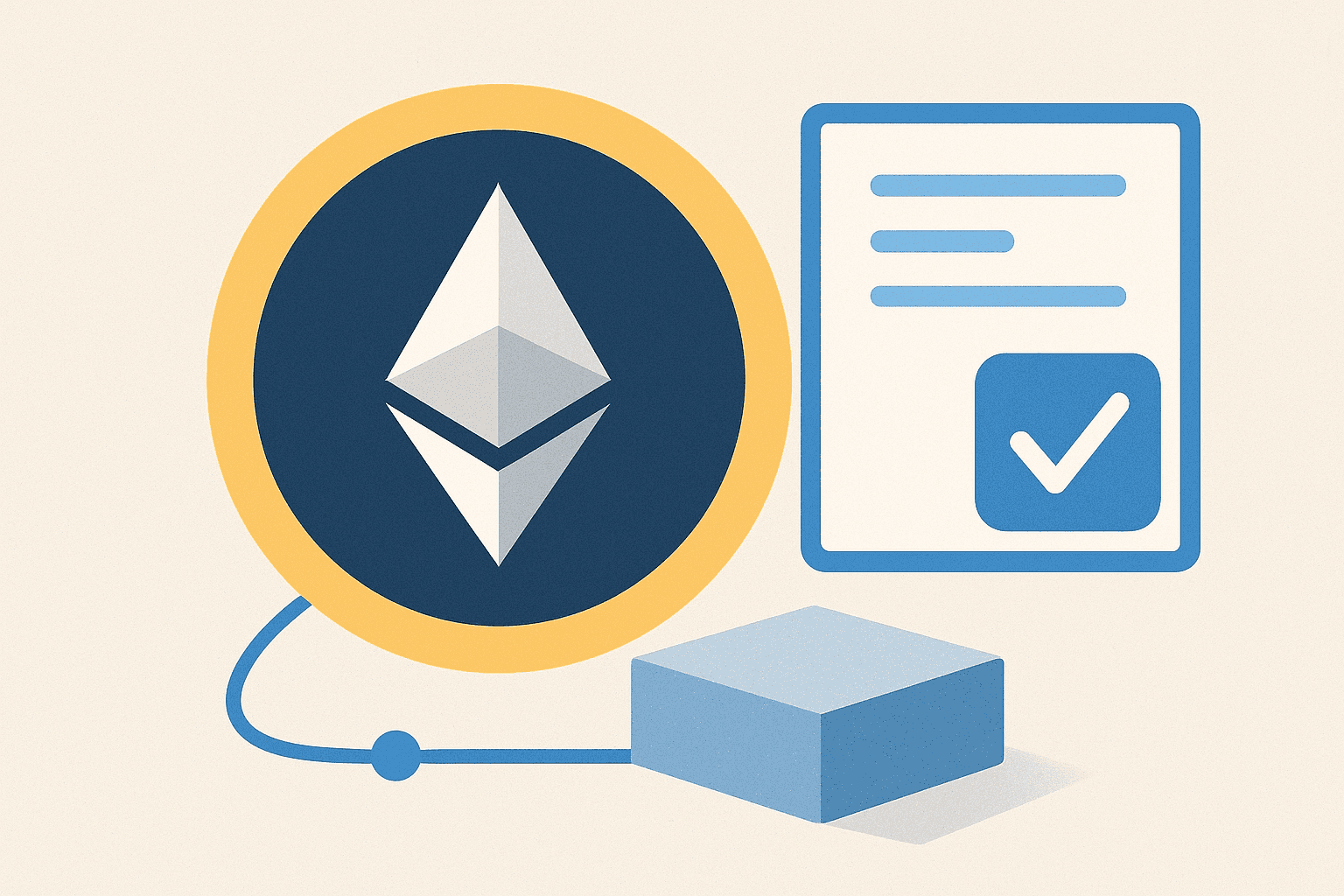
The term zkEVM expands to Zero-Knowledge Ethereum Virtual Machine. It’s a system that applies zero-knowledge proofs to Ethereum smart contracts so code can be executed and verified with strong cryptography.
Put simply, it’s about proving validity without revealing the underlying information. That’s the core purpose of zero-knowledge proofs broadly—whether you’re verifying a blockchain transaction, an identity claim, or a computation—confirming something is correct without exposing the private inputs. Think of it as confirming you solved a problem without disclosing the steps.
Why It Matters for Ethereum
Ethereum can become congested under heavy demand. zkEVM addresses this by operating as a layer-2 rollup: it processes work off the main chain and posts a proof back on-chain, proving correctness.
The kicker is alignment. zkEVM is designed to closely match Ethereum’s expected contract behavior, so applications can move over without their logic suddenly behaving like it’s on a totally different system.
How Execution and Proofs Fit Together
Start with the Ethereum Virtual Machine, Ethereum’s runtime that executes smart contracts and moves the chain from one state to the next. It defines how code runs and how on-chain data changes.
zkEVM mirrors that behavior but adds cryptography: it doesn’t just execute code; it proves the execution was valid using a zero-knowledge proof. Rather than shipping all transaction details, it sends a succinct, verifiable receipt.
Zero-knowledge proofs also come in different flavors. Interactive proofs involve back-and-forth messages between a prover and verifier, while non-interactive proofs package the claim into a single proof that anyone can verify later (the form most commonly used on-chain). Two major non-interactive families are snarks and starks: snarks tend to produce very small proofs and fast verification (sometimes with setup trade-offs), while starks typically avoid trusted setup and rely on different assumptions, often at the cost of larger proofs.
Under the hood, three stages coordinate:
- Execution Layer: Smart contracts run and transactions are processed to produce new state.
- Proof Layer: A zero-knowledge proof is generated, attesting that the computation followed the rules.
- Verification Layer: The proof is submitted to Ethereum, where a contract verifies it and finalizes the result.
The result is execution that can be checked on Ethereum with cryptographic certainty, without exposing everything that happened inside the rollup.
Key Advantages
- Scalability: Proof-based verification can let systems validate more activity with less on-chain work, improving the chain’s ability to scale.
- Lower Costs: Fees can drop because verification relies on compact proofs instead of repeating expensive computation on-chain.
- Faster Finality: Once a proof is accepted on-chain, the outcome is treated as correct without requiring every observer to re-execute the full workload.
- Developer-Friendly: Smart-contract logic can often carry over with minimal changes, instead of being rebuilt for a completely different execution environment.
Implementation Approaches
Not every zkEVM takes the same path. Broadly, there are two families:
- Native Ethereum Virtual Machine Opcodes: Bytecode-level compatibility with existing Ethereum contracts. Example: Scroll.
- Custom Opcodes: Tailored instruction sets for efficiency, sometimes requiring small code adjustments. Example: zkSync.
Here are several notable implementations to watch:
| Project | Key Features | Compatibility |
|---|---|---|
| Polygon zkEVM | Uses snark- and stark-style proof approaches for transaction verification, aiming for strong Ethereum alignment. | Targets close Ethereum Virtual Machine equivalence. |
| zkSync | Emphasizes an approach that works at the language level rather than raw bytecode. | High-level compatibility, with some differences from bytecode-perfect execution. |
| Scroll | Aims for deep compatibility and rigorous cryptographic integrity while it progresses through development. | Bytecode-focused compatibility goals. |
| AppliedZKP | An Ethereum Foundation–funded research effort building Ethereum-compatible zk-rollups from first principles. | Research-driven compatibility work toward Ethereum alignment. |
Closing Thoughts
zkEVM is more than a routine upgrade—it reframes how blockchains scale. While these systems continue to mature, the upside is substantial: they could help Ethereum verify complex activity securely, powering everything from games and cross-chain payments to global finance.