This guide answers what is smart contract in crypto by explaining how self-executing agreements on a blockchain automate transactions, cut out intermediaries, and power systems across finance, healthcare, NFTs, and other decentralized services.

What Is a Smart Contract?
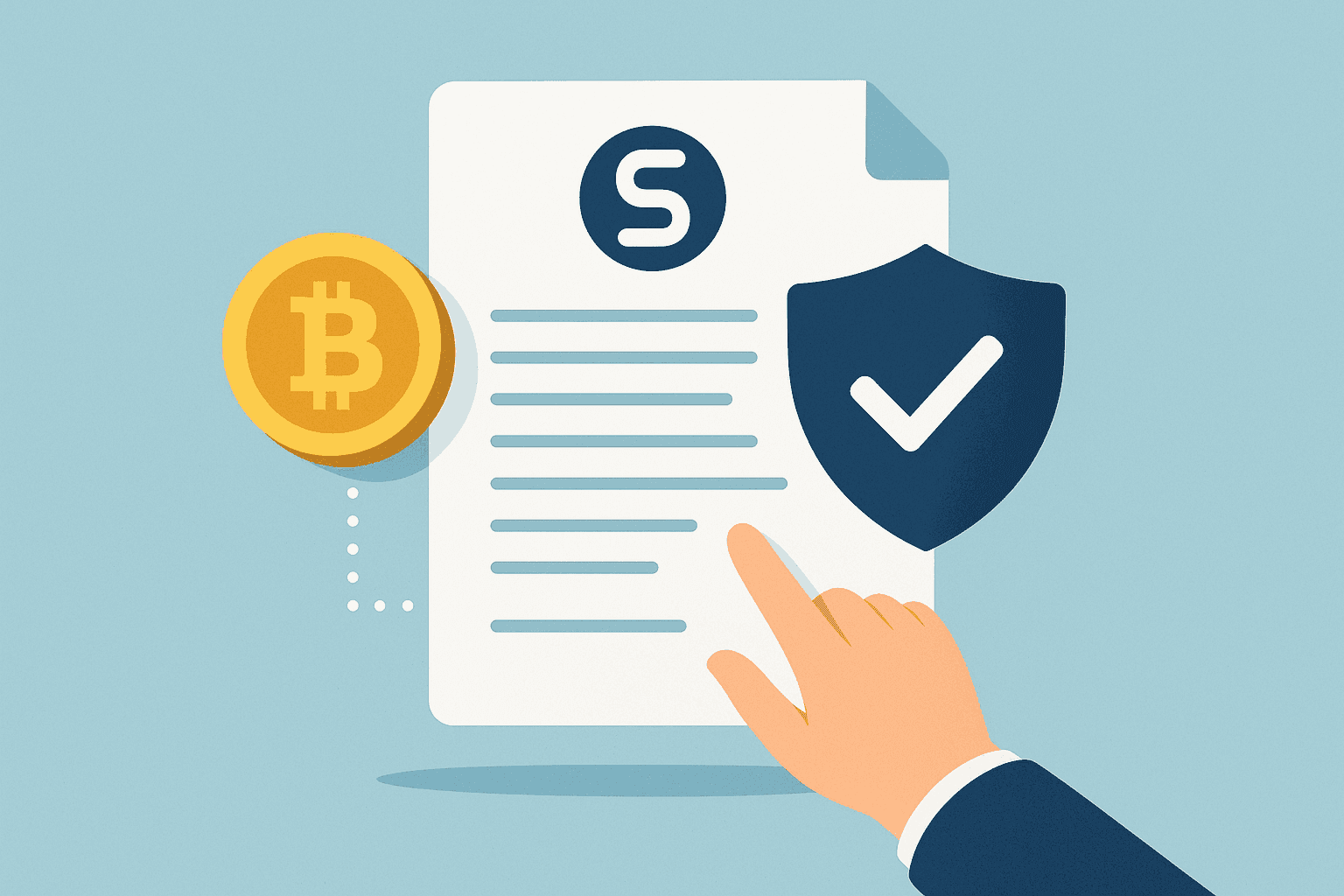
A smart contract is a programmable agreement that lives on a blockchain network. When predefined conditions are met, the code automatically executes the terms, providing reliable, predictable outcomes.
These programs rely on cryptographic primitives such as hashing and digital signatures to ensure authenticity and immutability. After deployment, the contract becomes tamper-resistant, which boosts security for managing digital assets, automating payments, and running decentralized applications (dApps).
Explore the next era of digital money. Get started with crypto in minutes on a trusted, crypto-native platform.
Smart contracts help turn agreed rules into automatic, verifiable execution, reducing manual friction while keeping an auditable on-chain record.
Ethereum: The First Mover
The concept predates modern blockchains, with computer scientist Nick Szabo introducing the idea in 1994 using the vending machine analogy. Bitcoin’s arrival in 2009 proved on-chain programmable settlement possible, but Ethereum later turned smart contracts into a core building block of blockchain ecosystems.
While Bitcoin can support simple logic like multi-signature wallets, Ethereum popularized richer, general-purpose contracts that power a fast-growing landscape of dApps. Layer-2 networks now extend Ethereum’s capacity with higher throughput, lower fees, and added privacy. Competing smart contract platforms also expand use cases and market share, further advancing the technology, including networks such as Ethereum, Binance Smart Chain, Solana, Cardano, and Avalanche. In practice, these systems typically use a blockchain’s native token to pay transaction fees (gas), such as ether (ETH) on Ethereum, binance coin (bnb) on Binance Smart Chain, ada on Cardano, sol on Solana, and avax on Avalanche. Xrp is the token used on the Xrp Ledger, which is primarily designed for payments and does not provide Ethereum-style, general-purpose smart contracts natively; it is generally described as having more limited built-in programmability and can be paired with separate smart contract layers for broader functionality.
How Do Smart Contracts Work?
Smart contracts are self-executing programs on a blockchain. Using if/then logic, they automatically carry out agreed actions once specific conditions are satisfied.
Here is how the process usually unfolds:
Programming the Contract
Developers write the terms in a smart contract language, encoding the agreement as deterministic instructions. For example, Ethereum contracts are commonly written in Solidity (or Vyper), while other chains may use different tooling, such as Rust on Solana or Plutus on Cardano.
Deployment on the Blockchain
After publishing the code to the blockchain, the contract becomes immutable, which strengthens trust and transparency.
Contract Execution by Nodes
When triggers are met, the network executes the instructions. For example, a rental agreement can release funds to a landlord’s wallet immediately after the tenant’s on-chain payment is verified.
Validation via the Ethereum Virtual Machine
The Ethereum Virtual Machine runs the contract across decentralized nodes, ensuring the same outcome everywhere and preventing unauthorized alterations.
Payment of Gas Fees
Each operation consumes computational resources and requires gas, paid in ETH on Ethereum.
Real-World Example
In a supply chain, delivery confirmation recorded on-chain can automatically trigger payment to the supplier with no intermediary, reducing delays and errors. In insurance, a policy can pay out automatically after a validated on-chain event meets the claim conditions. In NFTs, a sale can route a predefined royalty share to the creator at the moment ownership transfers. On decentralized exchanges, trades can settle directly between wallets once the contract verifies pricing and liquidity rules.
By leveraging a distributed ledger, these agreements deliver security, automation, and durable records.
Why Smart Contracts Outperform Traditional Contracts?
Code-based agreements offer a blockchain alternative to paper-based processes, addressing bottlenecks, high overhead, and geographic constraints.
Key advantages include:
| Advantage | Description | Example Use Case |
|---|---|---|
| Automation and Cost Savings | Terms execute automatically without intermediaries, cutting manual steps that slow traditional contracts and inflate costs. | In DeFi, on-chain lending reduces operational friction end to end. |
| Transparency and Fraud Prevention | Contract logic and state live on an immutable ledger, making terms auditable and hard to tamper with. | Real estate deals benefit from verifiable records and secure title transfers. |
| Instant Execution | When conditions are met, actions settle quickly on networks like Ethereum, avoiding prolonged back-and-forth. | On NFT marketplaces, this enables immediate creator payouts. |
| Security and Reliability | Immutability resists unauthorized changes, delivering strong assurances compared with documents that can be amended or disputed. | Escrow-style workflows can release funds only after objective on-chain conditions are satisfied. |
| Global Reach | On-chain agreements operate across borders without local-jurisdiction delays. | International supply chains can coordinate shared state and approvals across multiple parties. |
When Are Smart Legal Contracts Used?
Smart legal contracts blend blockchain-based automation with the enforceability of traditional agreements, connecting decentralized tooling to established legal standards in regulated environments.
Ensuring the Crypto Connection
Even in formal legal contexts, using cryptocurrency and on-chain records supports compliance, auditability, and traceability for digital asset transactions.
For example:
- Real estate agreements can denominate scheduled payments in crypto and settle them programmatically on-chain.
- In finance and insurance, blockchain verification can trigger loan disbursements or claims payouts promptly, minimizing human intervention.
By integrating blockchain execution with legal recourse, these hybrids combine automation with enforceable outcomes.
What Are Some Use Cases for Smart Contracts?
Across industries, smart contracts automate workflows, improve transparency, and lower costs through blockchain technology.
Notable sectors include:
- Finance and DeFi: On-chain protocols automate lending and staking, enabling fast, peer-to-peer transactions with reduced reliance on banks. DeFi protocols collectively held over $94 billion in total value locked by late 2021.
- Supply Chain Management: Blockchain-based provenance and audit trails can improve visibility and reduce fraud by creating a shared, tamper-resistant record of product movement and certification.
- Real Estate: Smart contracts can streamline closings by coordinating escrow-like steps and automating title transfer, reducing the need for brokers and significantly shortening settlement times—sometimes from weeks to minutes.
- Healthcare: Contracts can secure patient data sharing and verify permissions on a distributed ledger, which speeds processing and reduces administrative expense.
- NFTs and Digital Assets: Smart contracts can manage ownership and secure primary and secondary sales for tokenized items. Because NFTs are often priced in cryptocurrencies like ETH, their fiat value can move with market conditions, while on-chain transparency underpins trust and liquidity.
Limitations of Smart Contracts
Despite clear benefits, several challenges remain:
| Limitation | Description |
|---|---|
| Coding Errors | Bugs or flawed logic can expose vulnerabilities that attackers may exploit, potentially leading to costly losses. |
| Legal and Regulatory Issues | Enforceability varies by jurisdiction, and aligning code-based agreements with traditional legal frameworks is still evolving. |
| Immutability | Once deployed, correcting mistakes is difficult; upgrades may require migrations or carefully designed upgrade patterns. |
| Scalability and Performance | Network congestion and limited throughput can cause delays and increase transaction costs, including high gas fees during peak demand. |
| The Oracle Problem | Many contracts depend on external data sources to reflect real-world events, which can introduce trust assumptions and new failure points. |
| Privacy Limitations | Public blockchains can make contract activity and state widely visible, which may be unsuitable for sensitive business logic or personal data without additional privacy tooling. |
The Bottom Line
Smart contracts enable more efficient, secure, and open systems across DeFi, real estate, healthcare, and NFTs. By removing intermediaries, reducing costs, and supporting borderless transactions on blockchain networks, they are reshaping how digital agreements are formed and executed.