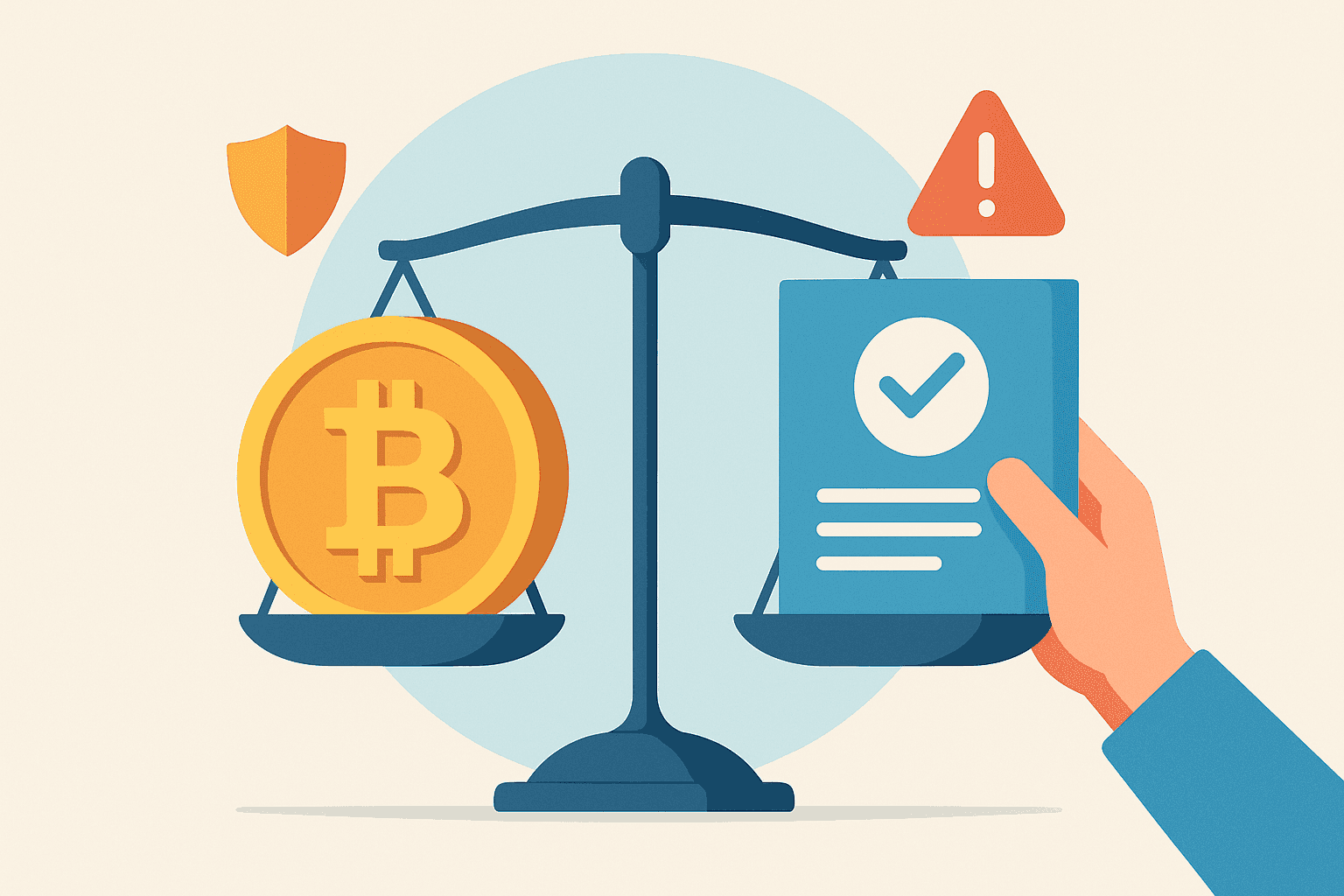
You agree to swap $10,000 in cryptocurrency with someone you barely know. Terms look good, momentum is high, and then the classic blocker appears: who moves first? Crypto escrow removes that standoff by parking funds in a neutral arrangement until obligations are met, giving buyers and sellers a secure path to finish the transaction.

If you pay upfront, you fear vanishing goods. If you deliver first, you fear vanishing funds. Legacy payment rails don’t translate well online: chargebacks tilt toward buyers, and bank transfers tilt toward sellers. Trusting a stranger is not a strategy.
That imbalance is the problem crypto escrow was built to solve. In this guide, you’ll learn what it is, how it functions on-chain, major models, pros and cons, practical uses, and how to pick a provider that fits your needs. Freelancers invoicing in Usdc, otc traders, and anyone who wants safer Web3 payments will find clear steps here.
What Is Escrow? Traditional vs. Crypto
Escrow is a financial arrangement where a neutral party safeguards assets until both sides complete the agreed steps. Think of it as a trust bridge: funds wait in an escrow account, then move when criteria are satisfied.
Traditional Escrow: How It Operates
- A licensed escrow service holds money in a regulated account and follows compliance rules.
- Written agreements define when money can move and under what conditions.
- Humans verify documents, inspections, and milestones before release.
- Typical fees run about 1–3%, with minimum charges often $300–$500.
Real estate closings are the classic example: a title company holds your deposit until ownership transfers. It’s reliable but slow, optimized for big, infrequent transactions, and not ideal for fast online trades.

Smart-Contract Escrow: How It Works
With crypto, the trusted company is replaced by code. A smart contract on a blockchain holds the funds and releases them automatically when predetermined rules are met. No single party can unilaterally take control.
Core differences vs. legacy escrow include: you trust open code rather than a firm; custody is on-chain via a program; access is 24/7; activity is auditable; fees can be lower and capped; settlement is faster; and it is globally accessible without borders.
Because the program defines every outcome, there’s no clerk to lose paperwork, freeze accounts, or “decide” outside the written logic. The rules are transparent and executed as written.
Crypto Escrow: Step-by-Step Process

Step 1: Align on Terms
Before money moves, the two parties finalize scope, price, payment asset, review timeline, acceptance criteria, and a plan for refunds or disputes. Many platforms produce a contract document that both sign; a hash of that file can be stored on-chain to create an immutable fingerprint of the agreement.
Step 2: Fund the Escrow
The buyer initiates the escrow by connecting a wallet, entering the amount, designating the seller and optional agent, approving token spend, and depositing the funds plus the protocol fee. Once confirmed, the money is locked in the contract—unspendable by the buyer and inaccessible to the seller until rules are satisfied.
Pro tip: Some systems use deterministic addresses so the agreement file can include the final escrow contract address for independent verification.
Step 3: Seller Accepts
The seller must explicitly accept the terms to activate the escrow. If they decline or fail to respond within the acceptance window, the buyer is automatically refunded.
Step 4: Fulfillment
The seller delivers the item, service, or digital asset and marks the work complete. This notifies the buyer that the delivery is ready for review.
Step 5: Release or Dispute
The buyer gets a protection window to inspect the outcome. They can release full payment, request revisions, or open a dispute if something is materially off. If the buyer is unresponsive and the review window expires, the seller can claim funds to prevent indefinite limbo.

Types of Crypto Escrow
Escrow setups vary in who holds keys, how decisions are made, and where you place trust. Here are the common models.
| Model | Who Holds Keys | Dispute Resolution | Pros | Cons | Example Use Cases |
|---|---|---|---|---|---|
| Custodial Escrow (Centralized) | The provider controls wallets and custody. | The provider reviews and adjudicates internally. | Familiar user experience, human support, and potential fiat integration. | Requires trusting the provider, single-point-of-failure risk, likely identity verification, and higher operating fees. | Exchange over-the-counter desks and traditional escrow firms that accept cryptocurrencies. |
| Non-Custodial Escrow (Decentralized) | Funds are held by a smart contract on-chain. | Automatic release based on programmed conditions (optionally with an arbitrator layer depending on the platform). | On-chain custody, transparent logic, no central failure point, lower fees possible, and wallet-based identity. | Web3 learning curve, potential contract bugs, and no password reset. | Freelance payments, peer-to-peer trades, and programmable milestone releases. |
| 2-of-2 Multisig (Locked Escrow) | Buyer and seller each hold a key; both must sign. | No built-in tie-breaker. | Maximum trust minimization, strong privacy, and minimal fees. | If parties disagree, assets can remain locked indefinitely; no dispute resolver is available. | High-trust counterparties who want simple co-sign release. |
| 2-of-3 Multisig With Arbitrator | Buyer, seller, and arbitrator each hold a key; any two can sign. | The arbitrator co-signs if the two principals can’t agree. | Offers dispute resolution without unilateral control. | Requires trust in the arbitrator’s fairness and availability; potential collusion; often off-chain processes. | Over-the-counter trades and larger peer-to-peer deals where a neutral tie-breaker is needed. |
| Smart-Contract Escrow With Staked Agents | Funds are held by a smart contract; agents participate via defined permissions and incentives. | Agents stake collateral and can be penalized for misconduct by protocol governance; their stake sets a maximum arbitratable value (Mav) limit. | Agents have skin in the game, transparent accountability, and dao oversight. | Added complexity and agent fees during disputes. | This is the Zenland model: agents’ stake limits the size of cases they can adjudicate, discouraging bad decisions and limiting blast radius. |

Why Use Crypto Escrow?
- Protection from scams.
- Seller-friendly finality and buyer safety.
- Always on and borderless transactions.
- Better economics for large deals.
- Radical transparency.
Common Use Cases
Escrow shines most when the deal is high-value, cross-border, trustless (you don’t know the counterparty), or milestone-based. These are the scenarios where “who goes first?” risk is highest, and where conditional release plus time-bound rules can prevent non-delivery, non-payment, or endless back-and-forth.
Freelance and Service Payments
Hiring a developer or designer you met online is risky. Without escrow, one side must go first. With escrow, the client deposits upfront, the professional delivers to spec, and funds release after acceptance.
Over-the-Counter Trades
Large off-exchange swaps with pseudonymous counterparties invite risk. An escrowed swap coordinates deposits and releases based on the terms, reducing counterparty exposure.
NFT Sales Off-Marketplace
Direct NFT deals avoid marketplace fees but reintroduce trust issues. Escrow locks the payment until the token is transferred and confirmed.
Domain Name Transfers
Premium domains require careful handover. Payment stays locked until transfer is verified, potentially with an oracle or documented confirmation.
Tokenized Real Estate
For property shares represented on-chain, escrow manages multiple parties, legal checkpoints, and large sums while keeping settlement on blockchain rails.
Risks and Considerations
Audited contracts don’t eliminate risk, but they materially reduce the chance that a simple logic error turns escrow into a loss event.
- Smart contract bugs: Defects can lock funds, enable unintended withdrawals, or create edge cases. Mitigation: Prefer audited, verified contracts from reputable teams and prioritize well-tested deployments.
- Platform risk for custodial services: Centralized providers can be hacked, pressured to freeze accounts, or shut down. Mitigation: Choose non-custodial models so funds live in contracts rather than company wallets, and assume regulatory uncertainty can change availability or requirements with limited recourse if a provider fails.
- Quality of dispute resolution: Outcomes hinge on the arbiter’s skill, neutrality, and responsiveness. Mitigation: Look for staked agents, visible reputation metrics, time-bound processes, and clear governance; also note that some services may offer limited customer support during disputes.
- Gas costs on Ethereum: Creating and settling escrows consumes gas, which can spike during congestion. Mitigation: Plan for fee volatility, and avoid making small escrows that become uneconomical after network fees.
- User error: Smart contracts execute exactly as instructed, and on-chain transfers are typically irreversible. Mitigation: Double-check addresses, amounts, and agreement details before signing.
Choosing a Crypto Escrow Service: What to Look For

Security Audit Status
- Has a respected firm audited the contracts?
- Are reports public, and were critical issues fixed?
Fee Transparency
- What percentage applies, and are there caps or minimums?
- Who pays the cost, and are there extra dispute fees?
Dispute Resolution Mechanism
- Who arbitrates, what incentives keep them fair, and how long do cases take?
- Is there accountability for poor decisions?
Supported Tokens and Chains
- Does it support your assets, such as Usdc, Usdt, or ETH?
- Are cheaper Layer 2 options available?
Contract Verification
- Is the source verified on a block explorer?
- Is the code open to independent review?
User Experience
- Is the interface clear, documentation solid, and community feedback positive?
Frequently Asked Questions
Is Crypto Escrow Safe?
Safety depends on the platform’s architecture and contract quality. Audited, non-custodial systems are generally secure. Remaining risks include code defects and user mistakes. Custodial services add company risk that non-custodial models avoid.
What Happens If There’s a Dispute?
In agent-backed setups, the buyer opens a dispute, the selected agent joins, both sides submit evidence, and the agent decides the split. The contract executes the result automatically.
In locked 2-of-2 models, both parties must agree; if not, funds can remain stuck. Use that model only with high mutual trust.
How Much Does It Cost?
Custodial providers often charge 1–5% without caps. Many non-custodial solutions are around 1% or less. Zenland charges 1% with a $50 maximum and a $0.50 minimum, plus network gas fees.
Can I Use Bitcoin for Escrow?
Yes. Bitcoin typically uses multisig (often 2-of-3 with an arbitrator), custodial services, or time locks. Evm chains enable richer smart-contract logic. For predictable value, stablecoins like Usdc or Usdt are often preferred.
Can I Escrow Xrp?
Sometimes, but it depends on the method and the service. In general, many smart-contract escrow platforms focus on Evm networks and the tokens they support, so native Xrp may not be available as a deposit asset there.
On the technical side, the Xrp Ledger has its own native escrow functionality (for example, time-locked releases and condition-based unlocks), which can be used to lock Xrp under predefined rules, but it doesn’t automatically give you a built-in, marketplace-style dispute process by itself.
If you specifically want an escrow “service” for Xrp, your options are typically (1) a custodial provider or over-the-counter desk that accepts Xrp, (2) an arrangement built directly on the Xrp Ledger using its escrow features, or (3) using a wrapped version of Xrp on a supported smart-contract chain, if the platform supports that asset. Zenland currently supports Usdc and Usdt on Ethereum, so Xrp isn’t supported as a deposit asset in the standard flow.
Conclusion
Escrow answers a timeless question in commerce: how can two parties who don’t know each other still complete a secure payment? By locking funds under predefined rules, smart contracts make online trades safer, clearer, and always available. When disagreements arise, staked agents can resolve issues without gaining unilateral control.
Key takeaways:
- Traditional services are slower, costlier, and require trusting a company.
- Smart-contract custody reduces counterparty risk and increases transparency.
- Non-custodial models remove platform custody risk.
- Staked agents add accountable dispute resolution.
- Fees can be modest and capped, especially on large transactions.
From a $100 logo to a $100,000 over-the-counter deal, escrow lets you transact confidently with anyone, anywhere. Create your first escrow today.