In crypto slang, “rugged” is shorthand for being on the losing end of a rug pull.
Rugged in crypto refers to a loss caused by an exit scam where creators of a new token walk away from the project, drain pooled funds, and strand investors with assets that no longer have market value.
What Does Rugged Mean?
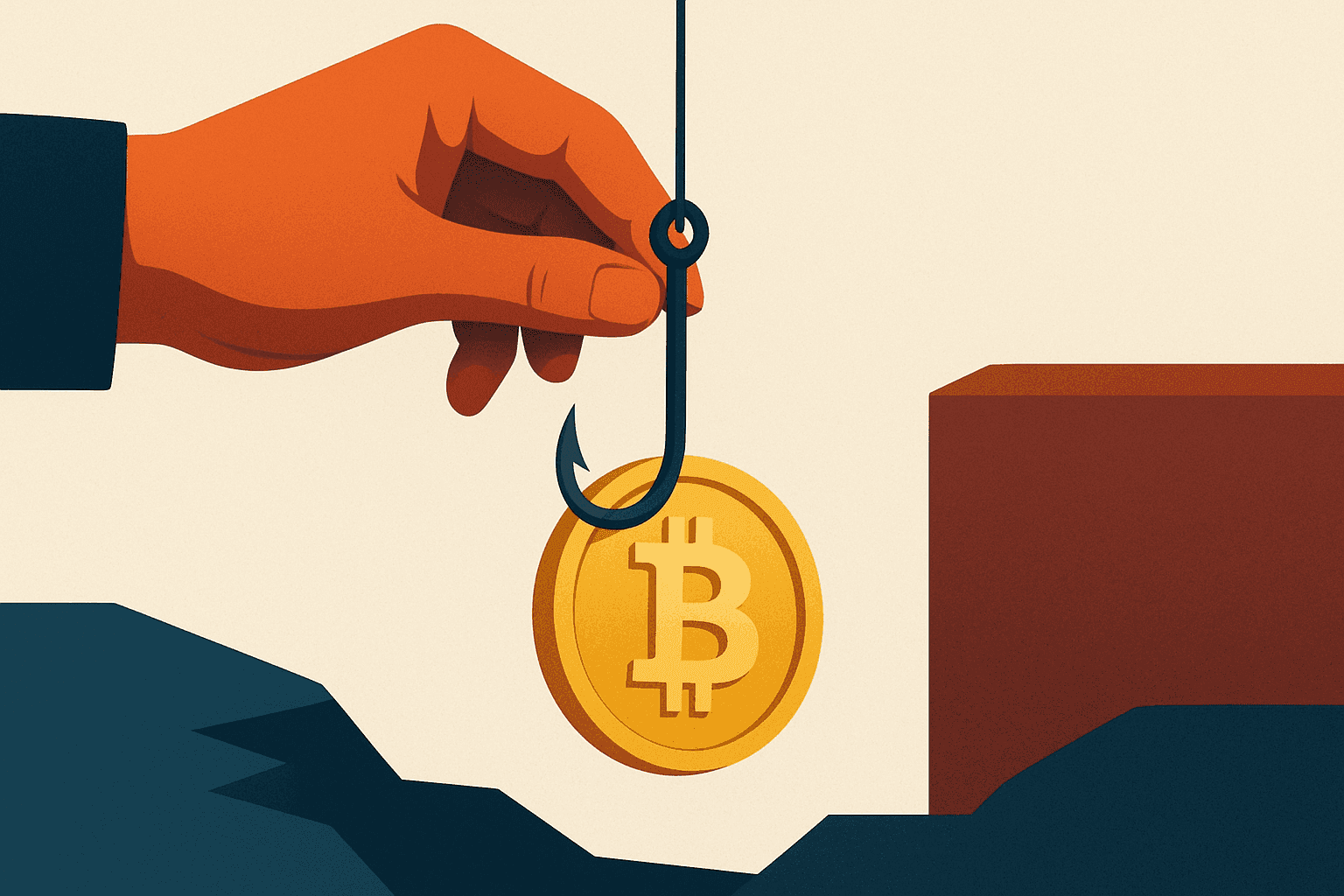
The phrase comes from a rug pull, a DeFi scam in which developers hype a cryptocurrency or token to attract capital and liquidity, then take the money and disappear. The idea echoes having the rug yanked from under your feet. When a person or group is hit by such an exit, they are said to be rugged.
In practice, rugged can describe two related things:
- Losing capital because of a rug pull that causes the value of a purchased token to collapse.
- The scam event itself, in which organizers engineer the exit and remove investor funds.
How Does It Happen?
A malicious creator often launches a fresh token and lists it on a decentralized exchange, which generally has lighter listing checks and code reviews than a centralized exchange. Influencers, paid shills, and bots may be used to spark fear of missing out on social platforms and lure speculators with promises of outsized gains.
After money accumulates in the decentralized exchange liquidity pool, the insiders siphon liquidity or dump their allocation, vanish, and the token’s price spirals toward zero. This sequence frequently plays out shortly after launch.
Victims typically encounter two variants: a hard rug or a soft rug.
| Type | Description | Key Characteristics |
|---|---|---|
| Hard Rug | The team abruptly disappears with investor funds. | Communication is severed. There is no realistic path to identify perpetrators or recover capital. |
| Soft Rug | The exit unfolds gradually as insiders scale back updates and disengage from the community. | Insiders slowly sell their holdings or bleed liquidity over time. The scheme can be harder to spot until losses are locked in. |
- Poor transparency
- Exaggerated return claims
- Thin fundamentals
- Suspicious or anonymous developers
To identify and avoid rug pulls, focus on concrete checks that reduce the odds of getting trapped in an engineered exit:
- Check liquidity conditions: Look for whether liquidity is locked, how long it is locked for, and who controls it.
- Review contract risk: Watch for owner permissions that can change fees, block selling, mint new supply, or otherwise alter trading behavior after launch.
- Look for independent scrutiny: Prefer projects with reputable audits or well-documented code reviews, and treat unaudited contracts as higher risk.
- Evaluate supply and distribution: Be cautious when a small set of wallets holds a large share of the supply or can rapidly dump into the market.
- Limit exposure: Use small position sizes, avoid chasing sudden pumps, and assume early liquidity can disappear quickly.
Rug pulls can be illegal, but outcomes depend on the facts and the jurisdiction. Many schemes fit common legal categories such as fraud, theft, or securities-law violations, and perpetrators may face civil claims, criminal charges, or both. Cross-border projects can make enforcement and recovery more difficult, especially when identities are hidden and assets move rapidly across platforms.
If you’ve been rugged, act quickly and preserve evidence:
- Stop interacting with the token contract: Do not approve new permissions or connect your wallet to unfamiliar sites tied to the project.
- Document everything: Save transaction hashes, contract addresses, screenshots of promises/marketing, and wallet addresses involved.
- Report through available channels: Notify the platform where you traded, and file complaints with relevant financial regulators or law enforcement in your region.
- Review wallet approvals: Revoke suspicious token allowances and move remaining assets to a fresh wallet if you suspect compromise.
Notable examples of rug pulls that are frequently cited in crypto discussions include:
- Squid Game token
- AnubisDAO
- Meerkat Finance
- Frosties NFT
An “unruggable” project is a project designed (or marketed) to minimize the ability for insiders to drain liquidity or change core token behavior after launch. While no design eliminates all risk, common mechanisms associated with “unruggable” claims include:
- Locked or burned liquidity: Liquidity is time-locked or permanently removed from insider control.
- Renounced or constrained admin privileges: Ownership is renounced, or sensitive actions are gated behind strict controls.
- Timelocks and multisig controls: Material changes require multiple signers and a delay that gives users time to react.
- Immutable or tightly limited token mechanics: Supply changes and fee changes are restricted or impossible after deployment.