Minting in crypto is the method blockchains use to create brand-new tokens or coins and release them into the circulating supply.
What Does Minting Mean?
Much like a sovereign mint produces fiat money, cryptocurrency networks generate new units on a blockchain. Computation verifies data and finalizes new blocks. Unlike a central bank system, creation on public blockchains is decentralized, with no single authority. Validators carry out issuance and earn protocol rewards in the network’s native asset.
Technically, minting occurs when the network accepts a valid state change that increases supply. That can happen at the protocol level (for example, when a new block is finalized and the rules allow an issuance reward) or at the application level (for example, when a smart contract’s mint function is called and accepted). In both cases, a transaction is broadcast, validated under the chain’s consensus rules, included in a block, and then reflected in the chain’s on-chain state.
After a successful mint, the blockchain records the result: a balance increases (for fungible tokens) or a new unique token identifier is created and assigned to an owner (for NFTs). Practically, the minter receives the asset in the destination wallet address, along with an on-chain transaction record that can be viewed in a block explorer.
How Minting and Mining Work in Crypto?
In cryptocurrency, new assets emerge via two main paths: minting and mining.
| Process | Consensus Mechanism | Who Participates | How New Tokens Are Created | Energy Usage |
|---|---|---|---|---|
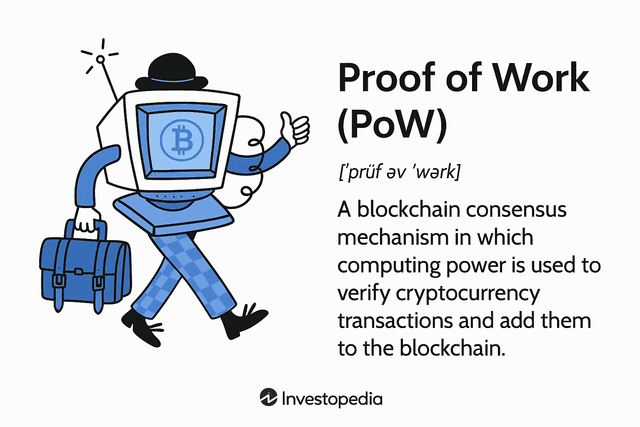
| Mining | Proof of work (PoW) | Miners running specialized hardware and software | Miners compete to solve a cryptographic challenge; the winning block can include a block reward paid in newly created assets. | High relative usage due to continuous computation |
| Minting | Proof of stake (PoS) and related mechanisms | Validators (or delegators) who lock stake and run validator infrastructure | Validators are selected to propose/attest to blocks; protocol rules can issue new units as rewards tied to stake and block production. | Lower relative usage since security is not based on puzzle-solving |
By locking or delegating value, participants become validators on the distributed ledger. Their role is to check transactions, propose or attest to blocks, and they are compensated with newly minted tokens for contributing new blocks.
In short, mining relies on energy-intensive work to secure the chain and add blocks, whereas minting expands supply through stake-based participation in PoS-style systems.
Minting is not the same thing as staking or mining, even though they can be related. Mining is the process used on PoW chains to secure the network and earn rewards. Staking is the act of locking tokens (directly or via delegation) to help secure a PoS chain and become eligible for rewards. Minting is the creation event itself—new units are issued according to protocol rules (or, in the case of smart contracts, according to contract rules)—and those new units may be paid out as rewards to stakers/validators.
To mint a new coin or token, you typically need a wallet to sign transactions, enough native gas tokens to pay network fees, and either a smart contract (if you are creating a token) or an app/platform workflow (if you are minting from an existing contract). A common step-by-step flow looks like this: set up and fund a compatible wallet; choose a chain and tooling (for example, a token generator, a developer framework, or a marketplace); deploy or connect to a contract that supports minting; submit a mint transaction specifying the recipient address and amount or token ID; wait for confirmations and verify the new balance or token ownership on-chain.
Minting costs vary widely. On low-fee networks, a simple mint may cost a small network fee; on congested networks, fees can rise substantially, sometimes reaching tens of dollars or more for complex transactions. The main cost drivers are network gas fees, contract complexity (more computation means more gas), marketplace or platform fees, and optional extras such as storage or “lazy minting” service charges.
Common platforms for minting depend on what you’re creating and where you want it to live. Popular choices include Ethereum (broad ecosystem and standards), Polygon (generally lower fees with Ethereum compatibility), Solana (high throughput and low typical fees), BNB Chain (low fees and wide exchange integration), and Avalanche (fast finality and EVM tooling). The “best” option usually comes down to fees, tooling support, wallet compatibility, and where your target community already transacts.
Typical use cases for minting include issuing new governance tokens for a protocol, creating in-game items and digital collectibles, launching memberships or access passes tied to ownership, distributing rewards or incentives programmatically, tokenizing real-world or off-chain rights (where legally applicable), and producing NFTs for art, media, tickets, or event credentials.
Potential benefits of minting include:
- Creating new digital assets with verifiable on-chain ownership
- Programmable issuance for rewards, incentives, or governance
- Transparent supply and transfer history that can be audited on-chain
- New monetization and distribution models for creators and communities
Potential risks or downsides of minting include:
- Irreversible mistakes if you mint to the wrong address or use the wrong parameters
- Unpredictable fees during periods of network congestion
- Smart contract bugs or malicious contracts that can lead to loss
- Liquidity and market risks if the minted asset has little demand
NFT Minting Explained
For non-fungible tokens (NFTs), the first milestone is minting, when a digital asset becomes a one-of-a-kind token on the blockchain.
During creation, a smart contract issues a verifiable ownership record for a specific item—digital art, collectibles, virtual real estate, or even social posts—typically through a marketplace or creation tool.
As part of the process, attributes and metadata are attached:
- Creator information
- Description
- Provenance details
- Traits or properties
After completion, the NFT receives a unique identifier recorded on-chain, which secures provenance, ownership rights, and limited supply.