This guide explains how to spot crypto arbitrage setups, outlining practical ways to identify cross-exchange price gaps, weigh costs, and execute trades with discipline in the cryptocurrency market.
Introduction
In fast-moving digital asset markets, crypto arbitrage stands out as a method for capturing small, often fleeting price differences. By purchasing where quotes are lower and selling where bids are higher, a trader can lock in modest edges with controlled risk. The challenge is less about the idea and more about consistently finding, validating, and acting on opportunities before they vanish.
Understanding Crypto Arbitrage
Arbitrage exists when the same cryptocurrency is priced differently across venues at the same moment. In practical terms, crypto arbitrage is the process of buying an asset on one market where it is temporarily cheaper and selling it on another market where it is temporarily more expensive, aiming to capture the price difference. A typical trade works like this: identify a spread large enough to matter, confirm you can trade the required size, place the buy and sell orders (ideally near-simultaneously), and then reconcile balances afterward so you are ready for the next opportunity. Fragmented order books, uneven liquidity, local demand, regulatory frictions, and exchange-specific mechanics all contribute to these spreads. Because no single marketplace governs price discovery, discrepancies can persist long enough to trade—if you can detect and clear them efficiently.
There are several common arbitrage strategies. Spatial arbitrage targets price differences between two venues for the same asset. Triangular arbitrage looks for mispricing between three related pairs on the same venue (for example, rotating through two cryptocurrencies and a base currency to end up with more of the starting currency). Statistical arbitrage relies on model-driven signals—such as mean reversion or short-lived divergence—rather than an obvious quoted spread. Decentralized exchange arbitrage focuses on price differences between on-chain pools and other venues, where pool liquidity and swap impact can create temporary dislocations.
Profitability is usually a game of small margins and high consistency: many workable spreads are narrow, and competition can compress them quickly. Your results depend heavily on speed of execution, how crowded the trade is, and whether your infrastructure can place and manage orders without hesitation. Realistic expectations tend to look like occasional small wins rather than a constant stream of large returns, especially once the market adjusts and other participants chase the same gaps.
Crypto arbitrage is generally legal in many places because it is a form of trading, but rules vary by jurisdiction and by platform. Restrictions can come from local regulations, exchange terms, and account limitations that affect access, funding routes, and what products you are allowed to trade. Taxes and reporting requirements can also apply, so it is important to understand the rules that govern your location and the venues you use.
Methods to Find Cryptocurrency Arbitrage
Map Multiple Exchanges
Build a roster of venues—major hubs like Binance, Coinbase, Kraken, and Bitfinex alongside nimble regional platforms. Use a consistent template to evaluate each venue before you commit capital.
| Exchange | Trading Pairs | Fee Schedule | Listings | Coverage |
|---|---|---|---|---|
| Binance | Major spot pairs you plan to trade | Review current maker/taker terms | Note new and thin listings | Global |
| Coinbase | Major spot pairs you plan to trade | Review current maker/taker terms | Note new and thin listings | Primarily U.S. and select regions |
| Kraken | Major spot pairs you plan to trade | Review current maker/taker terms | Note new and thin listings | Global with regional availability |
| Bitfinex | Major spot pairs you plan to trade | Review current maker/taker terms | Note new and thin listings | Global with regional availability |
| Regional Platform | Local pairs with unique demand | Review current maker/taker terms | Watch for local-first listings | Country or region specific |
Track Cross-Exchange Prices
Continuously observe quotes for the same asset across multiple exchanges to surface price gaps. Use reliable market dashboards and charting tools to compare order books and recent trades in real time, helping you flag spreads worth investigating before they close.
When choosing which cryptocurrencies to target, prioritize assets that are listed on many venues, trade with deep liquidity, and can be moved or rebalanced efficiently. Commonly arbitraged markets often include high-volume cryptocurrencies like Bitcoin and Ethereum, as well as heavily traded stablecoins, because they tend to have frequent two-way flow and broad exchange coverage.
Account for All Transaction Costs
Gross spread is not profit. Before you trade, account for every component that can turn an apparent edge into a loss:
- Deposit charges.
- Withdrawal charges.
- Maker/taker fees.
- Network transfer costs.
- Slippage.
Check Liquidity and Volume
Thin books can stall or move the market against you. Review depth, recent fills, and average volume on both legs of the trade. Favor pairs with consistent activity so your orders can clear quickly without excessive impact or partial executions.
Use Automation and Bots
The crypto market never sleeps, making manual monitoring impractical. Consider an arbitrage bot or automation stack to scan spreads, compute expenses, and trigger orders under predefined rules. Well-tuned systems can shorten reaction time and improve execution quality.
Speed is the real constraint in arbitrage: the opportunity often lasts only as long as your system needs to detect, decide, and place the orders.
Tools and platforms vary by approach, but many traders combine charting and alerts with API-driven execution. Common examples include TradingView for monitoring and alerts, CoinMarketCap or CoinGecko for market overviews, and bot platforms such as 3Commas, Bitsgap, or HaasOnline for rule-based scanning and order placement. The right setup depends on whether you need simple spread alerts, deeper order-book monitoring, or automated execution with risk controls.
Watch Regional Drivers
Local news, capital controls, fiat ramps, and sentiment can widen regional spreads. Track market developments by geography and target assets that are scarce or newly listed in specific areas, where cross-border or venue-specific differences can be more pronounced.
Practice Risk Management
Use clear operating rules to avoid taking on more exposure than the setup warrants:
- Diversify across exchanges.
- Diversify across assets.
- Diversify across strategies.
- Predefine maximum exposure.
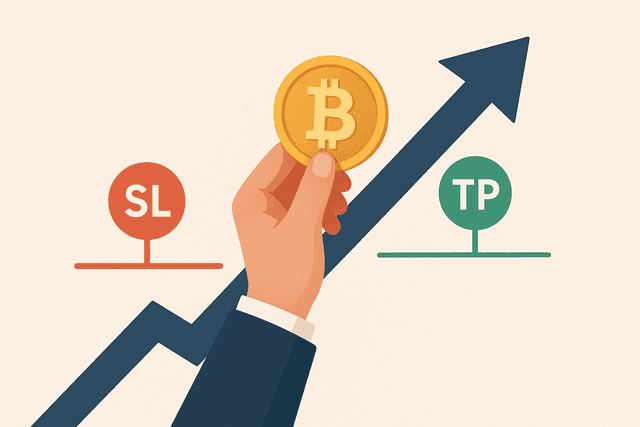
- Use stop-loss or fail-safe rules.
- Maintain contingency plans for stuck transfers, wallet pauses, or sudden volatility.
Risks and challenges to plan for include execution risk (one leg fills while the other does not), transfer delays (inventory cannot be rebalanced on time), exchange downtime (orders and access may be interrupted), regulatory risk (rules or access can change), liquidity risk (size may not clear at expected prices), slippage (fills worse than anticipated), and counterparty risk (platform failures, freezes, or loss events).
To get started, open and verify accounts on more than one exchange, fund them with a small test amount, and practice monitoring spreads without trading until you can calculate net outcomes confidently. Next, define a narrow universe of liquid pairs, set rules for minimum spread and maximum size, and rehearse the full workflow—placing orders, confirming fills, and rebalancing—before you scale up. Once the process is repeatable, consider adding automation cautiously, keeping strict limits until you have live performance data you trust.
Conclusion: Arbitrage can convert small pricing mismatches into steady gains when executed with speed, rigor, and cost discipline. Monitor several exchanges, validate spreads after all-in expenses, and lean on automation where it improves timing. Pair these tactics with strong risk controls and adaptability, and you can turn market fragmentation into a repeatable crypto trading edge.