Crypto culture runs on memes, in-jokes, and fast-evolving slang. If you have ever searched for what hopium means in crypto, you have likely seen its counterpart, copium, all over social feeds and forums.
You might notice traders joke about “drinking copium” after a rough position and wonder what that signals. This guide unpacks the meaning of copium, how it shows up in cryptocurrency conversations, and why the term carries a negative vibe.
Defining Copium
“Copium” blends two ideas: “cope” plus “opium.”
Cope: finding ways to handle stress, setbacks, or uncomfortable outcomes.
Opium: a narcotic, commonly used as a metaphor for soothing illusions or false comfort.
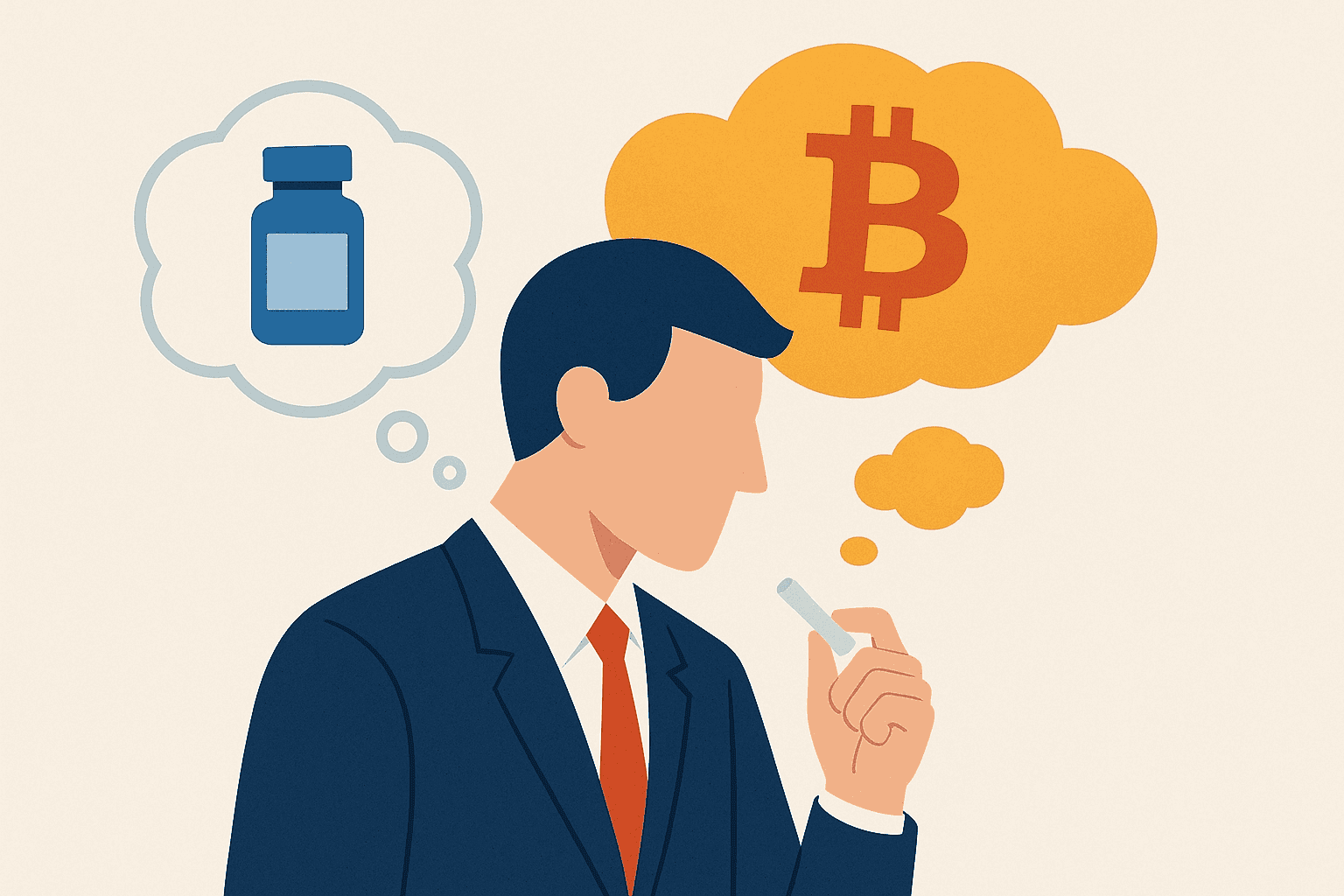
Together, copium frames a tongue-in-cheek, imaginary drug people “take” to deny reality and feel better about bad news.
When facts sting, someone “on copium” is portrayed as masking the truth rather than accepting it.
Copium Versus Hopium
Copium revolves around denial, while hopium is a different staple of crypto slang.
Hopium: irrational or baseless optimism. Holders assume a token or Bitcoin will rip upward without evidence or fundamentals.
Copium: mental self-soothing to withstand unfavorable outcomes, such as sharp drawdowns or poor entries.
Both terms mock behavior, but they apply to distinct moments—one to denial of the present, the other to unrealistic future optimism.
In crypto communities, hopium is used as shorthand for “I want this to be true, so I am treating it like it is.” Psychologically, it can look like selective attention (only sharing bullish screenshots), motivated reasoning (explaining away bad news), and crowd reinforcement (believing a narrative because everyone you follow repeats it).
When someone is “high on hopium,” they often act as if a positive outcome is inevitable: setting aggressive price targets without a catalyst, doubling down on a shaky thesis, or holding through clear invalidation because “the pump is right around the corner.” In trading terms, that mindset can lead to sloppy risk management—oversizing positions, avoiding stop-losses, or adding leverage because confidence feels like certainty.
The hopium meme usually leans into the “imaginary drug” framing, too: hopium “tanks,” “canisters,” or “inhalers” that people “hit” when charts go red or when a favorite narrative needs rescuing. In crypto culture it is commonly posted under moon predictions, “this is the bottom” claims, and screenshot threads that treat a single green candle as proof a full reversal is guaranteed.
Hopium is considered negative in crypto trading because it can turn hope into a strategy. Instead of evaluating probabilities, traders may chase rallies late, keep moving their exit plan, or ignore contradictory data until losses compound.
It also reshapes investor strategy in subtle ways: it can push people toward narrative-first decision-making, make them confuse community conviction with market confirmation, and encourage “all-in” thinking that crowds out position sizing, time horizons, and contingency plans.
Social media and influencer-driven content can intensify hopium culture by rewarding bold certainty over nuance. Common tactics include cherry-picked charts, confident “next leg up” calls, vague claims about “big money” entering, and repeated refrains that any skepticism is just “fear.” When those posts get amplified, hopium can spread faster than sober analysis.
Signs of hopium-driven sentiment in the market often include constant bullish certainty despite weak data, shifting goalposts (“just wait for the next catalyst”), dismissal of risk as mere negativity, and reliance on slogans or memes in place of a clear thesis.
To avoid falling into the hopium trap, it helps to set entry and exit rules before you buy, define what would prove you wrong, keep position sizes small enough that you can think clearly, and actively seek out the best arguments against your own trade. If you cannot explain the downside in plain language, that is usually a signal to slow down.
Historically, hopium has been most visible during broad speculative surges and late-stage euphoric phases: parabolic runs that inspire “only up” narratives, meme-driven pumps where jokes become price targets, and post-crash periods where communities rally around “back to the old highs” claims before fundamentals recover.
Hope can be emotionally useful, but in markets it becomes dangerous when it replaces a plan and turns probabilities into promises.
What Copium Means in Crypto
In everyday cryptocurrency chat, copium tags investors who refuse to accept hard data about losses, bad timing, or weak projects.
Example: after a deep dip, insisting a coin will moon “next week” is often labeled as breathing copium.
On X (Twitter), Reddit, and Telegram, the term is used with sarcasm when people rationalize risky bets or paint red charts as “temporary.”
How It Sounds in Crypto Talk
Here are common ways the term appears in conversation:
- Explaining red numbers: “I am barely down. A bit more patience and I am fine. #copium.”
- Poking at blind optimism: “New day, fresh copium. That token is not coming back.”
- Winners versus laggards: “Some caught the alpha and moved. Others are still sipping copium.”
In practice, it is usually dropped as a jab—calling out emotional rationalizations rather than describing a neutral outlook.
Labeling something copium implies sidestepping reality—ignoring risk, doubling down on weak trades, or pretending unrealized losses are not there.
Humor sits alongside other crypto slang like fomo, fud, hodl, and diamond hands, but denial can crowd out rational, evidence-based decisions.
Conclusion
In short, within crypto, copium names denial—especially when traders refuse to recognize losing positions or flawed strategy. The sarcasm targets clinging to comforting stories instead of facing facts.
It is fun as a meme, yet it also warns: in a volatile investment arena with cryptocurrencies and tokens, rejecting evidence can magnify mistakes. Spotting copium—in yourself or a community—can steer you toward more informed, less irrational choices.
FAQ
What Does It Mean in Simple Words?
Copium is denial—acting like everything is fine when reality clearly says otherwise.
How Is It Used in Trading?
People use it to describe traders who will not accept losses and instead comfort themselves with unfounded optimism.
Copium and Hopium: What’s the Difference?
A quick side-by-side makes the difference clearer.
| Term | Definition | Typical Behavior | Example |
|---|---|---|---|
| Copium | Self-soothing denial in response to bad current outcomes. | Explaining away losses, minimizing risk, and avoiding acceptance of a failed trade or weak thesis. | “It is not a real loss until I sell,” while ignoring clear signs the setup broke. |
| Hopium | Unrealistic optimism about future price action without solid reasons. | Assuming a big pump is inevitable, setting aggressive targets, and treating hopeful narratives as certainty. | Claiming a token will “moon soon” with no catalyst beyond vibes and reposts. |
Why Is the Connotation Negative?
Because it hints at delusion, dismissing facts, and potentially poor financial decisions.
Can This Mindset Be Harmful in Markets?
Yes. Denial can lead to ignoring risk, holding losers too long, and repeating mistakes instead of learning from them.