A few years back, conversations around cryptocurrencies focused on blockchain, smart contracts, and leaders like Bitcoin and Ethereum. Today, culture and humor share the stage with code, and this guide clarifies the difference between meme coin and crypto altcoins to set the context.
The tone of the crypto ecosystem has shifted. It is no longer purely technical; internet culture now shapes narratives alongside decentralized technology.
A clear sign of this shift is the rise of meme coins, digital assets that began as jokes yet managed to capture attention and market value.
That evolution leaves many wondering how these assets relate to other non-Bitcoin coins—specifically, how memecoins differ from broader altcoin categories.
The two are often mixed up, even though their distinctions are foundational and worth unpacking.
Memecoins vs. Altcoins: Underappreciated Distinctions

Memecoins and altcoins share a blockchain backbone, yet they originate from different motivations and aim at different outcomes. Below are the key contrasts to help you understand them clearly.
| Aspect | Altcoins | Memecoins |
|---|---|---|
| Origins | Typically launched to improve on or expand blockchain functionality | Typically launched from internet culture, humor, and viral memes |
| Purpose and Utility | Built around defined technical goals and longer-term product direction | Often starts as entertainment and community identity; utility may be added later |
| What Moves Prices | More influenced by development progress, adoption signals, and ecosystem activity | More influenced by social momentum, narratives, and visibility spikes |
| Community and Appeal | Credibility tends to center on teams, roadmaps, and technology | Virality tends to center on memes, participation, and online coordination |
| Typical Risk Profile | Still volatile, but often more tied to project fundamentals | Often more speculative and sentiment-driven, with sharper swings |
1. Origins: Jokes Spark Memecoins, Innovation Drives Altcoins
Tracing their beginnings reveals divergent roots. Memecoins grew out of internet humor and viral memes amplified by social platforms.
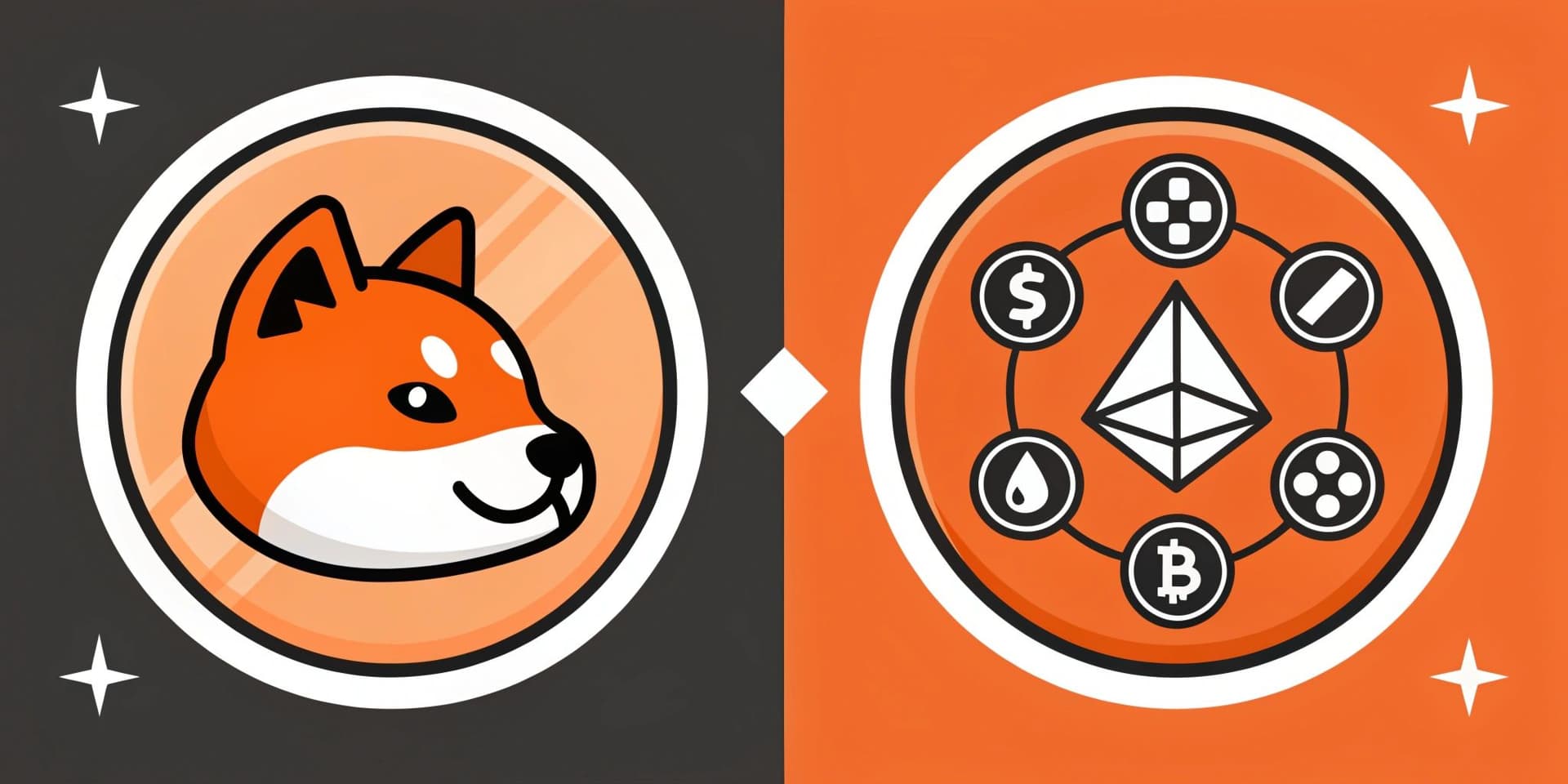
Dogecoin (Doge), launched in 2013 with the Shiba Inu emblem, started as a parody of Bitcoin and became widely recognized, helped by community enthusiasm and mentions from figures such as Elon Musk.
Altcoins, by contrast, arose as “alternative coins” to extend or improve on Bitcoin’s model. Altcoins are a broad category that includes all non-Bitcoin cryptocurrencies, including memecoins.
They set out to add capabilities or refine limitations—Ethereum (Eth) introduced smart contracts, Litecoin (Ltc) emphasized faster transactions, and Cardano (Ada) leaned on research-first design and efficiency.
These distinct beginnings shape how each group evolves in the crypto market: memecoins ride trends and community momentum, while altcoins typically progress through technical research and development.
From here, their character and objectives diverge even more.
2. Purpose and Utility: Culture and Fun vs. Practical Tech
Memecoins usually prioritize entertainment, community bonding, and digital culture. Early on, many had little to no practical use—existing mostly for fun—though some later added staking, NFTs, or DeFi mechanics to deepen utility. Some memecoins also develop real-world uses through community-led activity, such as tipping, micro-donations, fundraising, and merchant-style payments in niche circles.
Dogecoin began tongue-in-cheek, yet it now benefits from a sizable, active community and functioning network.
Altcoins, on the other hand, tend to be built with long-range objectives and concrete technical goals. They target solutions like programmable smart contracts, scaling throughput, or enhancing blockchain efficiency.
Ethereum, for instance, became a base layer for decentralized applications, not just a currency, anchoring a broader crypto ecosystem.
Because their aims differ, the way markets assign value to each category naturally diverges as well.
3. What Moves Prices: Viral Buzz vs. Project Fundamentals
Price action draws on different fuel sources. Memecoin valuations often hinge on trends, grassroots energy, and high-profile mentions that can trigger swift, outsized moves.
A single post from a well-known personality can send a memecoin rallying within minutes.
Altcoin pricing is more closely tied to fundamentals: software releases, developer progress, adoption metrics, and on-chain activity commonly guide their trajectories.
In effect, memecoins lean speculative, whereas altcoins more often mirror the health of the underlying project and its ecosystem. In general, memecoins are considered riskier because sentiment can change quickly, causing extreme volatility and rapid reversals without fundamental catalysts.
When price is driven mainly by attention and narrative, risk control matters as much as the entry point.
Even so, memecoins can shine where community coordination and culture matter most.
4. Community and Appeal: Virality vs. Credibility
Audience appeal grows along different paths. Memecoins flourish through energetic communities that amplify memes and in-jokes across social networks.
Groups like the Dogecoin Army and ShibArmy can push visibility with humor, posts, and waves of engagement that turn coins into trending topics.
This sense of belonging pulls in newcomers—even those without deep technical knowledge.
Altcoins rely more on the credibility of builders, clarity of roadmaps, and the perceived strength of their tech.
Investor confidence typically stems from innovation and the team’s reputation rather than meme power. As a result, promotion for memecoins centers on buzz and participation, while altcoins emphasize tangible progress to appeal to longer-term holders.
With that in mind, the next concern for investors is risk management.
5. Investment Risk: Speculation vs. Fundamentals
Risk profiles differ sharply. Memecoins are known for high volatility, with many newcomers emerging to chase short-lived trends without solid plans or products.
They can soar dramatically and then retrace just as fast when excitement cools.
Altcoins, while still volatile, often show relatively steadier behavior because they are anchored to specific purposes and ongoing development.
Announcements, upgrades, or wider use can drive movements in a more fundamentals-oriented manner.
Think of memecoins like viral online challenges—attention can spike and fade quickly—whereas altcoins resemble tech startups, building gradually on clearer roadmaps and foundations.
Both live under the crypto umbrella, but their paths and how they’re evaluated differ significantly.
Conclusion
Those five often-overlooked differences sketch how memecoins and altcoins diverge, and you can explore deeper through learning resources from Indodax Academy.
In short, both are cryptocurrencies, yet they represent two sides of the same coin: one grounded in internet culture, the other in technology and utility.
Either can fit a portfolio if you understand what drives them and the risks involved. If you decide to ride a trend, know your rationale first.
Beyond articles, you can expand your knowledge with tutorials and curated guides that match your interests.
Keep tabs on digital asset prices via Indodax Market and follow industry updates. For tailored execution, consider Indodax over-the-counter services, and enable notifications to stay current on blockchain, crypto assets, and trading opportunities.
For faster news access, follow updates on Google News. For a secure trading experience, get the Indodax mobile app from the App Store or Google Play Store.
Grow your holdings with Indodax crypto staking to earn passive income from assets you already own. Sign up, complete know-your-customer verification, and start trading with greater confidence and convenience.
Indodax Official Contact Customer Service Number: (021) 5065 8888 | Support Email: [email protected]
Stay connected on social platforms: Instagram, X, YouTube, and Telegram.
FAQ
Are Memecoins Considered Altcoins?
Technically, yes—anything other than Bitcoin falls under altcoins—but memecoins form a distinct subcategory with their own traits.
Which Is Better for Long-Term Investment?
Altcoins usually fit long-term strategies because they are grounded in utility and technology, while memecoins tend to be more speculative.
Do Memecoins Have a Future?
Some may, if they develop real ecosystems and use cases, though many are short-lived.
Do All Altcoins Deliver Utility?
Not always. Certain projects stall or fail, so diligent research is essential before investing.
Can You Hold Both?
Yes, with balance. Treat memecoins as experimental positions and use stronger altcoins as a steadier core.
Is a Meme Coin the Same as a Crypto Coin?
No. A “crypto coin” is a general term for a digital asset that exists on a blockchain. All meme coins are crypto coins, but not all crypto coins are meme coins.
Is Shiba Inu an Altcoin or a Memecoin?
Shiba Inu (Shib) is both an altcoin and a memecoin. It is categorized as a memecoin because its identity and growth were driven heavily by meme culture, online community energy, and viral narratives rather than a purely technical origin story.
Is Dogecoin an Altcoin or a Memecoin?
Dogecoin (Doge) is both an altcoin and a memecoin. It is categorized as a memecoin because it began as a joke inspired by an internet meme and gained traction primarily through community-driven hype and cultural momentum.
How Do I Evaluate Altcoins and Memecoins Before Investing to Avoid Scams?
Use practical checks and treat low-transparency tokens with extra caution.
- Check the project's whitepaper and documentation.
- Research the development team and their track record; be cautious with anonymous or unverifiable teams.
- Look for clear use cases and utility; avoid tokens with no clear use case.
- Assess community activity and transparency; lack of transparency is a major red flag.
- Be wary of unrealistic promises or guaranteed returns.
- Verify if the project is listed on reputable exchanges.
- Check for independent audits or code reviews.