In under a decade, tokens tied to blockchains have surged into the contemporary market and unsettled long-standing norms. What comes next for NFT-based crypto art? Should you commit capital, or do swings in price overwhelm potential returns? Below, we unpack key questions so you can evaluate this emerging space with greater confidence.
Are Non-Fungible Tokens Reshaping the Art Market?
Should You Buy Tokenized Artwork or a Physical Painting?
Collectors increasingly wonder whether NFTs—often labeled crypto art—can truly transform how contemporary pieces are bought, sold, and valued, a landscape historically centered on material works and conventional sales practices.
Some headline-making projects, including Beeple’s pieces, drew waves of bidders and achieved multi-million-dollar results. Yet the same forces that propel prices can reverse quickly; many observers caution that speculative excess and bubble dynamics make this segment risky.
During a recent upswing, on-chain artworks expanded in value by roughly ten times, with 2021 alone seeing daily turnover near $10 million.
What Is NFT or Crypto Art, and Should You Jump In?
Launched in 2014, NFTs rapidly became a favored format for minting and trading digital art, opening a fresh arena for speculative collecting alongside traditional art market channels.
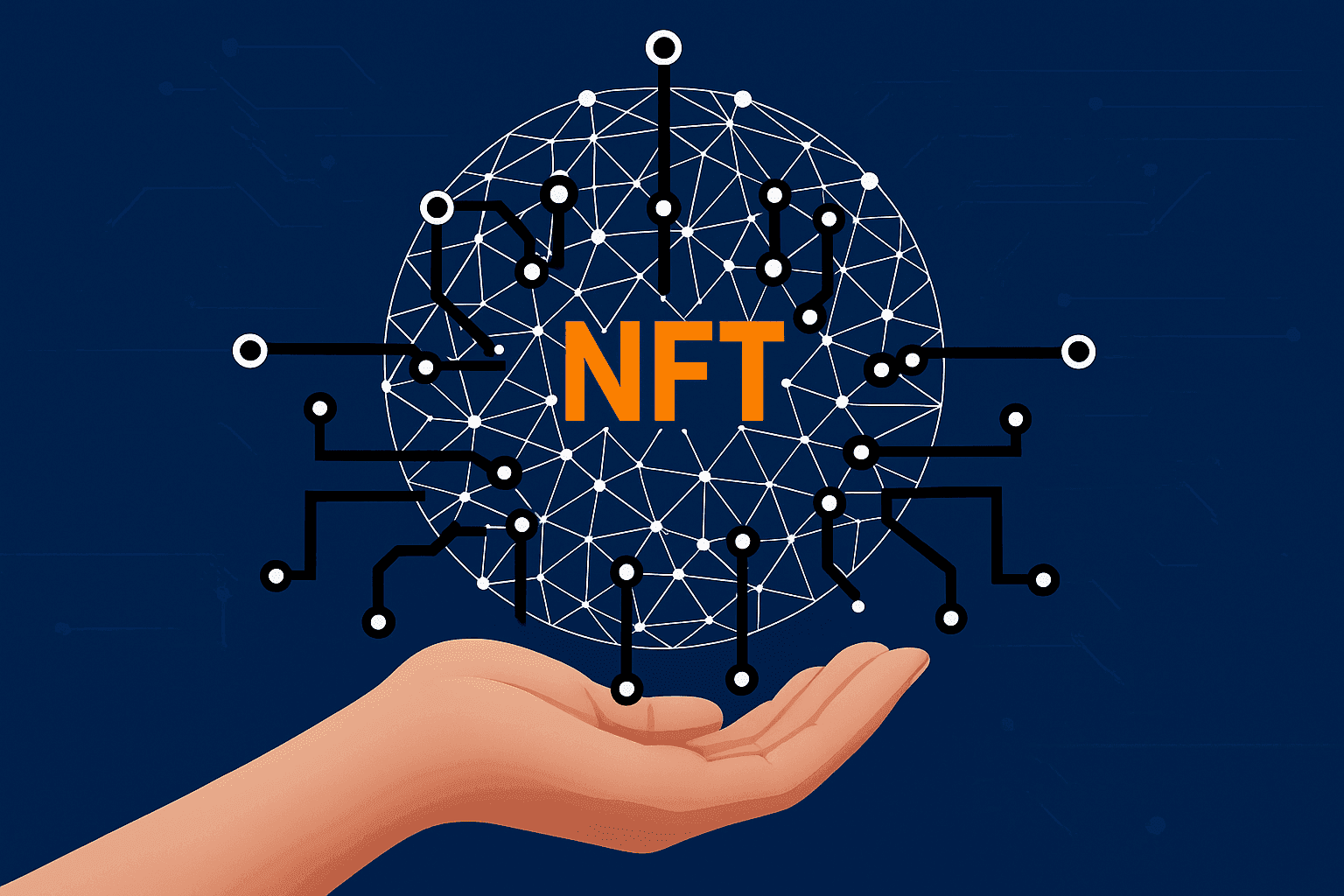
A non-fungible token (NFT, short for Non-Fungible Token) is a cryptographic entry on a blockchain that denotes a specific digital asset or references a real-world object. Unlike fungible cryptocurrencies such as Bitcoin or Ethereum, each NFT carries a unique identifier, making it non-interchangeable. That singularity manufactures scarcity for a digital file and supports value in ways infinitely copyable content cannot.
In practice, NFT art differs from traditional art in how ownership and control are expressed: the token records on-chain provenance and transfer history, while rights to reproduce, license, or commercially exploit the image may remain with the creator unless explicitly granted. Display also shifts from walls and institutions to screens, digital frames, and online galleries, and market dynamics tend to be faster-moving, more liquid at the low end, and more sentiment-driven than many physical art categories.
Acquisitions typically occur on an NFT marketplace and require a compatible crypto wallet for custody and settlement. A typical purchase flow involves setting up a wallet, adding funds, connecting it to a marketplace, reviewing the collection and token details, and then placing a bid or choosing a “buy now” option; the buyer confirms the transaction in the wallet, and the token transfers on-chain once finalized. Selling usually means connecting the same wallet, selecting the token, choosing a fixed price or auction format, approving the marketplace to list it, and confirming the listing and any subsequent sale transaction.
Major venues for buying and selling include OpenSea, Rarible, Foundation, SuperRare, Nifty Gateway, Magic Eden, and LooksRare. While the interface differs, the mechanics are similar: connect a wallet, browse collections, verify the asset details, and complete listings and purchases through on-chain transactions confirmed in the wallet.
Two common pricing concepts can help you interpret listings. Royalties are a preset percentage of a secondary sale that is routed to the creator (or another address) when the NFT is resold, typically via marketplace rules or smart-contract logic, so payouts can vary by venue and token design. A floor price is the lowest current listing price within a collection; it is often used as a quick sentiment gauge, but it can move rapidly and does not guarantee a buyer will exist at that level.
Cost is another practical constraint. To create (mint) an NFT, artists may face blockchain “gas” fees and marketplace-related charges; depending on network conditions and the chain used, minting and listing can range from a few dollars to well over $100 per transaction, and some platforms add service fees or take a percentage on the initial sale. To buy NFT art, the cost can range from under $20 for smaller editions to thousands of dollars for sought-after drops, plus network fees and marketplace fees at checkout; in active markets, the underlying cryptocurrency’s price swings can also change the effective cost between the time you decide to buy and the time the transaction settles.
Creating NFT art generally follows a straightforward sequence: make the digital work (or digitize a physical one), choose a blockchain and marketplace, set up a wallet, upload the file and metadata, mint the token, and then set pricing and any royalty terms before listing. Legal and marketing considerations matter: creators should ensure they own the copyright or have permission to tokenize the work, understand what buyer rights are (or are not) included, and avoid unlicensed use of trademarks, images, or music. On the marketing side, successful projects often pair the art with steady promotion, clear communication about utility and rights, and community-building through social media and collector channels.
Is Investing in NFTs a Cure-All for the Art World?
Price formation mirrors fine art: creator reputation, provenance, rarity, and demand all matter. Is a tangible canvas inherently superior to a purely digital token? Could collecting native digital pieces become mainstream in the decades ahead, much like galleries and auction houses shaped prior eras?
The Pros and Cons of Investing in Digital Collectibles
Yes: A Glimpse of Art’s Future
NFTs live as records on distributed ledgers. This blockchain technology acts as a public, append-only register that secures transactions and also underpins cryptocurrency networks.
As with numbered editions in movements such as Impressionism or Pop Art, tokenized works can be unique or limited, conferring scarcity comparable to pieces exhibited in renowned galleries.
When an artwork is minted, the chain issues a verifiable certificate of authenticity, allowing an original to be sold natively in a digital format through an NFT marketplace.
Commonly cited advantages include:
| Advantage | Description |
|---|---|
| New distribution channels for creators | Artists can sell directly to collectors without relying on traditional gatekeepers. |
| Programmable royalty payouts | Resales can be structured to return a percentage to the creator when marketplace rules support it. |
| Access to global audiences | Marketplaces operate online, expanding reach beyond local galleries and auctions. |
| Lower barriers to entry | Digital-first sales can reduce logistical friction compared with shipping and physical storage. |
| Broader participation in the art market | More buyers can engage through small purchases, editions, or lower-priced listings. |
Income potential can take multiple forms. Creators may earn from primary sales and, in some cases, from secondary-market resale percentages; collectors and investors typically aim for price appreciation or strategic flipping, though gains are never guaranteed and can be erased quickly in thin markets.
Even so, excitement can obscure downside. The investment case is more nuanced than the current buzz implies.
No: Reliability Is Still a Problem
Several recurring drawbacks come up in collector discussions:
| Disadvantage | Description |
|---|---|
| Lack of physical presence and exhibition value | Tokens are usually experienced through screens, which may feel less satisfying than a physical work in a home or museum context. |
| Fractional ownership complicates uniqueness | Some projects split exposure into many pieces, blurring what “one owner” means for a single work. |
| High market volatility | NFT pricing can rise and fall sharply, often alongside broader crypto sentiment and liquidity shifts. |
| Preference for tangible works among collectors | Many buyers still prioritize physical display, material craft, and conventional collection habits. |
| Environmental and energy consumption concerns | Some networks and infrastructure choices raise sustainability questions, though approaches vary widely by chain. |
Limited Display and Exhibition Value
Before buying, consider how and where you would actually live with the work—digital frames, private online galleries, or public display—since practical display constraints can affect long-term satisfaction.
Uniqueness With Caveats
Read the token’s details closely to understand whether you are buying a one-of-one, an edition, or exposure that can be divided among many holders, as the structure can change how scarcity is perceived.
An Extremely Volatile Market
Volatility is not just about price charts; it also affects liquidity, bid depth, and how quickly you can exit a position without taking a steep discount.
Volatility in NFT markets is often a liquidity story: when attention fades, spreads widen and prices can gap down faster than buyers expect.
Environmental Costs Remain a Concern
If sustainability matters to you, look into the network a collection uses and the project’s broader approach to energy impact, since not all chains and minting methods carry the same footprint.
Security and fraud risks add another layer of uncertainty. Fake collections, impersonation, phishing links, malicious approvals, and lost recovery phrases can all result in irreversible loss; platform outages or compromised accounts can also disrupt access. Many experienced buyers mitigate this by verifying collection identifiers, avoiding unsolicited messages, using a dedicated wallet for trading, and keeping recovery information offline.