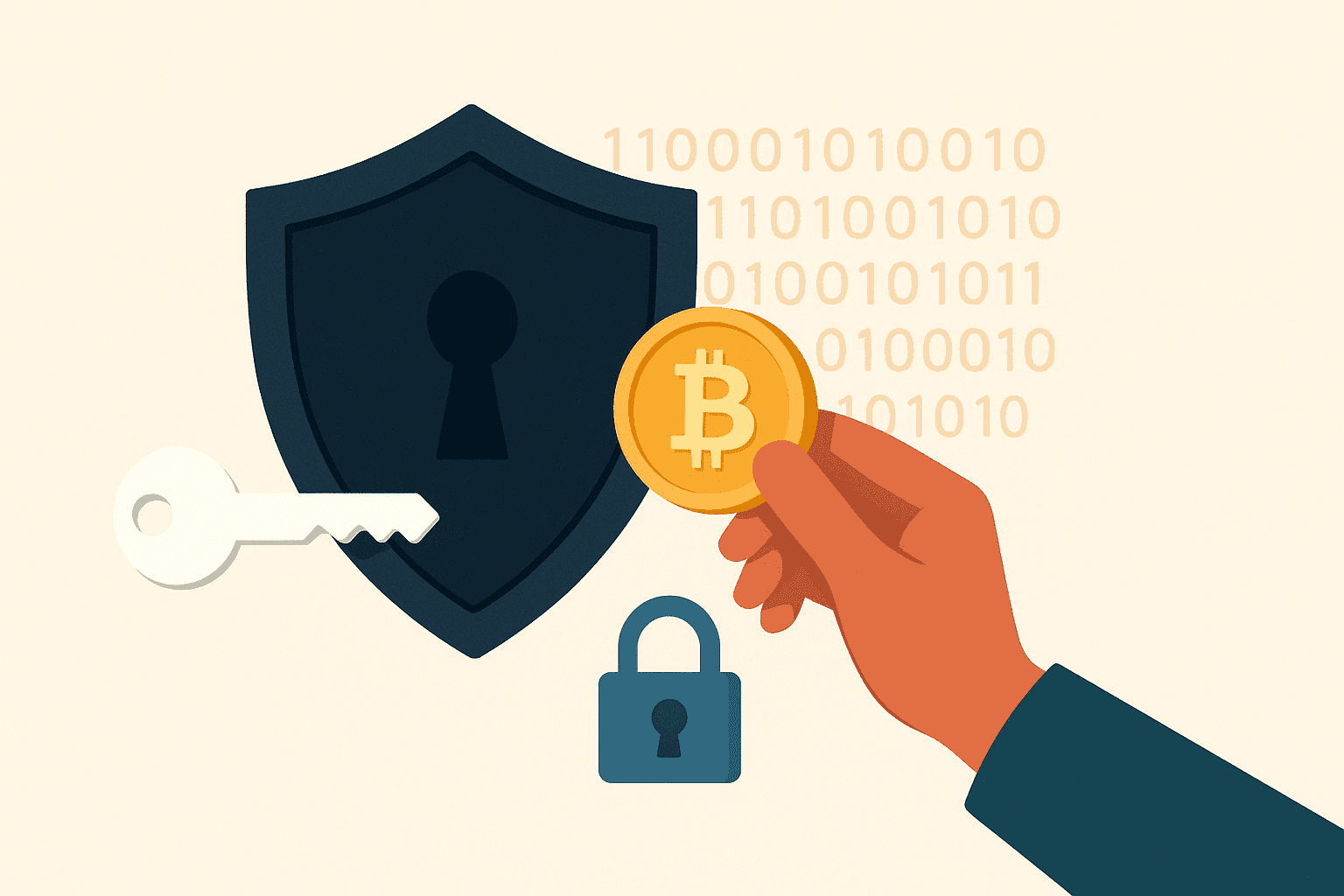
Over the last few years, coins like Bitcoin, Ethereum, and Dogecoin have moved into everyday conversation and even pop culture. At the same time, crypto hacking aimed at exchanges and traders has climbed sharply.
What Is Cryptocurrency?
Cryptocurrency is a blockchain-based form of digital money that operates without a central authority. Unlike government-issued currency, anyone can create tokens, distribute them, and trade them on networks. Familiar names include Bitcoin, Ethereum, Tether, Cardano, and Dogecoin.
In principle, you can spend crypto like cash, but mainstream use is still evolving and only a handful of large retailers accept it today.
Decentralization also introduces new risks. Traders often speculate on price swings much like stocks. Some people ask whether it is realistic to make $1,000 a day with cryptocurrency; it can happen under specific conditions, but it typically requires significant capital, exceptional timing, and a willingness to take on extreme volatility, and it can just as easily lead to large losses or exposure to scams.
Types of Cryptocurrency Attacks
In 2022, attackers siphoned a total of $3.8 billion across multiple services, up from $3.3 billion in 2021, despite declining coin prices driven by shaken confidence and ongoing breaches.
Understanding how different incidents work helps holders and active traders protect funds. Below are three widespread categories of crypto crime. Other common crypto losses can also come from rug pulls, exit scams, and smart contract exploits that do not involve bridges or wallets directly.
Bridge Attacks
Bridge attacks strike assets moving between separate blockchains. Because each coin lives on its own chain, transfers—for example, from Ethereum to Dogecoin—rely on cross-chain bridges. These protocols are essential but are frequently targeted through code bugs or misuse of cryptographic keys.
Wallet Compromises
Wallets store and transfer cryptocurrency. Some wallets keep keys offline, while others are internet-connected and therefore exposed. Attackers can exploit network weaknesses to penetrate an online wallet and drain its balance. Programmer Stefan Thomas famously reported losing access to 7,002 Bitcoin after forgetting the password to an encrypted IronKey drive that held his private keys.
Exchange Breaches
Exchanges are online platforms for trading and custody. They hold large pools of assets, making them prime targets. Adversaries use tactics such as phishing and social engineering to reach exchange online wallets and steal coins.
How Cryptocurrency Attacks Unfold
Threat actors use a range of techniques to compromise digital assets. Knowing the common playbooks helps users reduce risk. Here are three to watch. Beyond these, criminals also use sim swapping to hijack phone numbers and intercept verification codes, malware that monitors clipboard data to swap wallet addresses during transfers, and broader social engineering such as fake “support” outreach that pressures victims into sharing credentials.
- Phishing:Deceptive emails or messages trick owners into revealing secrets or installing malware, which then enables wallet access and theft.
- Malicious Code:Crypto systems and apps are software, and vulnerabilities can be abused. Weak points anywhere in the stack—from bridges to smart contracts—let attackers alter code paths and exfiltrate funds.
- Key Theft:Private keys control wallets and exchange accounts. If criminals obtain these keys, they can move assets as though they were the rightful owner.
Eight Notorious Exchange Breaches to Know
As adoption increased, large-scale breaches grew in tandem. High-profile events—such as the Ftx incident—have led to losses in the hundreds of millions, platform shutdowns, and, in some cases, legal fallout for operators. Some services, like StormGain, have thus far avoided major incidents, though that may not last forever. Below are notable cases.
| Exchange/Platform | Date | Attack Method | Amount Stolen | Outcome/Notes |
|---|---|---|---|---|
| Ronin Network | March 2022 | Stolen private keys used to authorize withdrawals | About $615 million (ETH and Usdc) | Believed linked to North Korea |
| Poly Network | August 2021 | Software flaw exploited to divert funds | Roughly $611 million | Funds were later returned; described as an experiment |
| Ftx | November 2022; January 2023 | Unauthorized outflows from exchange wallets | Exceeding $600 million; plus an additional $15 million | Outflows occurred around the bankruptcy filing; later additional drain reported |
| Binance | October 2022 | Bsc Token Hub cross-chain bridge exploit to mint extra Bnb | About $570 million | Bridge exploit involving minted tokens |
| Coincheck | January 2018 | Online-wallet compromise | $534 million worth of Nem | Company later compensated affected clients from its own reserves |
| Mt. Gox | 2011; 2014 | Online-wallet theft incidents | Around $400,000 (2011) and about $437 million (2014) | 2014 incident triggered liquidation |
| BitMart | December 2021 | Stolen administrator keys used to access funds | More than $196 million | Moved through Ethereum and Binance ecosystems |
| Nomad Bridge | August 2022 | Cross-chain process issue exploited by attackers and copycats | About $190 million | Only around $36 million was ultimately recovered |
1. Ronin Network Breach
In March 2022, attackers believed to be linked to North Korea infiltrated the game-centric Ronin Network and took about $615 million in ETH and Usdc. The operation relied on stolen private keys to authorize withdrawals, a textbook key-theft breach.
2. Poly Network Hack
In August 2021, a flaw in Poly Network’s software let an attacker divert roughly $611 million. The individual later returned the funds, describing the act as an experiment.
3. Ftx Unauthorized Outflows
In November 2022, on the day it filed for bankruptcy, Ftx saw unauthorized outflows exceeding $600 million from exchange wallets. A subsequent incident in January 2023 drained an additional $15 million.
4. Binance Bridge Exploit
In October 2022, adversaries exploited the Bsc Token Hub cross-chain bridge to mint extra Bnb and escape with about $570 million.
5. Coincheck Online-Wallet Compromise
In January 2018, Tokyo-based Coincheck suffered an online-wallet compromise that resulted in $534 million worth of Nem being stolen. The company later compensated affected clients from its own reserves.
6. Mt. Gox Incidents
The exchange endured two major incidents. In 2011, when it processed nearly 70% of Bitcoin trades, thieves stole around $400,000. In 2014, with its share down to roughly 7%, attackers drained about $437 million from online wallets, triggering liquidation.
7. BitMart Administrator Key Theft
In December 2021, criminals used stolen administrator keys to access BitMart’s funds and moved more than $196 million through Ethereum and Binance ecosystems.
8. Nomad Bridge Exploit
In August 2022, an issue in Nomad Bridge’s cross-chain process allowed attackers and copycats to withdraw about $190 million. Only around $36 million was ultimately recovered.
How to Prevent Crypto Exchange Hacks
If you hold or trade digital assets, build strong defenses. The steps below are widely recommended to reduce the chance of theft.
Cold wallets reduce the chances of remote key theft, and multifactor authentication can stop many account-takeover attempts even after a password is exposed.
- Use a cold wallet. Hardware devices keep keys offline, sharply limiting remote compromise.
- Turn on a vpn. Services such as Kaspersky Vpn Secure Connection encrypt traffic to reduce eavesdropping risks.
- Harden your devices. Install reputable antivirus software, enable firewalls, and keep all apps and firmware updated.
- Practice password hygiene. Rotate credentials, create strong and unique passwords, and consider a password manager like Kaspersky Password Manager.
- Enable multifactor authentication. Adding verification layers makes unauthorized access far harder.
- Stay alert to phishing. Treat unsolicited emails, calls, or texts with caution. Never click suspicious links or enter data on untrusted pages.
- Protect your seed words. Recovery phrases unlock wallets and exchange accounts. Loss or exposure can lead to irreversible asset loss.
Stolen cryptocurrency can sometimes be recovered, but outcomes vary widely. While blockchains are transparent and transactions can be traced, real-world identification may be difficult, and funds can move quickly across services; recoveries are more likely when an exchange or custodian can freeze assets, reporting happens fast, and law enforcement becomes involved.