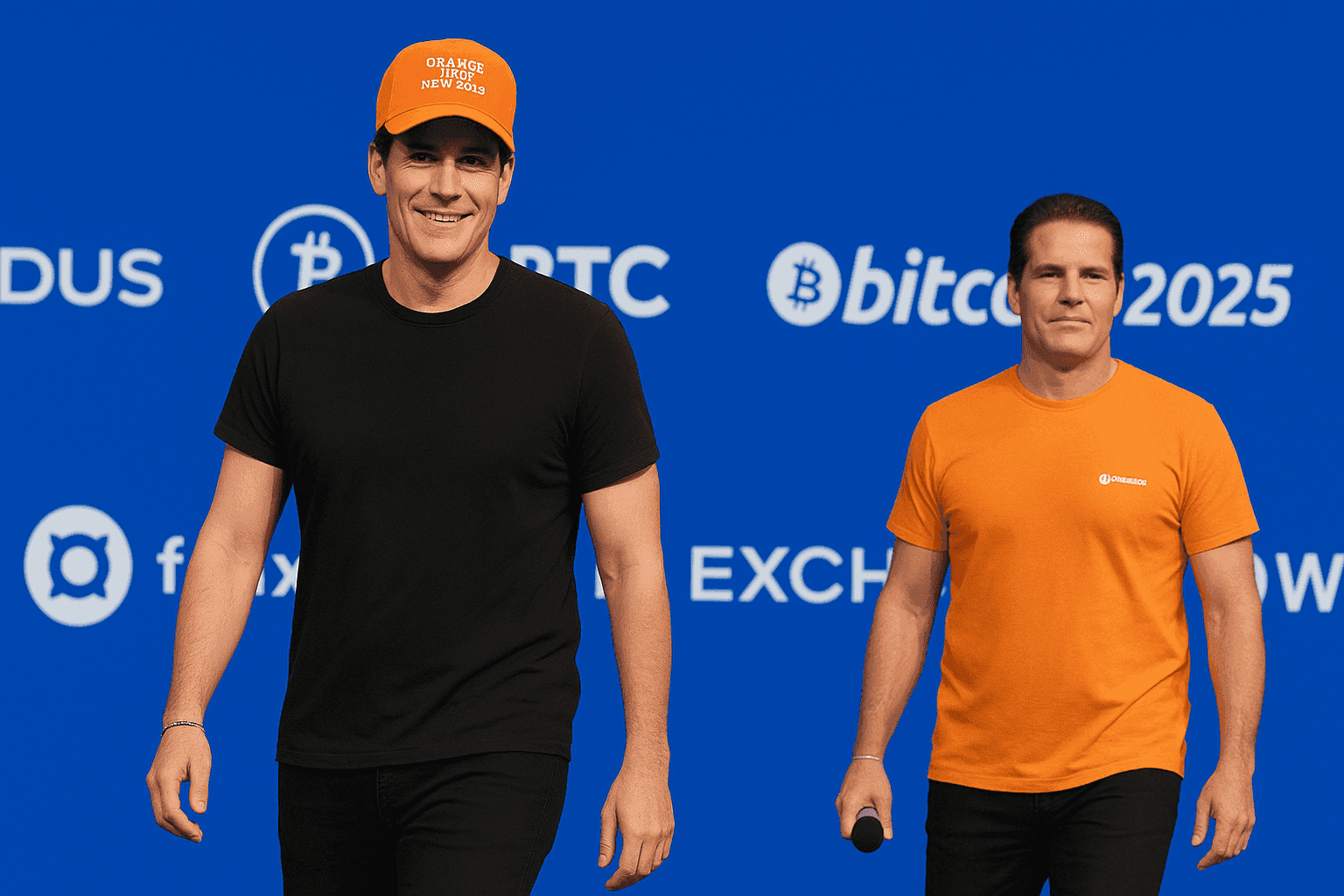
Cryptocurrency has captivated investors for many reasons, not least its ability to propel early adopters and startup founders into massive fortunes, as this crypto billionaires list illustrates.
Below are five of the wealthiest figures in digital assets:
- Changpeng Zhao
- Brian Armstrong
- The Winklevoss Twins
- Giancarlo Devasini
- Michael Saylor
Five of the World’s Wealthiest Crypto Billionaires
Ranked by estimated net worth, these are the top crypto billionaires in this snapshot; Changpeng Zhao is the richest person in crypto on this list.
| Name | Estimated Net Worth | Primary Source of Wealth |
|---|---|---|
| Changpeng Zhao | $45 billion | Binance |
| Brian Armstrong | $15 billion | Coinbase |
| The Winklevoss Twins | $13.7 billion | Bitcoin, Gemini |
| Giancarlo Devasini | $11.5 billion | Tether |
| Michael Saylor | $8.3 billion | Bitcoin / Strategy |
How many billionaires are from crypto? It depends on definitions, but broad tallies that scan major rich lists and count individuals whose primary wealth is tied to crypto assets and crypto-native companies typically land around 60 crypto billionaires globally as of June 30, 2026; that estimate generally excludes people whose fortunes are mostly from non-crypto businesses, even if they hold some digital assets.
Is Zhao richer than Bill Gates? On the same date, Bill Gates’s net worth is commonly estimated at roughly $120 billion, meaning Zhao’s estimated $45 billion is substantially lower.
Who is the biggest crypto owner? By number of coins, the largest widely cited single holding is the Bitcoin stash commonly attributed to Bitcoin’s creator, Satoshi Nakamoto, though it is not definitively proven and it is tied to an unknown identity; by value, the “biggest owner” can shift with market prices and whether you count custodians and exchanges that hold assets on behalf of clients rather than as personal wealth.
Which cryptocurrencies are commonly held by crypto billionaires? Bitcoin and Ether are the most common foundational holdings, while founders’ wealth is often concentrated in equity plus ecosystem exposure (for example, exchange-linked tokens such as BNB), and some fortunes are closely tied to stablecoin businesses (such as Tether); in this list, the Winklevoss twins and Saylor are strongly associated with Bitcoin, Zhao’s wealth is tied to Binance and related crypto exposure, Armstrong’s to Coinbase and the broader market, and Devasini’s to Tether.
What is the average age of crypto billionaires? Based on the publicly reported ages of the five people (or paired founders) profiled below as of June 30, 2026, their average age is roughly 51 years.
1. Changpeng Zhao
Changpeng Zhao co-founded Binance and previously served as its chief executive officer, turning it into one of the largest crypto exchanges globally.
Trained as a software developer, he built trading systems and launched a tech venture in 2005. A chance 2013 poker game with Bobby Lee, then leading a Bitcoin exchange, nudged him toward Bitcoin after Lee suggested allocating 10 percent of his cash to the asset.
Zhao ultimately sold his apartment and went all in on Bitcoin. The price slid before rebounding, and he held through the downturn. Spotting an opening to build his own platform, he introduced Binance in 2017, which became profitable in roughly three months.
In 2023 he stepped down after pleading guilty to violations of United States anti–money laundering laws; the company paid a $4.3 billion penalty.
By the end of 2024, Binance reported more than 250 million registered users. Zhao is widely believed to own about 90 percent of the exchange, according to Forbes.
Estimated net worth: $45 billion.
2. Brian Armstrong
Brian Armstrong co-founded Coinbase with Fred Ehrsam in 2012 and is the chief executive officer of the publicly traded exchange, which listed in 2021 on Nasdaq and recently carried a market capitalization near $89 billion.
Like Zhao, Armstrong began as a software engineer. While at Airbnb, he encountered slow, costly transfers to South America with unclear fees—frictions he believed cryptocurrency could solve.
Working nights and weekends, he built a simple way to buy and custody coins, a project that grew into Coinbase.
By late April 2025, filings suggested he held roughly 13 percent of the company’s shares.
Estimated net worth: $15 billion.
3. The Winklevoss Twins
Cameron and Tyler Winklevoss, ex-Olympic rowers, are widely known for their legal dispute with Mark Zuckerberg over Facebook’s inception. Reports indicate they invested $11 million from their settlement into Bitcoin in 2012 and became among the earliest Bitcoin billionaires by 2017.
They launched Gemini in 2014, another crypto exchange, with Tyler as chief executive officer and Cameron as president. The brothers are thought to retain a controlling stake, though details are not publicly available.
Combined net worth: $13.7 billion.
4. Giancarlo Devasini
Italian entrepreneur Giancarlo Devasini began his career as a plastic surgeon before pivoting to technology, where he imported computer hardware.
His entry into crypto grew from an interest in Bitcoin and a meeting with Raphael Nicolle, who was developing Bitfinex, a platform noted for advanced trading tools. Devasini became a partner at Bitfinex and later its chief financial officer.
He did not design the Tether currency itself, but he helped establish Tether as a company in 2014 while at Bitfinex and served for years as chief financial officer before becoming chairman in March 2025.
He is estimated to hold a 47 percent stake in Tether, according to Forbes.
Estimated net worth: $11.5 billion.
5. Michael Saylor
Michael Saylor co-founded Strategy, formerly MicroStrategy, a public software company best known for amassing a sizable Bitcoin treasury. Saylor was chief executive officer from 1989 to 2022 and now serves as executive chairman.
The stock surged in 2024, at one point climbing nearly 700 percent. Some investors view the company as a leveraged way to express a Bitcoin view, an approach that may not fit every risk profile.
Strategy remains closely tied to its BTC holdings. By June 30, 2025, the company reported owning 597,325 Bitcoins at an average purchase price of $70,982.
Estimated net worth: $8.3 billion.
Bottom Line
Many of these fortunes stem from founding and scaling core crypto infrastructure (such as exchanges), holding large equity stakes in crypto-native companies, issuing or supporting major crypto products (including stablecoins), and making outsized early allocations to assets such as Bitcoin; in some cases, wealth also compounds through technical innovation, trading/market-making, and turning a corporate balance sheet into a long-term crypto treasury strategy.
Global economic trends can swing these net worths quickly: tighter monetary policy and higher interest rates often reduce risk appetite and compress valuations, inflation and currency volatility can shift demand narratives for digital assets, and regulatory actions can directly affect exchange volumes, token prices, and the value of equity stakes in crypto businesses.
Crypto billionaires also tend to diversify outside their core holdings, commonly spreading wealth across traditional equities, venture capital investments, private companies, real estate, and cash-like instruments, while keeping concentrated exposure to the assets or businesses that generated their initial fortunes.
Outsized bets produced exceptional outcomes, but cryptocurrencies remain volatile and risky. Only commit capital you can afford to lose, and for long-term goals favor a diversified portfolio with a modest allocation to digital assets.