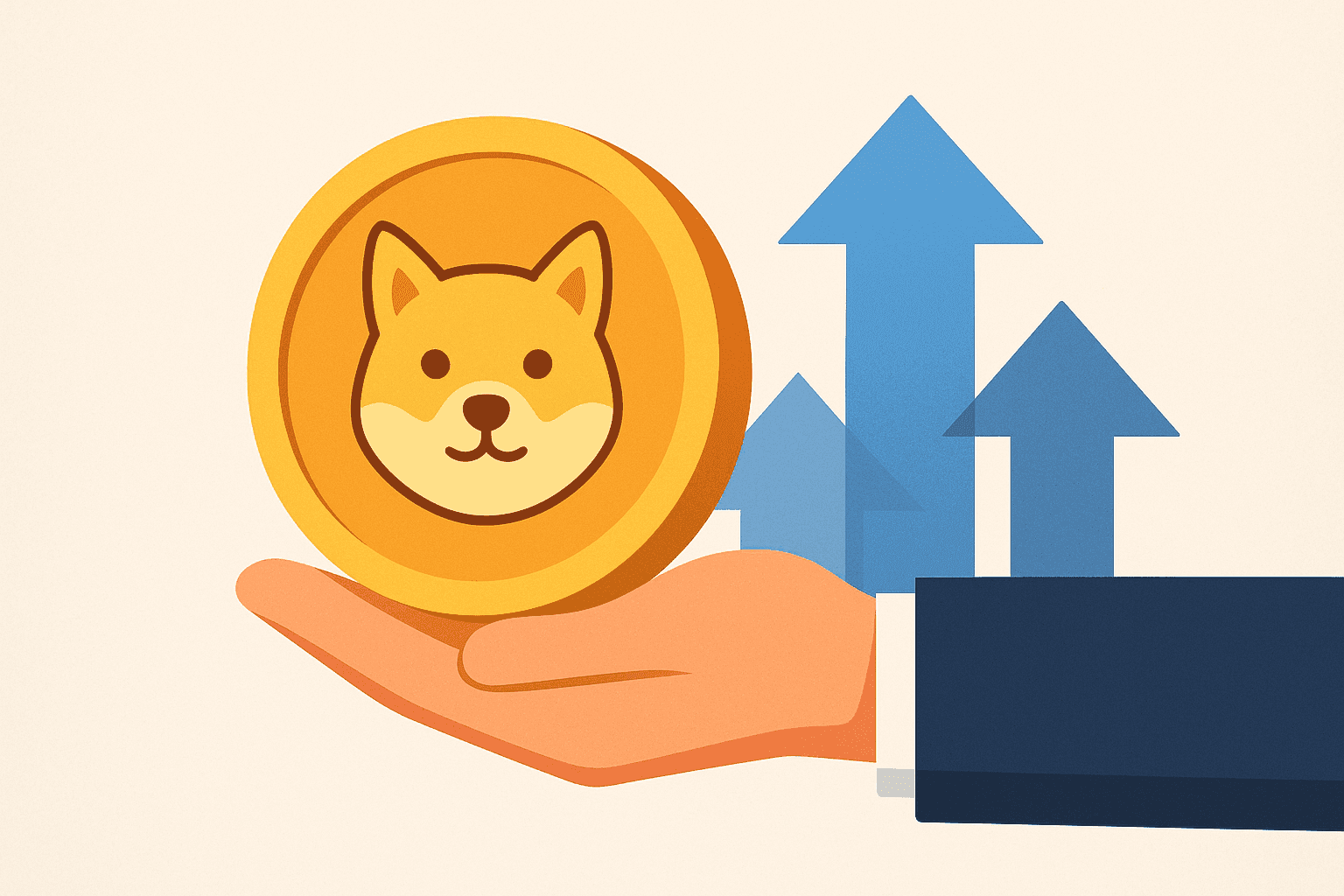
Within the Solana ecosystem, Bonk refers to a Shiba Inu–styled digital asset created around a playful dog motif and issued on Solana’s high-speed network.
Also known as Bonk Inu, the meme coin was conceived to lift the Solana community’s spirits and now appears across DeFi apps, cross-chain messaging tools, NFT marketplaces, and other integrations.
In December 2022, the price of Solana’s native token fell to its lowest level in nearly two years following the collapse of Ftx and Alameda Research as Sam Bankman-Fried’s empire unraveled. Because Solana had leaned heavily on Bankman-Fried–linked support, the sharp drop fed doubts about the network’s resilience without that backing.
Roughly a week after Solana’s native token hit its lowest point since February 2021, a new meme coin launched: Bonk. Featuring the familiar Shiba Inu mascot, it arrived when the community sought something lighthearted, and its rapid traction showed how effectively it met that need.
How Was Bonk Developed?
Public details about Bonk’s creators are scarce: the founders are anonymous, and no individual or team has publicly claimed responsibility for founding Bonk. The project’s paper emphasizes flipping the venture-capital-first model on its head and returning influence to everyday users, implicitly criticizing Sam Bankman-Fried and other venture capital firms for harms inflicted on the Solana ecosystem.
Anonymous launches are common among meme coins; Shiba Inu on Ethereum is a prominent example. Shiba Inu and Bonk share roots in Dogecoin and position themselves as community-led currencies rather than being dominated by centralized holders.
Bonk went live on Christmas Day 2022, when Solana’s native token traded near $11.40—about 96% below its roughly $260 peak. The token was airdropped to numerous NFT projects, artists, and collectors, drawing broad attention; estimates suggest nearly 300,000 wallets received it. During the first week, the Bonk price surged more than 2,000%, but the path since has been highly volatile, with an all-time low of $0.00000009197 recorded in December 2022.
Soon after launch, the community began adding practical uses. Bonk has since been woven into NFT markets, DeFi protocols, crypto games, and even social platforms.
How Does Bonk Work?
Bonk is a token issued on Solana under the network’s standard token program, enabling seamless movement across the Solana ecosystem. To bridge Bonk to other blockchains, users typically connect a wallet to a cross-chain bridge interface (such as Wormhole), select the source and destination networks, approve the token transfer, and then claim the bridged tokens on the destination chain. Bridging can involve network fees (on both chains), potential bridge- or relayer-related fees, and practical risks such as transaction delays, phishing sites, or smart-contract vulnerabilities on the bridge itself.
As a meme coin, Bonk’s design is intentionally simple: it exists to be held and traded. Even so, builders and users have integrated it into many services. Examples include:
- DeFi: Supported on Solana DeFi platforms and Bonkbot on Telegram, which includes a token burn feature.
- NFTs: Used for buying, selling, renting, and minting NFTs.
- Gaming: Functions as in-game currency and as player rewards.
- Payments: Enables peer-to-peer transfers.
How Is the Bonk Token Used?
Bonk behaves like other Solana tokens: it can be transferred as a medium of exchange, held as a volatile store of value, or deployed in the integrations noted above. For many participants, it is a speculative asset traded in pursuit of profit.
Token Economics and Distribution
Per the project paper, allocation was as follows:
| Recipient | Allocation Percentage | Notes |
|---|---|---|
| Active Solana NFT projects | 21% | Distributed across 40 projects |
| Early contributors | 21% | Allocated to 22 contributors with three-year vesting |
| Bonk decentralized autonomous organization | 16% | Governance and community initiatives |
| Solana market participants | 16% | Broad distribution to ecosystem participants |
| 1-of-1 digital artists and collectors | 10% | Allocated to artists and collectors |
| Solana developers | 5% | Developer-focused distribution |
| Initial liquidity | 5% | Liquidity provisioning |
| Promotional efforts | 5% | Promotion and ecosystem growth |
The initial supply was 100 trillion tokens. Community-driven initiatives introduced token burns to reduce circulating supply; by April 2024, more than 6 trillion had been destroyed. A significant milestone came in January 2023, when the project’s developers reportedly burned their 5% allocation.
Conclusion
- Bonk is a Shiba Inu dog-coin in the meme category, comparable to Dogecoin and Shiba Inu.
- The token launched on Solana in December 2022 to energize a community shaken by the Ftx implosion.
- Despite lacking native utility, the community has embedded Bonk into DeFi, gaming, NFT venues, and other parts of the Solana ecosystem.
Potential benefits and disadvantages are worth weighing before participating.
- Benefit: Strong community support and social momentum.
- Benefit: Broad integration across Solana apps, including DeFi and NFT venues.
- Benefit: High liquidity during active market periods, which can make trading and transfers easier.
- Disadvantage: Extreme volatility and sharp drawdowns are common in meme-coin markets.
- Disadvantage: Limited intrinsic utility relative to many non-meme crypto projects.
- Disadvantage: Speculative risk can be amplified by hype cycles, leverage, and thin liquidity during downturns.
Meme coins can move faster than fundamentals; treat them as high-volatility instruments and size risk accordingly.
For buying, Bonk is commonly available through Solana-based decentralized exchanges and aggregators (such as Raydium, Orca, and Jupiter) and may also be listed on centralized exchanges (availability varies by region and platform).
- Create or use a compatible wallet and securely back up recovery information.
- Fund the wallet or exchange account with the asset required for the trading pair and network fees.
- Place a buy order or swap into Bonk, then confirm the transaction details before submitting.
- Verify the received balance and consider transferring to a self-custody wallet if that matches your risk preference.
Bonk’s price and market capitalization change continuously; any fixed number can become outdated quickly. For a live price, market cap, and a timestamped quote, check the Bonk trading page on your chosen exchange or a real-time market-data tracker and use the time shown next to the quote as the reference.
The value of 1 Bonk in Nigerian naira also fluctuates and depends on both the Bonk price and the applicable currency conversion rate on the platform you use. To get a live 1 Bonk-to-naira rate, look for a Bonk/naira market (if available) or use the platform’s built-in converter at the time of your check.
A common question is whether Bonk can reach $1. With an initial supply of 100 trillion tokens, a $1 price would imply a market capitalization on the order of $100 trillion if the full supply were valued at that level, which makes the target mathematically improbable under current tokenomics, even allowing for burns and changing circulation.
Future price predictions for Bonk vary widely, and forecasts often hinge on factors such as overall crypto market conditions, Solana ecosystem growth, exchange availability, and shifting social sentiment. Any projection should be treated as uncertain and speculative rather than as a reliable estimate.
As an investment, Bonk is generally considered a high-risk, speculation-driven asset: it can experience rapid rallies and equally rapid sell-offs, and it may be especially sensitive to liquidity shifts, hype cycles, and broader market drawdowns. Past performance does not guarantee future results.